
Not just a mole, not just a freckle, not just a sunburn—skin cancer plays dirty. On pale skin it can look pink and pearly; on dark skin, inky and stubborn. A crust that won’t heal. A streak on one nail. An “ugly duckling” you keep ignoring. You think you’d notice? You won’t—unless you know where and how to look, and what to do the moment something changes…
Key Takeaways
- Skin cancer varies by skin tone; watch for new dark smudges, pink pearly bumps, crusty plaques, or stubborn sores, including on palms, soles, or scalp.
- Use the ABCDE rule for moles: asymmetry, irregular borders, color variegation, diameter over 6 mm, and evolving changes, especially new or rapidly changing spots.
- Basal cell carcinoma often appears as a pearly, translucent bump with fine surface vessels and a recurring scab or central depression.
- Squamous cell carcinoma looks like a rough, sandpapery patch or thick, crusted plaque that bleeds, especially on sun‑damaged areas or old scars.
- Under nails, a single persistent dark streak or band from the cuticle can signal melanoma; photograph and monitor monthly for changes.
What Skin Cancer Can Look Like Across Skin Tones
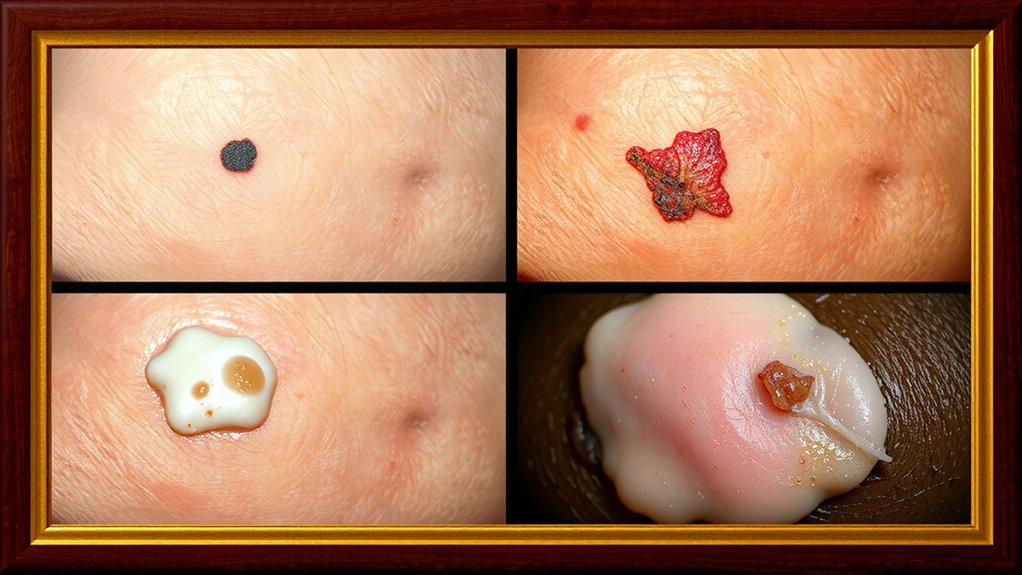
Because myths love company, let’s kill one: skin cancer hits every skin tone. You’re not immune. Not golden. Not cocoa. Not ebony. Cancer doesn’t care. It shows up loud or sneaky. On dark skin, you may spot inky patches, odd gray or blue shadows, or a stubborn sore on palms or soles. On lighter skin, think angry pink, pearly bumps, crusty plaques. Nails? A single dark streak that won’t quit. Lips or mouth? Pale ulcer that stings. That’s Pigmentation Variation doing its messy work. And yes, Hypopigmented Presentations exist—flat pale spots that look boring until they bleed. Cute. Not. Itches. Burns. Doesn’t heal. You know better. Stop excusing “just dry skin.” Look again. Look closer. Then act. Today. Call your dermatologist. Protect your body.
The ABCDE Guide to Checking Moles
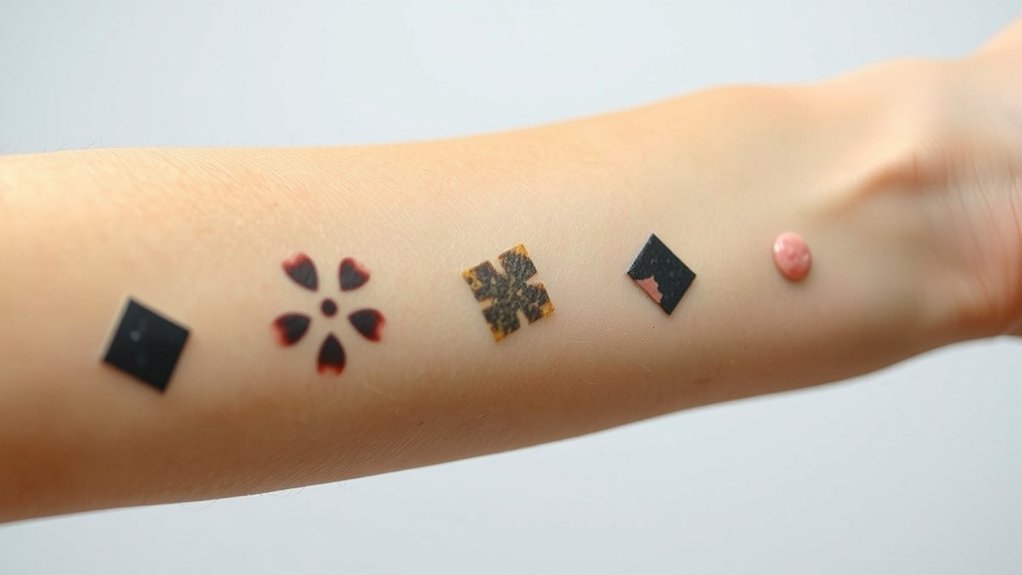
While you’re already staring in the mirror, do the real check. Stop scrolling. Lift the light and hunt. ABCDE isn’t cute. It’s survival. Asymmetry—one half lies, the other doesn’t. Borders—ragged, not crisp. Color—mixed shades that won’t shut up. Diameter—bigger than a pencil eraser, yeah, that classic. Evolving—anything new, louder, weirder. You want Diagnostic accuracy? Practice. Use your camera. Compare monthly. Not someday. Now. If you’re unsure, don’t guess. Call a pro. Then push your clinic for clear photos and plain language. Demand Training resources you can actually use. No mystery. No pride. Just action.
| ABCDE Pair | What it means |
|---|---|
| A + B | Uneven shape with jagged edge? Bad combo. |
| C | Multiple colors or new black, blue, or red. |
| D + E | Growing, larger than 6mm. Move. |
Basal Cell Carcinoma: Visual Clues to Watch For
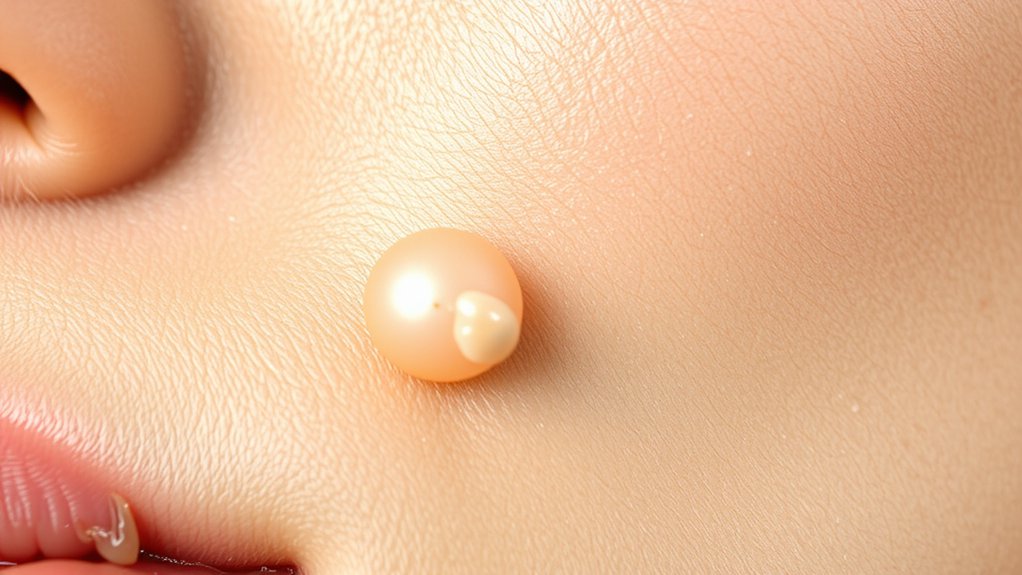
You spot a pearly or waxy bump that glints like cheap plastic—yeah, that smug little shine isn’t cute. It scabs then bleeds then scabs again, a nonhealing bleeding sore with Rolled Edges and a Central Dip like a tiny crater—see it now, not later. You look, you act, you call it out today, because pretending it’s nothing is exactly how nothing turns into trouble fast.
Pearly or Waxy Bump
A glass bead on your skin that won’t quit shining is not cute. You see that tiny bump. Smooth. Dome-like. It flashes a pearly sheen like a cheap pearl stuck under your skin. You think zit. It’s not playing by zit rules. It sits there. It glows under bathroom lights, with a weird waxy texture you can’t ignore. Edges look rolled, almost translucent, like plastic wrap. Fine surface vessels? Yep, faint little red threads, bragging. You press it. It bounces back. Annoying. Persistent. And yes, it keeps returning to the exact same spot, the audacity. Face, ears, neck, chest—sun-baked zones love this trick. Don’t bargain with it. Don’t wait it out. Snap a photo, set a reminder, and get a pro to inspect it.
Nonhealing Bleeding Sore
Because that “scratch” keeps bleeding, it’s not being cute—it’s waving a flag. You dab it. It stops. Then boom, it leaks again from nothing. Days turn to weeks. Scab, bleed, repeat. That’s not clumsy shaving. That’s a warning. Basal cell cancer loves this trick: a tiny sore that never finishes healing, crusts over, oozes, smiles, then bites. Sun‑hit zones get hit first—nose, ears, scalp, chest. You think ointment fixes it? Great, try real wound care, but if it rebounds, you call a clinician. Now. Also, meds matter. Watch for anticoagulant interactions that make minor bleeds look dramatic and hide the real issue. Take photos. Track dates. Don’t excuse it. Don’t wait for perfect. Bleeding that lingers means business. Prove you do too. Right now.
Rolled Edges, Central Dip
That bleeder’s twin has a look. A shiny dome with rolled edges, then a mean little pit in the middle. Like a crater with a curb. You see it. You stall. Don’t. Pearly rim, telangiectasias, and that central dip whisper Basal Cell Carcinoma. Not cute. Not rare. You want proof? Biopsy, then histologic correlation seals it. The architecture tells the truth. And it bites.
| Clue | Why it matters |
|---|---|
| Rolled border | Suggests tumor nests pushing outward |
| Central depression | Ulceration, depth, surgical implications |
Edges curl because cells pile up. The center sinks because tissue dies. Brutal math. Sun made it. You can pretend it’s nothing. Or act. Snap a photo. Measure. Set a deadline. If it bleeds or grows, you move, not tomorrow, today.
Squamous Cell Carcinoma: Signs on Skin, Lips, and Scars
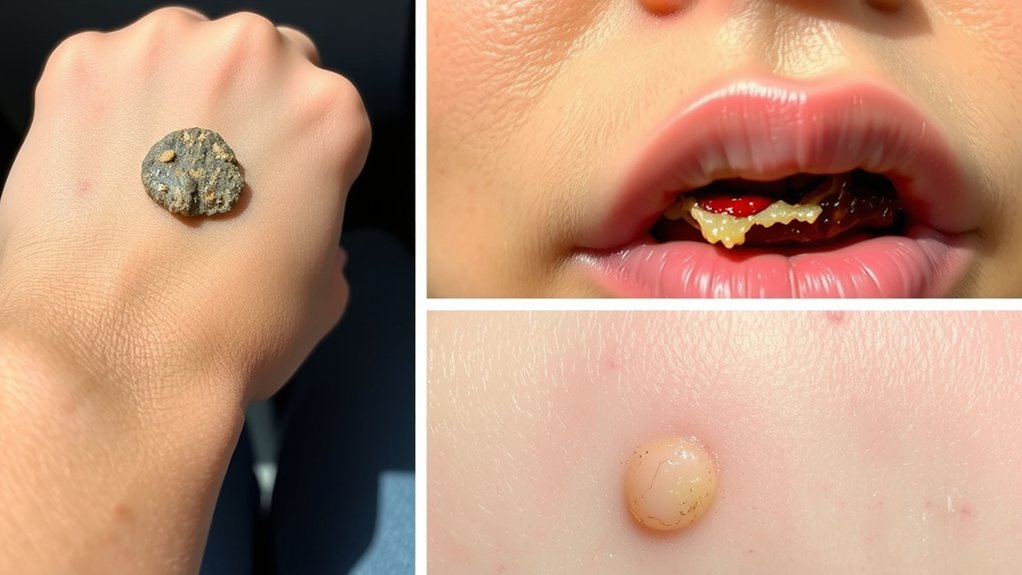
While you obsess over freckles, the real bully can be squamous cell carcinoma—loud, gritty, stubborn.
It doesn’t whisper. It crusts. It bleeds then scabs then bleeds again. You feel a sandpapery patch that won’t quit. Sun‑blasted temples. Bald scalp. Hands that worked outdoors. A wart that mutinies. Edges sharpen. Center hardens. You stall, it spreads.
Now the lips. Dry? Please. This is worse. A thick, rough plaque that cracks and hurts when you smile. Chronic chapping that doesn’t heal is your red flag for lip carcinoma. Smokers and sun lovers, that’s you.
Old burn mark or surgical line turning angry? Think scar transformation. A sore erupts on the scar and keeps coming back. Ugly. Persistent. Not normal.
Stop waiting. Photograph it. Circle the date.
Melanoma: Subtle and Serious Warning Signs
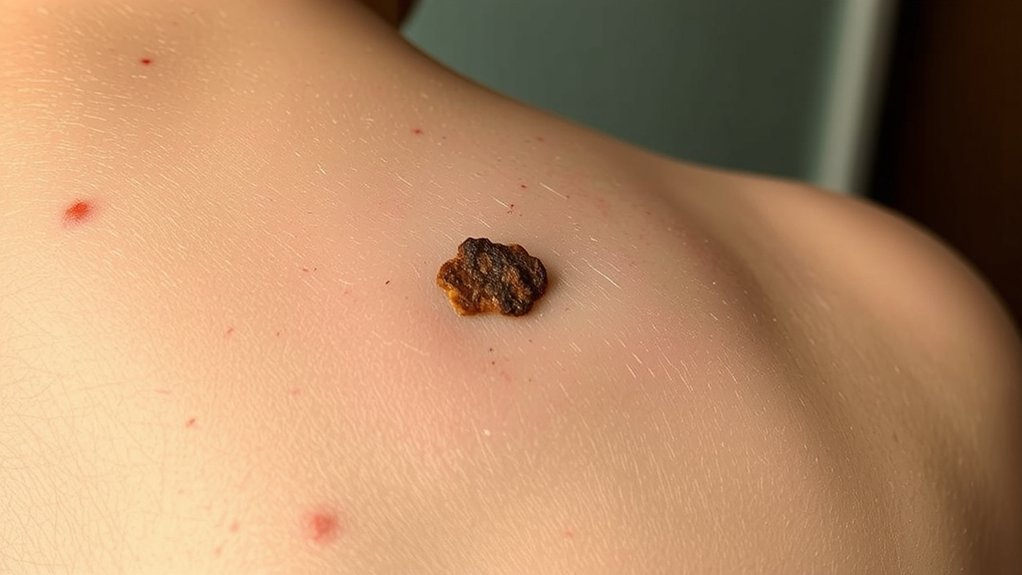
You check moles with ABCDE—Asymmetry, Border jagged, Color weird, Diameter growing, Evolving fast—because melanoma cheats. New spot that wasn’t there last month? Or an old one that changes overnight—bigger, darker, itchier—yeah, that’s not “just skin.” You act now not later—snap a photo, set an alarm, book the exam—because waiting plays roulette and your skin loses.
ABCDE Mole Changes
Staring at a mole won’t save you. You need the ABCDE check, minus the endless waiting. A is Asymmetry. Split it in your head. One side lies. The other laughs. Bad sign. B is Border. Smooth is boring. Ragged, notched, sneaky? Pay attention. C is Color. Tan and even is quiet. Multiple shades—brown, black, red, even blue—shout. D is Diameter. Bigger than a pencil eraser? Don’t argue with math. Now the science you keep dodging. Genetic mutations push cells to misbehave. Hormonal influences can press the gas pedal. Puberty. Pregnancy. Meds. Your skin listens and sometimes it obeys the wrong boss. You’re not powerless. You can look, judge, act. Use light. Use a mirror. Stop bargaining with spots. Check today. Not someday. Do it.
New or Evolving Lesions
If a spot wasn’t there and now it is, that’s a headline, not background noise. You don’t shrug at headlines. You zoom in. New equals news. A freckle that gate-crashes your skin overnight? Audit it. A mole that swells, darkens, itches, bleeds, or just won’t match its neighbors? Interrogate it. Don’t play chill; play detective.
Yes, rashes happen. So do Drug Eruptions. So do Infection Mimics that pretend to be harmless bites, ringworm, or zits. Great actors. Terrible intentions. Melanoma loves that confusion. It grows while you wait for “later.” Later is a trap.
Measure it. Photograph it. Set a two-week timer. If it changes, spreads, hurts, or simply feels wrong, you call. Not next month. Today. Your skin’s broadcasting. Answer. Loud and urgent.
Hidden Spots: Nails, Palms, Soles, Scalp, and Genitals
Usually, the sneakiest cancers hide where you never look. Under nails, a thin brown or black stripe can creep from cuticle to tip and pretend it’s a bruise. It isn’t cute. Palms and soles? Pale patches that turn darker. A stubborn crack that bleeds. A glossy bump that won’t quit. Friction Zones lie, so don’t trust blisters that outstay their welcome. Moisture Traps cheat too; soggy skin masks weird colors and gritty textures. The scalp loves camouflage; a crusty spot under hair, a mole that aches, a scab that returns. Genitals aren’t exempt. New dark smudges, pink pearly nodules, warty grit, ulcers that sting. You’re not overreacting. Cancer loves shy corners. It banks on your silence. Don’t give it that. Not today. Not ever.
Self-Exam Routine: How to Inspect, Photograph, and Track Changes
While doctors help, you live with your skin. Strip down. Stand under bright, even light. Use smart Lighting Techniques—lamp plus daylight—no moody shadows. Scan top to toe. Slow. Then faster. You know your spots; prove it. Circle odd ones with a washable marker. Don’t trust memory; you forget lunch. Take photos. Front, back, side. Use timers, mirrors, and ruthless honesty. Prefer simple Photo Apps with date stamps and albums. Name files like “left-calf-january.” Compare monthly. Look for new, darker, bigger, itchier. If a mole bullies its neighbors, call it out. You’re the detective, not the bystander. Track or lose. Your choice. Now.
| Step | Why it matters |
|---|---|
| Prep light, mirrors, camera | See reality, not drama |
| Shoot angles consistently | Apples to apples |
| Log changes promptly | Memory lies, data doesn’t |
When to Contact a Dermatologist and What to Expect at the Visit
You did the scan, snapped the pics, tagged the weird spots. So call. Not next month. Now. Call if a mole bleeds, crusts, or itches. If it grows fast. If colors clash like a bad bruise. If edges look jagged. If it’s the “ugly duckling.” You know the one.
What happens? You check in, conquer Insurance navigation, hand over the photos, and strip to a gown. The derm scans head to toe with a bright light and a dermatoscope. No secrets. They map, measure, and compare. Suspicious? Tiny numbing shot. Quick shave or punch biopsy. Done in minutes. Lab reads it in days. You get results and a plan.
Hate waiting rooms? Use Telemedicine options first, then book in‑person for anything risky without delay.