
You think that itchy red bump is “just a mosquito”? Prove it. Spider bites often show two tiny punctures, a hot ring of redness, maybe a pale center or a bruise that creeps in later. It burns. It nags. Sometimes a small blister pops up, then things escalate. Pain spreads. Skin darkens. Sweat, cramps, fear—maybe not, but maybe. Clean it, cool it, snap a photo. Still sure? Good. Now back it up.
Key Takeaways
- Often a red, itchy, tender bump with slight swelling and sometimes a tiny blister.
- Look for two close puncture dots; neat, round borders are common, unlike ragged scratch marks.
- Early pink halo may develop; dusky purple, blue, or black changes are concerning.
- Pain can progress from pinprick to burning over hours; venomous bites may cause muscle cramps, sweating, or nausea.
- Photograph daily with a ruler; seek care for rapid spread, fever, streaking redness, or worsening pain.
Common Signs of Spider Bites
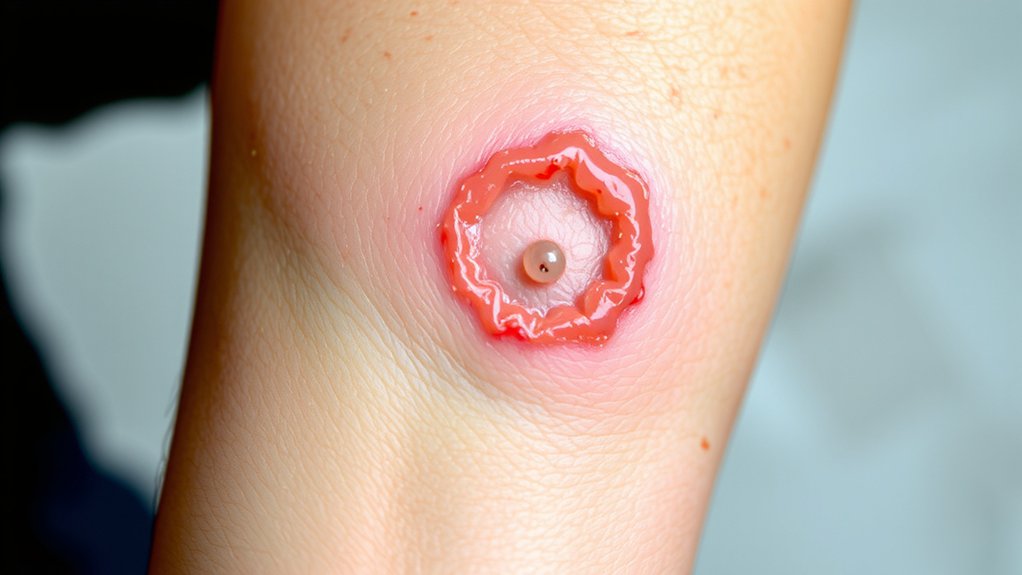
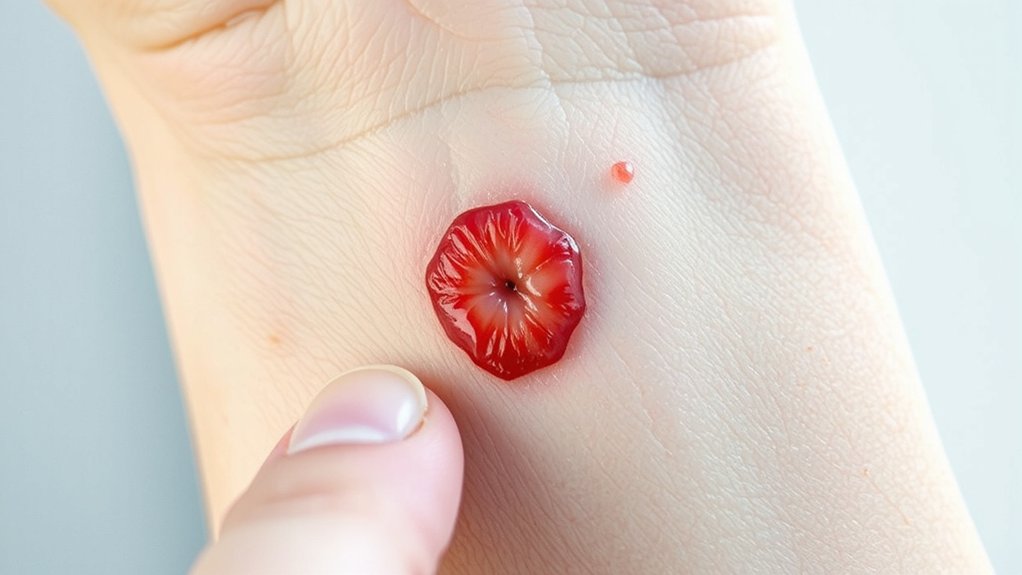
Usually, a spider bite looks boring—red, itchy, a little swollen, maybe tender when you poke it, and that’s it. Then it heats up. You feel a sharp sting or nothing at all, then a slow burn. The spot climbs from pink to angry red. It puffs. Itches hard. You want to scratch. Don’t. You might see a tiny puncture dot, maybe two, like a pin teased your skin. Sometimes a small blister forms and weeps a little. Pain? Mild to moderate, unless you’re unlucky. Swelling stays local, near the bite. Fever and chills? Possible, but rare. Track it. Watch the borders. Does redness spread fast? Push the skin. Is it warm? Take photos. Seasonal patterns matter—late summer spikes. Misdiagnosis rates do too. Document timing.
How Spider Bites Differ From Other Insect Bites
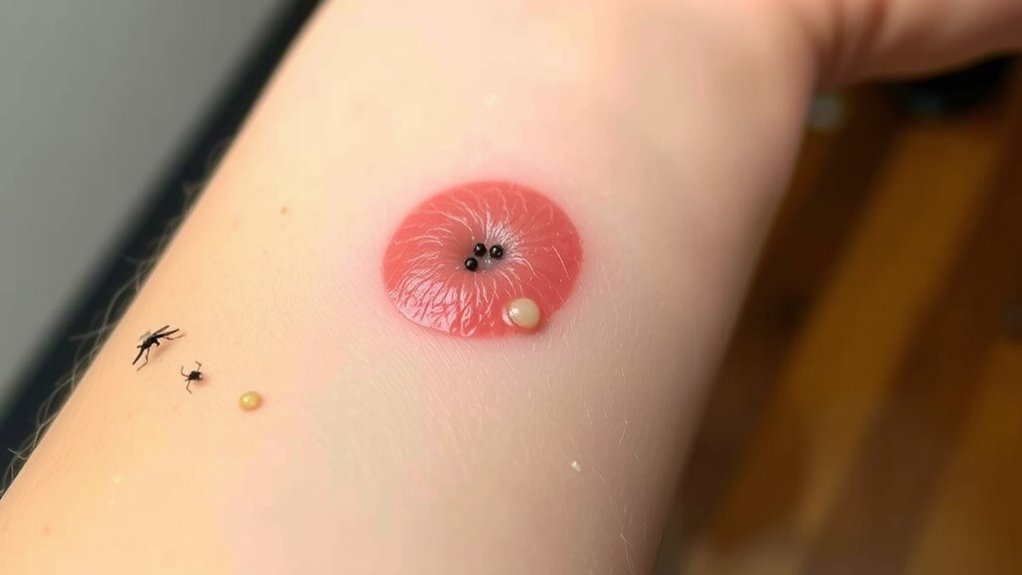
Figure it out fast: spiders hit you with venom that can wreck tissue or rattle nerves, while mosquitoes and ants toss weak irritants that mostly itch and annoy. See the pattern—two sharp punctures can hint spider, but fleas pepper your ankles and bed bugs march in tidy lines like a creepy buffet. And when you get sweating, chest tightness, nausea, or muscle cramps, stop playing tough—systemic chaos screams spider, not some basic bite.
Venom vs. Irritants
How do you tell venom from mere irritation? Venom acts like a plan. Irritants just poke you. With venom you feel more than itch. Burning rises. Pain spreads. Skin blanches then bruises. Maybe sweating, nausea, cramps. That’s your nerves hijacked, classic immune modulation gone loud. Irritants? Red, itchy, annoying, then boring. Calms down fast unless you scratch it raw.
Remember why spiders have venom. Predators need tools. Ecological roles matter; they drop pests, not you. But you’re collateral sometimes. Potent enzymes can blister tissue, even ulcerate. Irritant saliva won’t do that. Watch the clock. Venom escalates over hours, sometimes days. Irritants fade.
Don’t romanticize it. If symptoms climb your arm or hit your gut, stop guessing. Ice it. Elevate. Call a pro right now.
Bite Pattern Clues
Why does a real spider bite refuse to play by mosquito rules? Because you’re hunting patterns, not fairy tales. Look for paired punctures. Two tiny doorways. Close, balanced, a fang’s signature. Not a scattered sprinkle. Not those itchy linear tracks that bedbugs brag about after midnight raids. A spider hits once or twice, then bails. Clean. Focused. You’ll see a central spot with a tight halo, maybe a small mound, but not a dotted parade up your arm. Ants? Random chaos. Fleas? Ankles in clusters, like they planned a festival. Mosquitoes? Lone welts that puff and vanish. You need evidence, not vibes. Measure spacing, check symmetry, ignore drama. No pattern match, no spider credit. Be ruthless. Don’t let guesses win. Look harder. Decide now.
Systemic Symptom Profiles
Even when the skin looks loud, your body tells the real story. Spider venom acts system-wide. You feel it. Fast. Black widow? Muscle cramps, chest tightness, sweating, blood pressure jumps. Nerves misfire. That’s Neurological manifestations, not drama. Brown recluse? Spiking pain, nausea, fever, sometimes urine darkening—your red cells pay rent they don’t owe. Your Immune response fights, then overreacts. Contrast that with mosquitoes: itch, maybe blah fatigue. Cute. Bees and wasps? Boom—instant allergy theater: hives, wheeze, throat closing. That’s not venom pattern; that’s anaphylaxis. Ticks lurk slow, flu-ish days later. Different game. With spiders you get waves: cramps, chills, restlessness, odd sweating, belly pain. If your body screams from the inside, stop guessing. Seek care. Now. Bring the bite, not bravado, to professionals today.
Visual Clues: Color, Shape, and Size
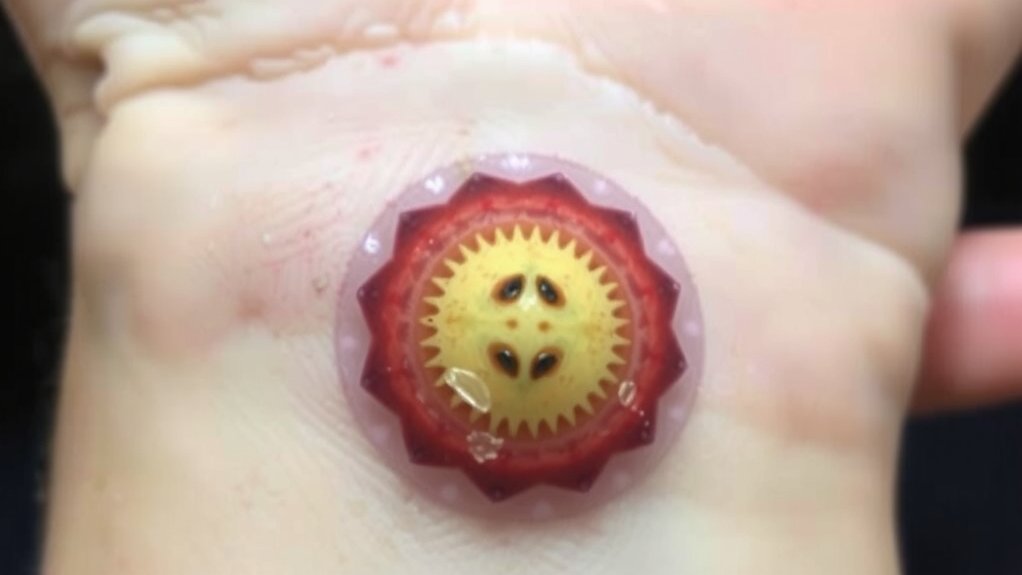
You want to spot a spider bite fast? Watch the color—bright red halo, a pale bullseye, or in ugly cases a blue‑black bruise that screams trouble. Check the shape and size too: clean round welt or tight blister, not a ragged scratch, and anything from a sneaky pinprick to a nickel‑ or quarter‑sized hit depending on the species, so stop guessing and measure.
Typical Bite Coloration
Usually, a spider bite looks boring—small, red, and maddeningly ordinary. You want drama. You get a blush. Most bites stay pink or light red, warm to the touch, a little angry, then they fade like a cheap sunburn. Stop hunting rainbows. If the spot darkens to a dusky purple or brown, pay attention. That shift matters. Not horror-movie black, but bruise-like, smoky, stubborn. Bright cherry? Could be irritation from you poking it. Yellow crust? That’s drying serum, not apocalypse.
Photos lie. Harsh flash shouts. Warm bulbs fake oranges. Follow Photography standards—neutral light, true white balance, no filters—or you’ll fool yourself. And check your head. Cultural perceptions paint “deadly” colors into every bump. Your fear edits the palette. Reality doesn’t care. Color does. Right now.
Common Lesion Shapes
Circles tell stories. You spot a round welt and your brain screams monster. Relax, but look hard. True bite lesions love symmetry. Clean edges. A neat papule or wheal. Sometimes a targetoid bull’s‑eye, dark core with a paler ring, then flare. Classic, right? Maybe a small vesicle haloed by blush. Or a crusted ulcer with an ugly eschar center. Lines happen too. A crooked arc where you scratched, not the spider. Clusters? Sure, but scattered clusters scream bedbugs more than drama spiders. Use dermatologic terminology or don’t, but see the patterns. Shapes speak. Nomenclature variations don’t bite you, insects do. Two close puncta? Good clue. Ragged starburst? Think trauma. Straight line streaking? That’s you, clawing, not venom. Document it fast, then stop doomscrolling tonight.
Size Range by Species
Shapes talk, but size shouts. You want ranges? Fine. House spider bites stay small, coin‑dot small, then quit. Widow bites swell wider, a bossy quarter, sometimes a rude half‑dollar. Recluse? A sneaky start, then a spread that scares, palm‑wide if you stall. Jumpers and orb‑weavers? Pinpricks with attitude, then nothing. Big tarantulas? Drama, not diameter—more bark than bloat.
Use simple measurement methods: compare to coins, a ruler, your fingernail; take photos daily. Doctors love data. You need proof, not panic. Cross‑check with museum specimens and field guides; species size drives lesion size, not myths. Watch the clock. Fast expansion means go. Slow creep means monitor. And if the size outruns your chart? Stop guessing. Get help now. No bravado, no delay, act like it.
Symptoms by Timeline: Minutes to Days
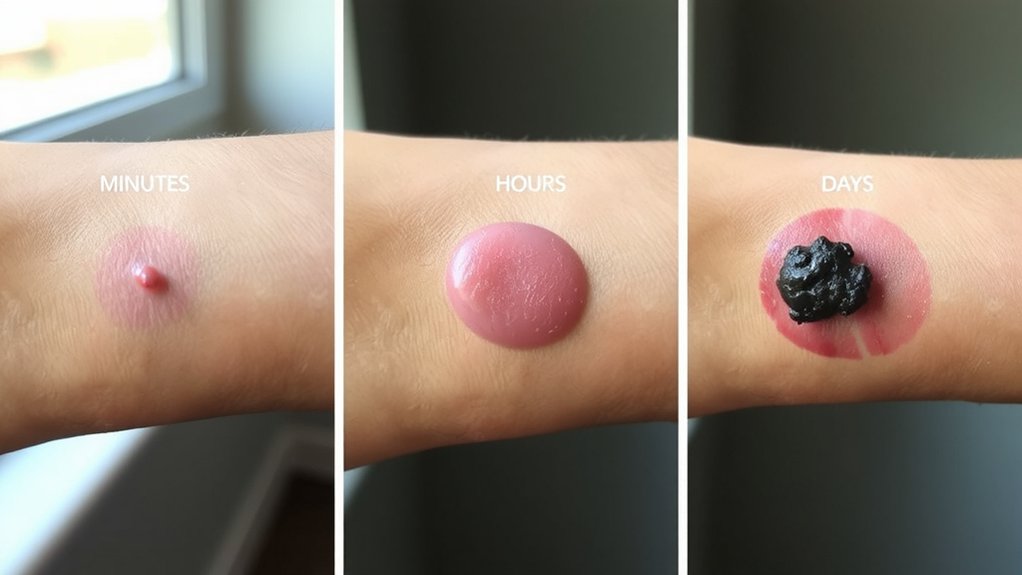
Although the clock starts the second those fangs nick you, your body fires back on its own schedule. You want certainty. Too bad. Track it. Do bite journaling. Time the sting, the itch, the swell. Don’t guess. Watch color shifts. Measure heat. If pain spikes, slow down. Set activity restrictions. You’re not a hero. You’re a lab.
| Timeline | What you notice |
|---|---|
| 0–10 minutes | Pinprick sting, mild swelling, restless itch. |
| 30–60 minutes | Red halo, warmth, tender to press, annoying burn. |
| 2–6 hours | Thicker swelling, throbbing, tight skin, small blister possible. |
| 12–24 hours | Spreading redness, deeper ache, fatigue, headache sneaking in. |
Escalation matters. Faster shift, higher alert. Spreading redness like a racing stripe? Mark edges with pen and time. Fever or vomiting? Go. Hydrate. Ice. Rest.
Bites From Common Spiders: What to Expect
While every spider gets blamed, only a few usual suspects actually mess you up. House spiders nip when trapped; you feel a sharp sting, two tiny dots, a small red halo. It itches. Big deal. Jumping spiders? Quick jab, mild swelling, done. Wolf spiders give a hot, bruisy spot that aches like a door slammed your skin. You handle it. Black widows bring pinprick pain that spreads dull and bossy, tight muscles flirting with cramps, but usually local. Brown recluses start sneaky; tender patch, slow burn, maybe a faint bull’s‑eye before anything dramatic. Don’t panic. Most bites fade. Blame their nocturnal habits, your bare ankle, and pure bad timing. Blame urban prevalence too. You’re not cursed. You’re just delicious, apparently. Wash up. Move on.
Warning Signs of Severe Reactions
If your body flips out, stop pretending it’s fine. You want signals? Here’s the siren: pain that explodes then keeps climbing, swelling that races, skin turning bullseye, blue, or black. Sweat pours. Muscles cramp like a vice. Nausea hits, then dizziness. Your heart sprints. Lips tingle. Breathing feels wrong. Eyes blur. Dramatic? Good. Severe reactions don’t whisper.
| Body signal | What it screams |
|---|---|
| Face or throat swelling | Airway under threat |
| Spreading necrosis/blister | Tissue in trouble now |
| Vomiting with headache | Systemic storm brewing |
| Fainting or confusion | Brain short on oxygen |
Genetic Predisposition can stack the deck against you, and Biomarker Research keeps proving some bodies light up like alarms. Don’t argue with chemistry. Rapid change. Wide spread. Out‑of‑proportion pain. Your skin writes the headline. Believe it.
At-Home Care and When to Seek Medical Attention
How do you handle a bite without losing your mind? Start with Wound cleaning. Soap. Water. Rinse like you mean it. Pat dry. Apply a cool pack ten minutes on ten off. Elevate the limb. Pain? Take acetaminophen or ibuprofen as directed. Itchy? An antihistamine helps. Don’t poke it. Don’t pop blisters. Snap a photo. Draw a line around the redness and watch it.
Now the Hospital indicators. Severe, spreading pain. Hard swelling. Streaks racing up the arm. Fever, chills, vomiting. Muscle cramps, sweating, or belly pain after a black widow suspect. A growing ulcer or black skin after a brown recluse look‑alike. Trouble breathing. Lip or tongue swelling. Dizziness or fainting. Kids, older adults, pregnancy, or immune issues. Go. Now. Don’t wait, move.
Prevention Tips and Myths to Avoid
You cleaned it, you watched it, you didn’t panic—good. Now stop tempting fate. Close gaps, seal screens, and quit leaving shoes on the floor like bait. Shake them. Every time. Gloves for boxes, because corrugated cardboard is spider condos. Fix your Clothing Storage: sealed bins, tight lids, lavender sachets if you must—smell helps you, not them. Do Yard Maintenance like you mean it: trim shrubs off walls, clear woodpiles, kill outdoor lights at night that lure bugs that lure spiders. Wear long sleeves for attic crawls. Vacuum webs, don’t negotiate.
Myths? Spiders hunt you—wrong. Most “bites” are pimples, staph, or drama. Tourniquets, cutting, suction—stop. Essential oil miracles—please. Brown recluse everywhere—no. You want fewer bites? Respect them, block them, move on. Start today. Go now.