
You’re 52, mowing the lawn, when a brick sits on your chest and creeps to your jaw—hello, not “just stress.” Your left arm feels heavy. You’re sweaty, dizzy, short of breath. Or you’re a woman and it’s jaw ache, nausea, crushing fatigue—no drama, still deadly. Heartburn? Maybe. Anxiety? Cute guess. Muscle pull? Sure. Want the fast test, the sneaky signs, and the move that buys you time?
Key Takeaways
- Classic pressure like heavy weight/car on chest; radiating to arm, neck, jaw; shortness of breath, cold sweat, nausea, dizziness.
- Atypical in women, older adults, diabetes: sudden breathlessness, overwhelming fatigue, jaw ache, nausea, lightheadedness without chest pain.
- Pain is deep, heavy, persistent, not changed by position; may feel tightness, belching-like pressure, or back/shoulder/jaw pain at rest or sleep.
- Distinguish from heartburn/anxiety: heartburn burns upward after meals; anxiety causes rapid breathing and tingling, often easing with calming.
- Treat as emergency: call 911 immediately; chew an aspirin unless allergic; rest still, take prescribed nitroglycerin, and prepare for EMS arrival.
Classic Symptoms and How They Present
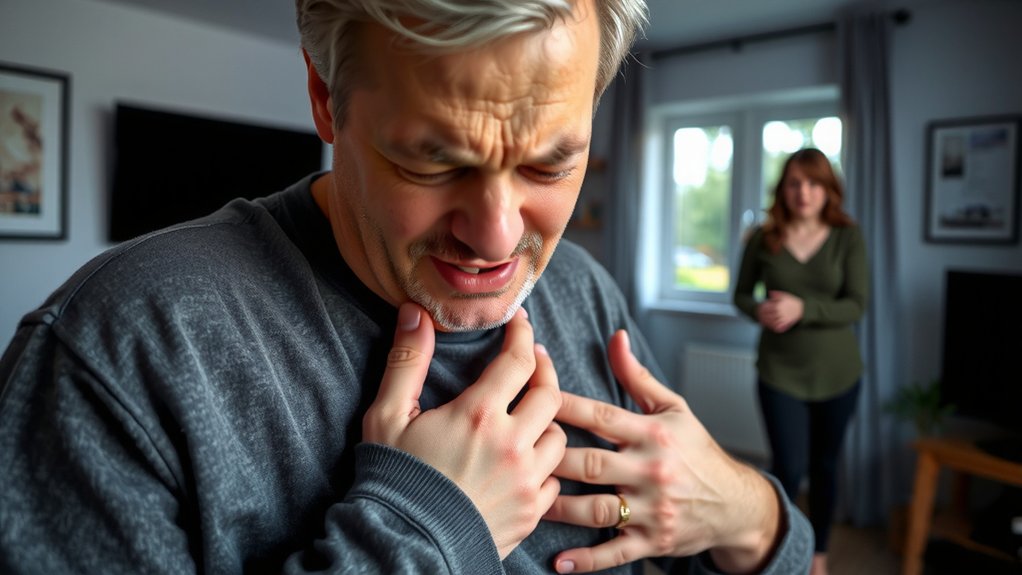
Although the movies love the dramatic collapse, the classic heart attack doesn’t always perform for the camera. You don’t clutch your chest and fall. You notice pressure. Not cute. Chest pressure that builds like a car parked on your ribs. Pain that creeps to your arm, neck, or jaw and refuses to shut up. You feel short of breath walking a few steps. Dizzy. Nauseated. Then the Cold sweat hits, slick and weird, like your body knows before you do. You slow down. Bad move. You argue with yourself. Worse move. Time kills heart muscle. Call now. Chew aspirin if you have it. Don’t drive. Don’t “wait it out.” You’re not tough. You’re breakable. Prove you’re smart instead. Live angry tomorrow. Do it today.
Atypical Symptoms in Women, Older Adults, and People With Diabetes
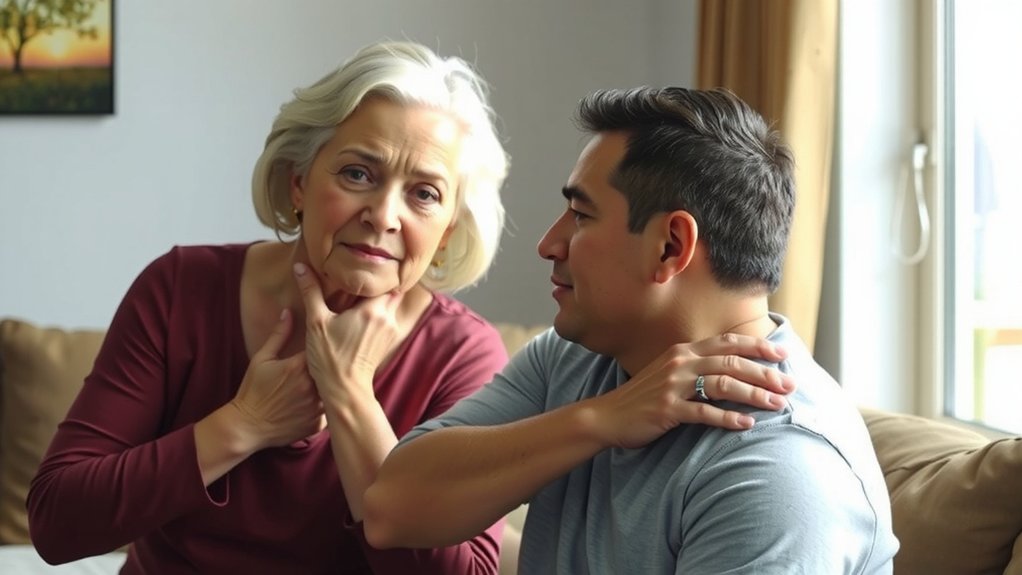
You think a heart attack always screams chest pain—wrong; in women, older adults, and especially if you’ve got diabetes, silent ischemia can mute the pain and blindside you. You might just feel shortness of breath out of nowhere, huffing on the couch or gasping on the stairs, and that’s the alarm not a cold. So stop guessing, listen to your body, and if your breath tanks or you feel off for no good reason, you call now not later—because quiet hearts still kill.
Silent Ischemia in Diabetes
When diabetes enters the picture, pain goes quiet and trouble gets loud. Your heart can starve without screaming. That’s silent ischemia. Nerves misfire, alarms mute, damage continues. Autonomic neuropathy plays bouncer and kicks pain to the curb. You think you’re fine. You’re not.
| Clue | What you notice | Why it matters |
|---|---|---|
| Sudden cold sweat | Soaked shirt, no workout | Stress response without pain |
| Unusual fatigue | Chores crush you | Oxygen debt, silent strain |
Listen. Patterns repeat. Little warnings gang up. Don’t wait. Track episodes, time, triggers. Bring receipts. Jaw ache, dizzy spells, or a heavy hush still count. Ask for ambulatory monitoring, stress tests, and real follow‑up. Push hard. Demand numbers, not vibes. Protect your heart now, not someday. No excuses. You move. You check. You live.
Shortness of Breath
Because air is life, sudden shortness of breath is a five‑alarm fire, not a cute mystery.
You climb a flight, gasping like a fish. Not normal. You lie down, feel worse. Also not normal. Women do this dance, older adults too, people with diabetes most. They wait, lose. Your heart may be starving. No chest pain? Tough. The muscle still screams.
Ask why now. Cold day? Maybe anxiety. But if breath dies out with sweat or back pressure, call 911. Now.
Check the sleepers. Snore like a chainsaw? Consider sleep apnea. Check the blood. Pale, wiped out, fast pulse? Ask for anemia screening.
Stop bargaining with oxygen. If a sentence steals your wind, that’s your siren. Don’t Google. Get help, or the timer wins.
Silent Heart Attacks and Subtle Warning Signs
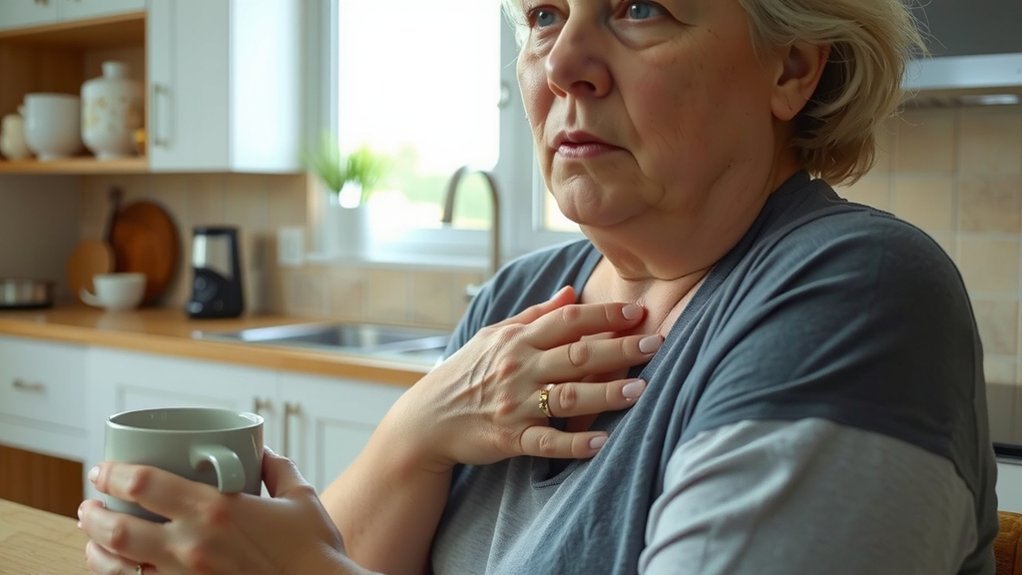
You think heart attacks always roar with crushing chest pain—wrong. They can whisper with no pain at all—especially in women—where nausea, jaw ache, breathlessness, or dead-on fatigue crash the party and you call it “just stress.” Ignore those odd clues and you aren’t tough—you’re a ticking excuse, so act fast and call for help before silence writes the ending.
Minimal or No Pain
Though the movies scream chest‑clutching drama, real life often whispers. You can have a heart attack and feel… almost nothing. No crushing weight. Just a weird pressure, a dull tightness, a bad burp you dismiss. You call it fatigue. You blame lunch. Dangerous lie. Your pain perception can be muted by nerves, meds, stress, even genetic factors that change how your body screams—or stays quiet. Minimal pain doesn’t mean minimal damage. It means you’re flying blind. Watch for short breath, cold sweat, sudden weakness, lightheaded stumbles, a bolt of nausea, an ache that wanders to your jaw or back then ghosts away. Don’t wait for fireworks. Call. Now. Chew aspirin if told to. Get checked. Prove your heart wrong—or save it. This minute, seriously.
Atypical Symptoms in Women
While TV scripts love the chest‑grab, women’s hearts often go quiet—and lethal. You don’t always get fireworks. You get fatigue that bulldozes your day. Nausea that isn’t “just lunch.” Breath that thins on stairs. Jaw ache. Back burn. Weird anxiety that sits like a stone. Not drama. Danger. Hormonal fluctuations twist the playbook, so symptoms drift, blur, hide. Your body whispers while your risk climbs. You call it stress. Or flu. Cute excuses. Deadly bet.
Here’s the kicker. A silent heart attack can sneak through errands and emails. No sirens. Just you, fading. Middle of the night, too. Or after a tough week. Even during a pregnancy presentation at work, because yes real life doesn’t pause. Listen. Feel off? Don’t wait. Get checked. Now.
Overlooked Warning Clues
Because the quiet ones kill, pay attention to the whispers. You won’t get them. You’ll get a nagging burn you call indigestion, a breathless climb you blame on stairs, and a wave of sweat in a cool room. You’ll shrug. Don’t. Cold extremities? That’s blood shunting, not drama. Persistent hiccups? Laugh it off and you might pass out. Jaw twinge. Shoulder ache. Sudden fatigue that drops you mid‑sentence. A pulse that rabbits. And dread, heavy.
| Sign | What it hints | Do now |
|---|---|---|
| Cold extremities | Poor flow | Warm, call |
| Persistent hiccups | Irritation | Check rhythm |
| Jaw/shoulder ache | Referred pain | Stop, test |
Your heart isn’t subtle. Track patterns, not moments. If symptoms stack, stop. Sit. Breathe. Call now, not later. Pride won’t restart a stalled pump. Right now.
What a Heart Attack Feels Like vs. Heartburn, Anxiety, or Muscle Strain
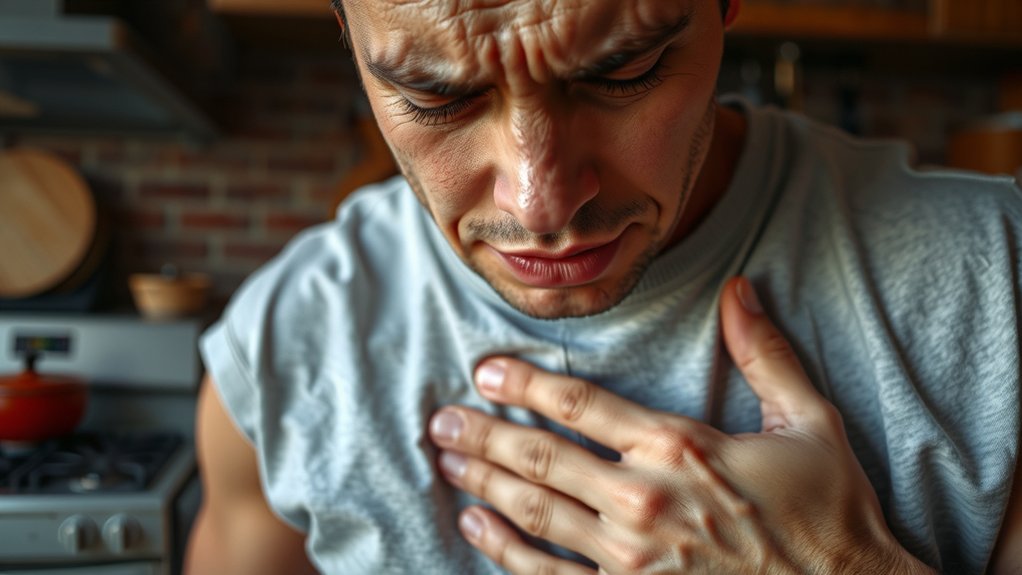
How do you tell crushing danger from everyday drama? Heart attack pain feels heavy, deep, bossy. It clamps your chest, squeezes your jaw, floods you with dread. It doesn’t beg. It commands. It may spread to your arm or back while you sweat like a spotlight found you. Heartburn? It burns upward after food. Sour taste. Burp relief. Those are classic reflux indicators. Anxiety? Fast breath, racing thoughts, tingling fingers, but pressing your chest doesn’t spark that iron grip. Muscle strain screams when you twist or touch, then quiets when you rest. Real cardiac pain laughs at position changes. You want proof? ECG interpretation exposes patterns your gut can’t. Stop guessing. Feel the pattern. Compare the triggers, the spread, the stubborn grind. Decide now.
When to Call Emergency Services and What to Expect
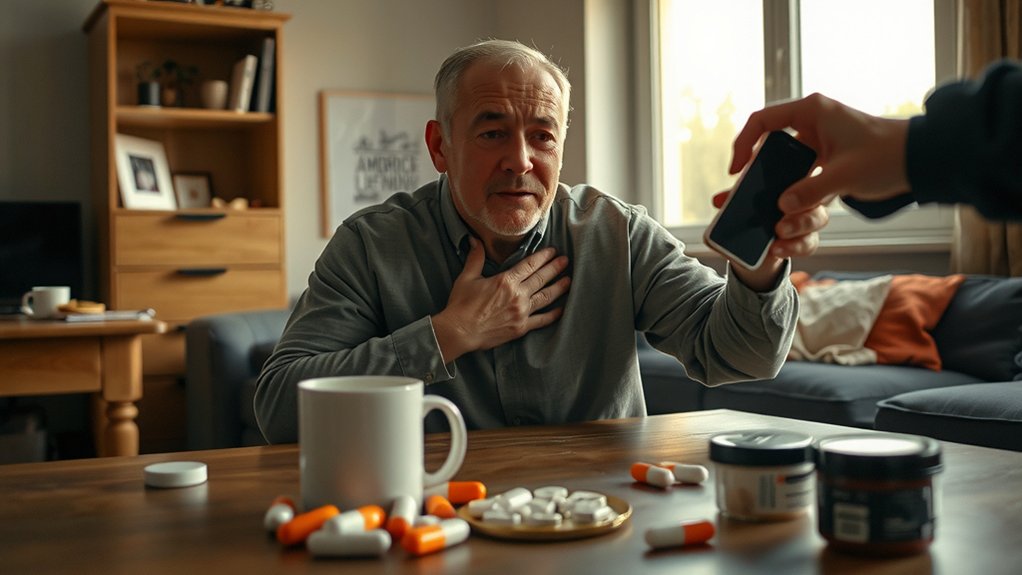
You felt the clamp and the sweat—now stop playing hero. If chest pain crushes, spreads to arm, jaw, or back, or you feel sick, dizzy, short of breath—call 911. Not your cousin. Not a ride share. Time kills. Dispatch asks fast questions, flags a probable heart attack, triggers EMS protocols. Paramedics roll in, stick leads, run an ECG, start oxygen if needed, maybe aspirin or nitro per orders, and radio the hospital. Lights mean priority. Siren means a team is waiting.
At the ER, you skip the lobby. Straight to a monitor, blood tests, repeat ECGs, and blunt truth. The hospital workflow shifts around you. If it’s a STEMI, you’re hustled to the cath lab. Minutes matter. Pride doesn’t. You want survival? Call early.
Immediate Steps to Take While Waiting for Help
If the pain hits, the clock starts. You call 911. Not your cousin. Not a rideshare. You. Now. Put the phone on speaker. Give your location. Open the door. Sit down, legs slightly bent—Comfort Positioning, not hero posing. Chew one adult aspirin unless you’re allergic or your doctor said don’t. No driving. No stairs. No drama. Breathe slow—Calm Breathing—four in, six out. Loosen tight clothes. Keep still. If you have nitro, take it as prescribed, and only as prescribed. Tell someone nearby. Point to your meds list. Drop the dog in another room. Feel worse or pass out? They start CPR. You stay stubborn. Don’t eat. Don’t chug water. Don’t argue with dispatch. You fight smart. Seconds steal muscle. Take them back. Right now.