
You sneeze in the car and it feels like a hot nail stabbed your rib—yeah, that one. You grab your side, you breathe shallow, you curse. Laughing hurts. Coughing mocks you. A hug? Forget it. Pressure on that spot lights you up, then muscle spasms pile on. Is it bruised or cracked? You want the truth, fast, plus what to do tonight and what could be serious. Ready?
Key Takeaways
- Sharp, stabbing pain that worsens with deep breaths, coughing, laughing, or pressing the spot.
- Localized tenderness and muscle spasms, often with skin bruising that turns purple then yellow.
- Deep breaths are painful but usually still possible; many adopt shallow, guarded breathing and feel chest tightness.
- Sudden pain with reaching, twisting, tying shoes, or rolling in bed; the area is sore to touch.
- Compared with a fracture: bruises show broader skin discoloration; fractures cause pinpoint, knife‑like pain each inhale, sometimes clicking or deformity.
Signs and Symptoms of a Bruised Rib
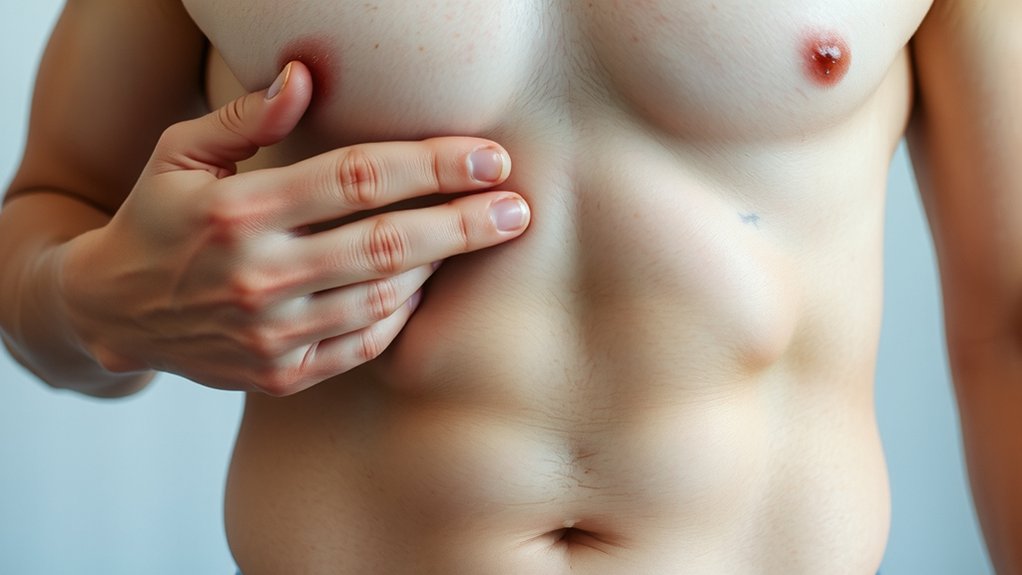
Because that rib took a hit, it talks back loud. You feel a sharp stab when you breathe. Laugh? Dumb idea. Cough and it bites harder. Touch the spot and you flinch because pressure screams. Skin discoloration blooms like bad art, purple and yellow, and you hate the mirror. Muscle spasms twitch under your fingers, rude little shocks that won’t quit. You move slow, then faster, then regret the stunt. Rolling in bed? Nope. Sneezing turns brave into broken. Your chest feels tight, like a belt yanked one notch too far, then two. Deep breath, shallow pain, repeat. You brace your torso like a shield because every bump is drama. And yes, fatigue shows up, uninvited, dragging your mood down. Anyway, rest now. Heal.
Bruised Rib vs. Fractured Rib: Key Differences
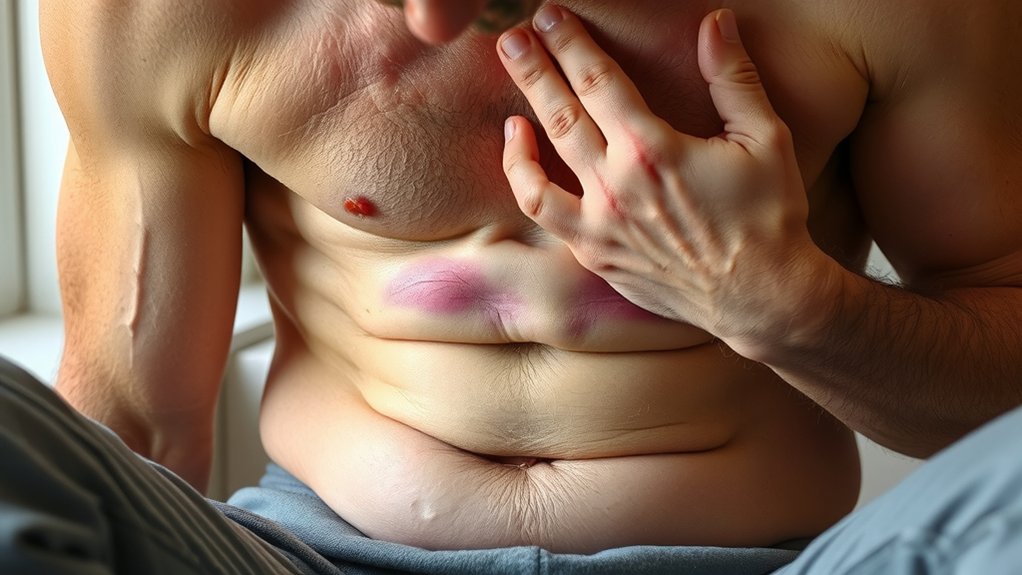
How do you tell if it’s just bruised or flat‑out broken? Pain speaks. A bruise screams with movement and pressure, but you can still take a deep breath—barely. A fracture bites harder. Sharp, pinpoint, stabbing on every inhale. Sometimes a click. Sometimes a step-off. Cough and it’s electric. Lie on that side? Forget it.
Look for clues. Big purple bloom on the skin favors bruise. Visible deformity favors break. Gentle squeeze test hurts both, yet fracture pain feels knife-clean, focused, uncompromising.
Short breath, popping, or uneven chest motion? Stop guessing. Get imaging. X‑ray, maybe CT. Because complications aren’t cute.
Treatment splits too. Bruise: rest, ice, meds. Fracture: tighter pain control, breathing exercises, watch lungs.
Bonus reality: Insurance Coverage and Legal Liability follow proof. Documented.
Common Causes and Risk Factors
While speed gets the blame, your ribs usually lose to force—sudden, dumb force. Big hits do it. Stupid falls do it. You misjudge a stair, meet a railing, and boom. Contact sports? Perfect chaos. Football, hockey, rugby, martial arts—your ribs are targets. Car crash? Seat belt saves your life, slaps your cage. Hard coughs, sneezes, even CPR can bruise you. So can a flying elbow at a crowded concert. Bone weakness raises the odds. Age, osteoporosis, low vitamin D, lousy nutrition, smoking, steroids—stack the deck against you. Bad form and zero padding make training a lottery. Fatigue drops your guard. Weekend hero, weekday desk—terrible combo. Alcohol? Kills balance, invites gravity. Prior rib injury? Easier to re‑bruise. And yes, dog‑pile with friends. Until you wheeze.
How the Pain Feels During Daily Activities
You took the hit, now the bill comes due. Breathing bites. Laughing mocks you. Cough once and it feels like a car jack under your ribs. You reach for a mug—zap—tiny lightning. Tying shoes turns into a hostage negotiation. You move slow, then slower, because speed taxes you. So you cheat. Activity Adaptations, right? You roll out of bed like a log, not a hero. You side‑eye stairs, hug railings, plan every step. Posture Changes rule your day; slouch and it stabs, stack tall and it growls but tolerates. You brace to sneeze, you hold your core like a secret. Even hugs feel suspect. You learn the hard rhythm: smaller breaths, shorter strides, fewer flexes. Annoying? Absolutely. But you adjust. Own it today, stubborn.
When to Seek Medical Care
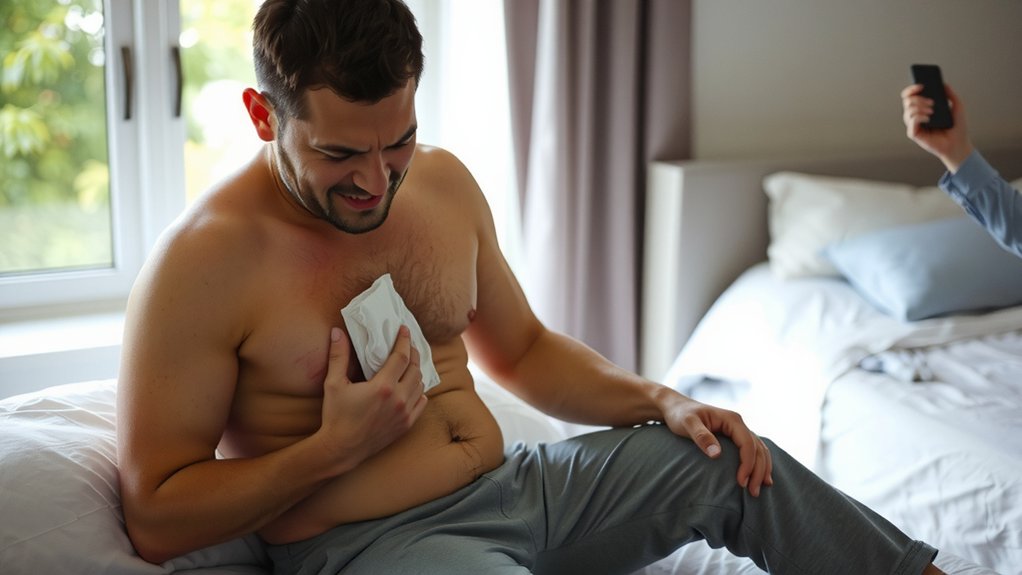
If your chest clamps down or air won’t come, drop the hero act and call 911 now. Can’t breathe without panic? Go. Pain rockets with each inhale and won’t quit? Go. You heard a crack then saw a bulge? Hospital. Blue lips or fingers. Coughing blood. Dizziness like the floor tilts. Fever after a blow. These aren’t “wait and see.” They’re red sirens.
On blood thinners? Older? Have lung or heart disease? Don’t gamble. Get checked today.
Pain wakes you at night, ramps despite rest, or blocks deep breaths so hard you gasp? Enough. Stop toughing it out.
Got a work injury? Seek care promptly for legal documentation, then ask for workplace accommodations so you don’t wreck recovery. Pride won’t protect ribs. Action will.
Diagnosis: What to Expect at the Clinic
You walk in hurting and impatient—good, because the first thing they do is grill you on your story: how you got hit, what hurts, what makes it worse, meds, coughs, weird pops. Answer straight, no guesswork, because those details steer the plan, not your buddy’s backyard diagnosis. Then they talk pictures—X-ray for fractures, maybe ultrasound or CT if they smell trouble—and they’ll explain why, what it can miss, and whether you actually need it today instead of getting zapped for nothing.
Medical History Review
How did this mess start? You tell the story. Fast. Fall off a scooter? Coughing fits from that cold? A body check in rec league hockey? Say it straight. Where it hurts, what makes it surge, what calms it. Breathing, laughing, twisting, sleeping—name the triggers. Don’t hide meds. List everything. Painkillers, inhalers, blood thinners. And your Medication allergies, loudly, before anyone offers the wrong pill.
Now the messy truth. Your habits. Your social history matters. Smoker? Vaper? Weekend warrior with tequila courage? Work lifting boxes or sitting crooked all day? Any past rib hits, asthma, osteoporosis, bleeding issues? Recent illness, fever, weight loss? They’ll ask about domestic violence. Yes. Safety. Be honest. You want help, not hero points. Tell the truth. Fix it faster.
Imaging Tests Explained
Story told, now the machines get a say. You step into imaging, not a spa. The tech aims, you hold your breath, your rib screams. X-rays shoot fast. They hunt breaks, lung leaks, nasty surprises. But bruises? Often invisible. That’s the punch: Xray limitations. So don’t act shocked.
Next move. Ultrasound slides in with cold gel and zero drama. The probe glides, finds fluid, cartilage pain, tiny hematomas. Real-time truth. That’s the Ultrasound utility you want when bones look “fine” but you don’t.
Worried about bigger trouble? The doc may order CT to rule bleeding or a sneaky pneumothorax. More radiation, more answers. You choose clarity or doubt. Minutes matter.
Ask questions. Demand plain English. Leave knowing what broke—and what didn’t. Simple. Done. Breathe.
Treatment Options and Home Care
You want the pain to back off now, so you hammer it with smart relief—OTC meds, steady breathing, and position tricks that stop a stab before it starts. Then you rest like you mean it—no hero acts; prove it. Ice it hard early to shut swelling up, then switch to heat when the ache hangs on, cold for control, warmth to loosen the grip—you run the show, not the bruise.
Pain Relief Strategies
While that rib yells every time you breathe, the plan stays brutal and simple: kill the pain, protect the bruise, keep you moving just enough to heal. Start with smart meds: acetaminophen or NSAIDs, not both at max. Layer topical gels or lidocaine. Add Mindfulness Meditation for calm under fire. Curious about needles? Acupuncture Benefits include shorter flare‑ups and better sleep.
Breathe like you mean it. Slow, steady, through pursed lips, with a cough hug to clear gunk. Brace with a small pillow when you laugh, sneeze, or get bossed by gravity. Stand tall. Slouching stabs.
| Move | Tool | Why |
|---|---|---|
| Walk short | Timer | Stops stiffness |
| Deep breaths | Pillow hug | Prevents lung funk |
| TENS unit | Sticky pads | Quiets nerve noise |
If pain surges, get checked today.
Rest, Ice, Heat
Because that rib feels like it’s plotting against you, hit it with the basics: rest, ice, then heat. Kill the hero act. Park yourself. Breathe low and slow. Hug a pillow when you cough or laugh because pain loves surprise. Ice first, hard stop, 15 minutes on with a cloth, then off. Repeat. Early swelling hates cold. Ask the cryotherapy origins crowd; ancient athletes dunked in rivers, not for fun. After two days, pivot. Heat wins. Warm showers. A pad on low. Muscles unclench. Blood moves. You heal. But not a furnace; skip brutal sauna rituals until sharp pain fades. Sleep higher, side supported. No crunches, no twisting, no “I’m fine.” You’re not. Rest now, return faster. Simple. Ruthless. Effective. Listen to your body.
Recovery Timeline and Tips for Sleeping and Breathing
After the first shock calms down, the clock starts—most bruised ribs ease in 3 to 6 weeks, but the first 72 hours can feel like a sledgehammer. Track healing milestones. Day 3: less stabbing at rest. Week 2: deeper breaths without cussing. Week 4: slow twists, not circus tricks. By week 6: you’re not fragile glass, but you’re not bulletproof either.
Use sleep adaptations or suffer. Back plus pillows under knees. Side with a fortress of cushions hugging your ribs. No stomach flop unless you enjoy yelping. Ice before bed, heat in the morning. Breathe bigger on purpose. Sniff in, hiss out, ten times every hour. Cough with a pillow brace. Laugh carefully—yes, I said it. Move daily, gently. Quit heroics. Heal. Do it.