
Twenty-five percent of your bones live in your feet—so yeah, they break. You felt a snap, now it’s swelling, bruising, maybe crooked. You can’t put weight on it, or pain spikes at rest. That’s not “just a sprain,” hero. Is the skin tight, numb, cold, or open with bone peeking? Stop guessing. You want the fast way to tell—and what to do in the next five minutes. Let’s sort it before you make it worse.
Key Takeaways
- Early, pronounced swelling—often asymmetric—making the foot look puffy and too tight for shoes.
- Extensive bruising that migrates across the foot and toes, shifting from deep purple to yellow over days.
- Obvious deformity: crooked or displaced toes, unexpected bumps or ridges, or collapsed normal contours.
- Black or blue discoloration under a toenail (subungual bleeding) following impact.
- Marked difficulty weight-bearing with a limp; movement may trigger an audible snap or a grinding sensation.
Key Symptoms of a Broken Foot Versus a Sprain
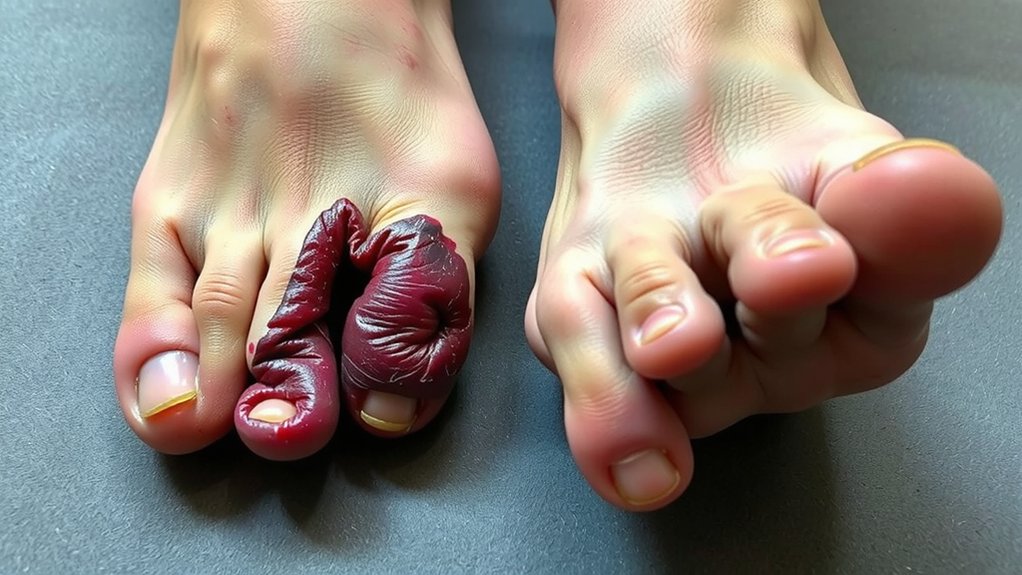
How do you tell—sprain or break—without playing doctor on your couch? Pain talks. A break barks. Sharp, stabbing, drill‑bit mean. Sprains whine, then ease if you baby them. Fractures don’t. You push, it screams at one exact spot. You try to walk, the foot rebels. No compromise. Sprains grumble with motion; breaks punish even at rest, at night, with light taps. Hear a snap? Not poetry. That’s hardware failing. Feel grinding when you move a toe? Bad sign. You can’t trust vibes, you need diagnostic imaging, but your body’s giving clues, loud ones. Weight bearing matters: ten steps feel like ten miles, you stop, you sweat. Clock’s ticking. Treatment timelines split fast—immobilize and protect for fractures, rehab and controlled loading for sprains. Decide. Act.
Visual Signs: Swelling, Bruising, and Deformity
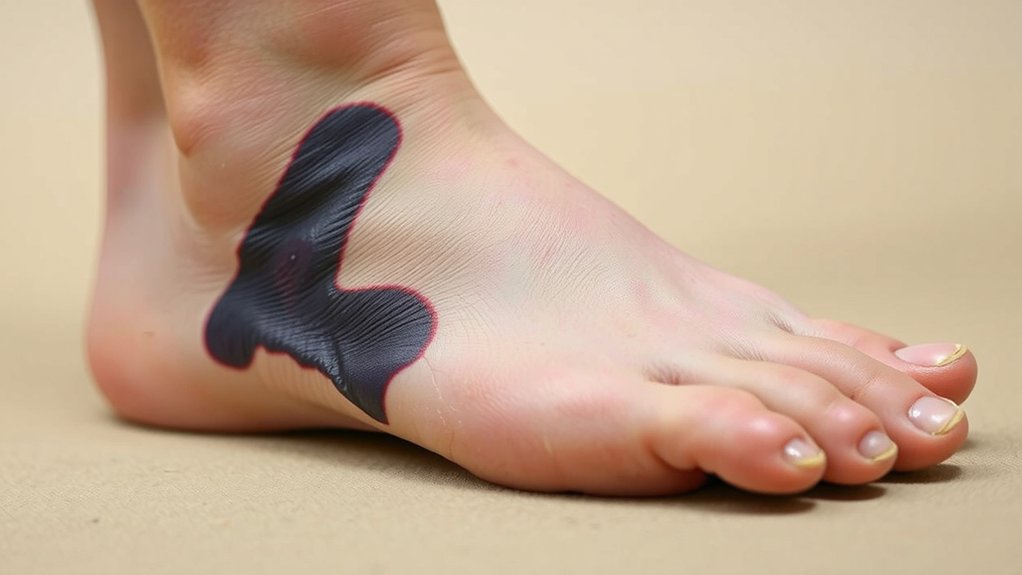
Evidence sits on the skin. You see it before you feel it, so stop pretending it’s fine. Swelling barges in first. Loud. Lopsided. Your shoe suddenly hates you. The foot balloons, edges blur, bones vanish under puffed drama. Bruising follows like a bad rumor. Purple storms. Yellow maps. It creeps across the arch and toes, not cute, not subtle. Spot toe misalignment? That crooked lineup isn’t a fashion choice. One toe points north while the others vote west. Deformity screams. Ridges. Collapses. A weird bump that wasn’t invited. And nail discoloration—oh yes—blackened, blue, trapped blood under glossy lies. You want to shrug. Don’t. Look again. Compare sides. Snap a photo. Still guessing? That guess risks worse. Act now. Get help. Stop the heroic denial.
Pain Patterns and Weight-Bearing Clues
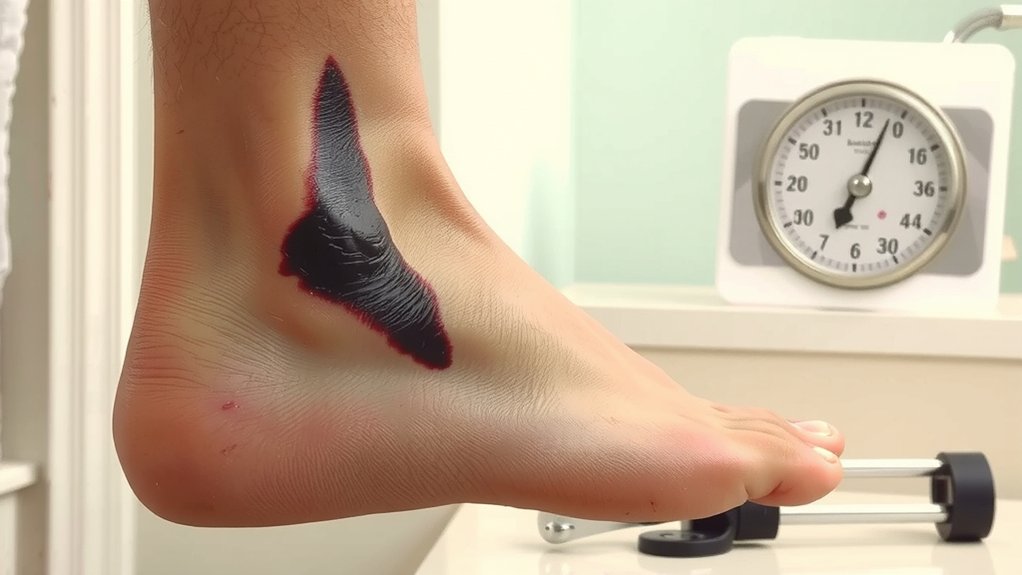
Why does that step feel like a nail gun to the arch? Because your foot’s screaming. You push off, it bites back. Heel strike? Fine. Midfoot load? Boom. Sharp, hot, unfair. You shift weight, you limp, you cheat. That’s your body doing gait analysis in real time. The pain chooses sides. Stairs punish. Sand mocks. A jump? Don’t even try it.
Map a pain timeline. First twinge during impact, dull throb at rest, night spikes when you roll. Morning hurts more, then eases, then ambushes at lunchtime because you got cocky. Press the spot. Local zap says bone, vague ache says soft tissue. Now watch patterns. Straight-line walking tolerable. Pivoting brutal. Toe-off worst. Keep notes. Stop pretending it’s “just sore.” Own the truth today.
Red Flags That Require Immediate Medical Care
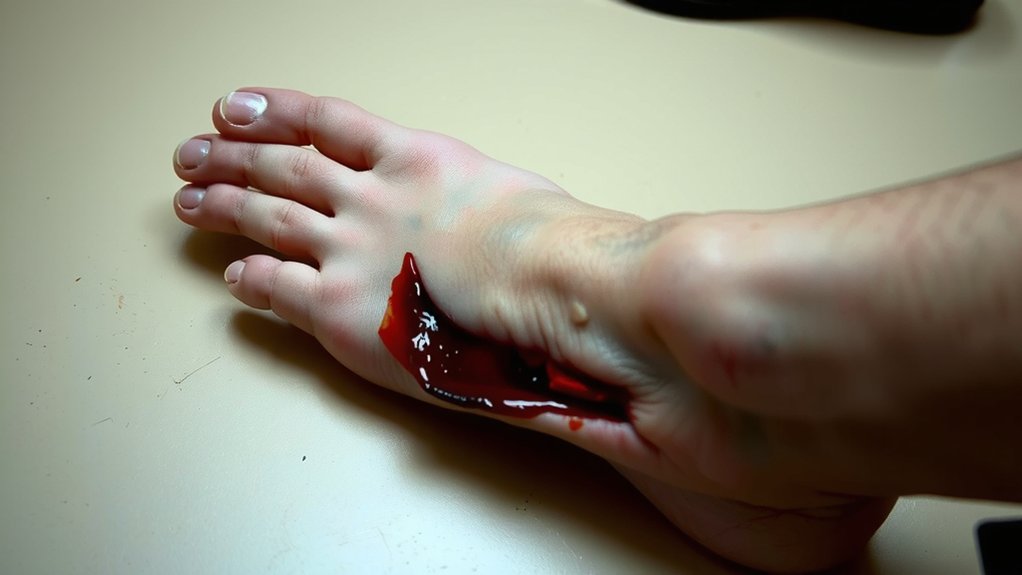
If your foot looks wrong, act now. Bone poking through skin? That’s an open fracture, not a DIY project. Call emergency, not your group chat. Skin turns pale blue or cold? That screams vascular compromise and dying tissue. Numb toes that don’t wake up. Alarming. Foot balloons like a grapefruit, tight, shiny, pain exploding even at rest. Bad news. You hear a snap, then instant deformity—crooked arch, toes drifting, heel shifted. Not “walk it off.” Can’t move the toes, or they move but feel like strangers. Freaky, and urgent. Bleeding you can’t stop, especially with fracture lines, means time matters. Fever, chills after injury? Infection gate is open. You want tomorrow? Get help today. Don’t argue. Don’t stall. Go. Now. This is not optional.
First-Aid Steps Before Professional Evaluation
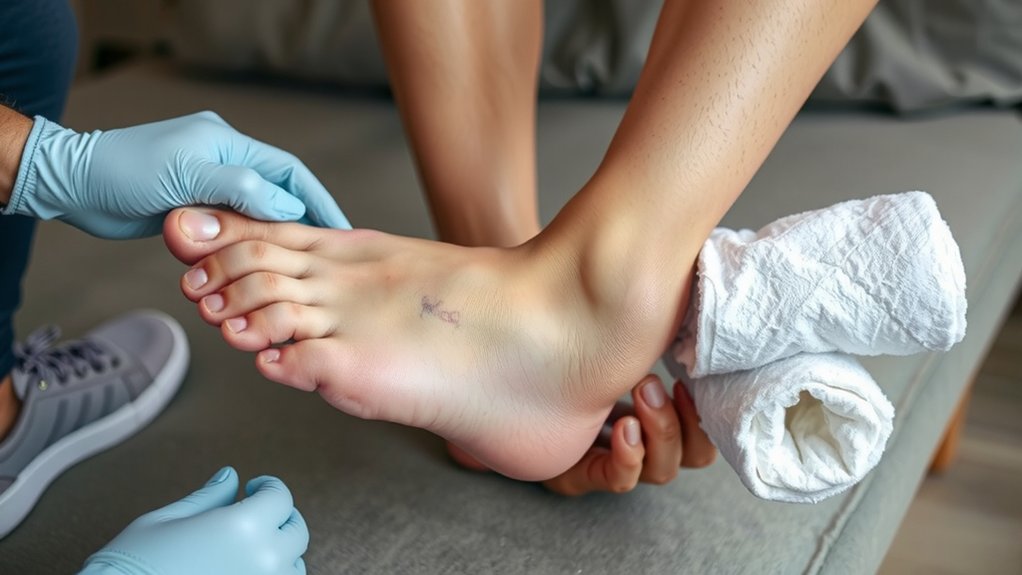
You spotted the danger signs—good. Now act. Don’t walk it off; don’t be a hero. Sit. Strip the shoe and sock if they’re loose, but skip the tug-of-war. Control bleeding with firm pressure. Cold pack the area for 15 to 20 minutes, no heat, no magic rubs. Elevate the foot above the heart. Compression? Light, not a tourniquet. Bones poking? Don’t shove them back. Splint Application: pad the foot, immobilize ankle to toes with a board, magazine, anything rigid, then secure snug but not numb; recheck color and feeling. No food, no booze, no drama. Pain meds only if safe. Zero weight bearing. Call backup. Arrange Safe Transportation—friend, rideshare, ambulance if needed. You move smart, you win. Don’t stall. Get help, now. Do it.