
Your body runs cooler than your great‑great‑grandparents—about 1°F lower on average. So 98.6°F? Cute myth. You chase numbers while your core whispers truth. Low temp can mean cold exposure, thyroid drag, meds messing you up, or just a sloppy measurement. Which is it? You don’t guess—you test, warm up, and watch symptoms. Shiver, fog, stumble—red flags. Calm down. Then act. Ready to find out what your number really says?
Key Takeaways
- Low means below your usual baseline; verify with repeat readings using the same site, technique, and device.
- Normal ranges vary: roughly 97–99°F overall; mornings run cooler; measurement sites differ—axillary lowest, rectal highest.
- Common causes include cold exposure, hypothyroidism or other endocrine issues, severe infection/sepsis, certain medicines, alcohol, inadequate calories, or dehydration.
- Watch for warning signs: intense shivering, numbness, clumsy hands, slowed thinking; confusion, slurred speech, or blue lips require urgent care.
- First aid: warm up, get dry, drink warm fluids, monitor; if shivering persists >30 minutes or in infants/elders, contact a clinician.
What Counts as Low Body Temperature?

So what actually counts as “low”? You hate vague labels. Me too. Low means you’re below your usual heat, clearly, repeatedly, and not just because you licked a popsicle and panicked. You verify, you don’t guess. You collect a couple readings, same method, short interval, and yes—no heroic excuses. Historical definitions tried to stamp one magical cutoff. Nice try. Bodies laughed. Researchers learned the hard way. So, you use research criteria instead: repeatability, symptoms that match the story—shivering, slow thinking, clumsy hands—plus timing and context. If it quacks like low, treat it like low. Don’t debate the thermometer while you’re freezing. Don’t crowdsource your core. Decide. Act. Warm up. Then write the diary entry scientists crave. Data, not drama. You’re the witness. Right now.
Normal Ranges and Factors That Affect Readings
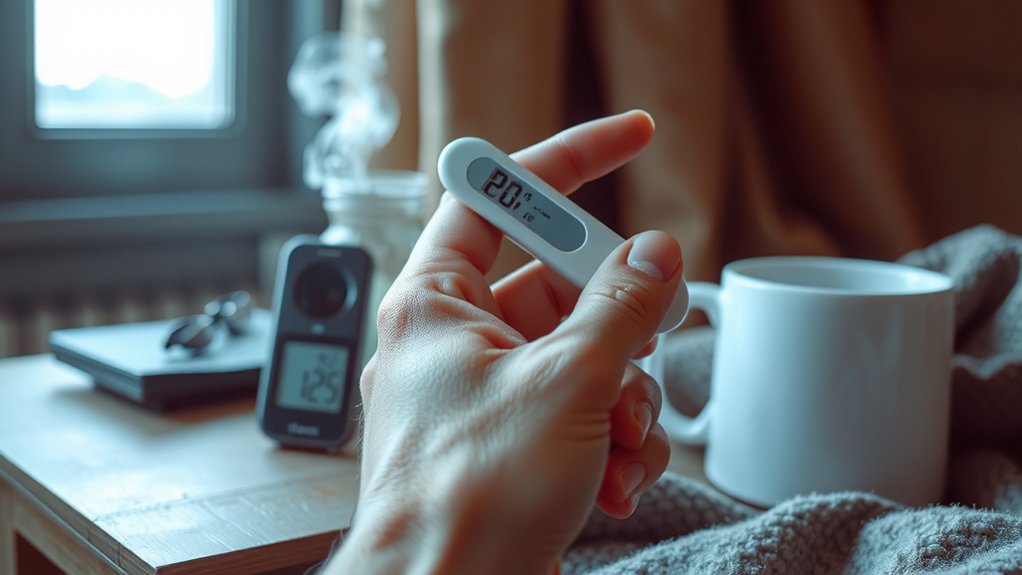
You think there’s one perfect body temp—cute. Typical ranges hover around 97 to 99°F but your normal shifts with time of day, hormones, stress, and, yes, real life. Mouth reads lower than rectal, ear argues with forehead, and armpit often lies—so measure the same way, same spot, same time, or admit you’re guessing.
Typical Temperature Ranges
Most people treat 98.6°F like gospel—news flash, it’s a myth. You’re not a statue. Your temperature moves. Typical healthy range runs roughly 97°F to 99°F, sometimes a bit wider. Morning runs cooler. Late day climbs. That’s not failure. That’s biology. Historical norms came from tiny samples and cranky thermometers. Modern research findings keep shouting the same thing: humans vary. Teens run hotter. Older adults often sit lower. Hormones swing the dial. So does hard exercise, dehydration, stress, and lousy sleep. Eat a big meal, warm up. Skip food, cool down. Cold room drops you. Fever isn’t the only spike. Anxiety can do it. Meds too. Track your baseline for a week. Know your number, not your neighbor’s. Then judge deviations, not myths. Act now.
Measurement Site Differences
While the number matters, the body part you measure matters more. You want truth? Pick the right site or accept fiction. Oral reads lower after iced coffee. Axillary runs coolest and slow. Rectal runs hottest, and yes it’s awkward. Forehead? Fast but finicky. That’s Anatomic Variability punching your certainty. Thin kids, sweaty athletes, snorers with open mouths—they skew readings. So fix Sensor Placement. Deep enough rectal. Snug axillary with dry skin. Proper oral under tongue, lips shut, no talking. Wait five minutes after exercise or hot showers. Compare sites consistently. Don’t mix apples and armpits. Track trends, not single blips. Measure like you mean it.
| Site | Typical Range | Factors |
|---|---|---|
| Oral | 97.6–99.3°F | recent drinks, mouth breathing |
| Axillary | 96.6–98.5°F | sweat, arm position |
| Rectal | 98.7–100.5°F | depth, stool |
Common Causes of Low Temperature
You think you’re just “a little chilly”? Cold rain, blasting AC, thin jacket—boom your core drops and your brain shrugs too late. Or your thyroid’s slacking, hormones off the rails, and you keep blaming the sweater; worst case—an infection roars into sepsis, your thermostat goes stupid, and if you wait it out you’re playing chicken with shock, so act.
Environmental Cold Exposure
Even when the air feels “fine,” cold ambushes you. You shrug, you step outside, and bam—heat drains like a busted radiator. Your core cools. Fingers go clumsy. Brain fog rolls in. You call it “brisk.” Your body calls it risk. Wind steals warmth fast. Wet clothes bully faster. Snow? Child’s play compared to a chilly drizzle and a hard gust. Fix it. Upgrade clothing insulation. Dry base layer, wind‑blocking shell, head and hands covered—nonnegotiable. Keep moving, but don’t sweat out your heat. Eat, sip, repeat. Build cold acclimatization with short exposures, then longer, like training legs not ego. Buddy system, always. Shiver’s a siren not a badge. Numb skin lies. Check time. Check face. Get warm now. Don’t bargain. Move fast. Finish the fight.
Hypothyroidism and Endocrine Disorders
Because your thermostat lives in your hormones, a glitch there chills everything. Feel slow, foggy, always cold? That’s classic low thyroid. Your cells idle. Metabolism drags. Heat drops. You pile on sweaters like armor. Doesn’t help. Hypothyroidism slams the brakes, and yes, it’s common. Iodine, autoimmunity, or meds can nudge it. So can Pituitary dysfunction that starves the thyroid of orders.
Check the mirror. Dry skin, brittle hair, weight creep, low pulse. Ring a bell? Stop shrugging. Ask for labs. TSH, free T4, free T3. Numbers matter. Then fix it. Hormone replacement can flip the switch and warm the room. Adrenals join the mess too; cortisol lows sap heat and grit. You deserve fire, not permafrost. Demand answers. No more excuses. Start pushing back.
Sepsis and Severe Infections
When infection detonates inside your body, the thermostat can crash instead of spike. Sepsis flips the script. You expect fever. You get cold, clammy, confused. That’s Immune dysregulation, not drama. Blood vessels dilate, pressure tanks, organs beg. Your brain? Fogged. Your skin? Pale like bad paint. Shivering hard, yet dropping. Not normal. Not tough. Dangerous. Call 911. Now.
Don’t bargain with sepsis. Don’t sleep it off. Rapid fluids, oxygen, cultures, targeted antibiotics. Yes, targeted. Antibiotic stewardship matters, even in chaos, because the right drug saves you and spares tomorrow. Watch for triggers: pneumonia, UTI, an abscess that looked “fine.” If you’re elderly, frail, or on steroids, expect fewer clues. So trust the cold. It’s your alarm. Move. Get help before the lights go out.
Signs and Symptoms to Watch For
How do you spot trouble before it drops you?
Start with the cold that bites then refuses to let go.
Your shivering intensity spikes, ridiculous, like a jackhammer under your skin.
Then it fades. Bad sign.
Fingers go numb, buttons win, zippers laugh.
You stumble. Coordination quits. Coffee spills, pride follows.
Words slur and tangle; your mental confusion isn’t cute, it’s loud.
Thoughts slow, reactions drag, time turns rubbery and mean.
Skin goes pale, maybe blotchy, lips edge toward blue.
Breathing gets shallow, pulse feels thin, energy flatlines.
You feel sleepy at the worst moment, like a siren in reverse.
And the weird one, that fake warmth, the urge to strip layers.
Don’t rationalize it. Notice it. Now. Move.
Your body’s waving red flags.
When to Self-Care, Call a Doctor, or Seek Emergency Help
Why gamble with a dropping core temp? Warm up, drink fluids, get dry. Still shivering hard after 30 minutes? That’s not “toughing it out.” That’s risk. Call your doctor. Slurred speech, clumsy hands, blue lips, or confusion? Stop arguing. That’s 911 now. Infants, older adults, and people on sedatives crash fast; you move faster. Ask for caregiver guidance if you’re monitoring someone fragile. Set a follow up timing plan so symptoms don’t drift into danger.
| Situation | Action | Urgency |
|---|---|---|
| Mild chill, alert | Self-care | Now |
| Persistent shiver >30 min | Call doctor | Same day |
| Confusion or slurred speech | Emergency | Immediate |
| Infant or elder affected | Call doctor | Rapid |
Don’t wait for perfect conditions; act, then reassess. If doubt nags, treat it as danger, not drama. Move. Now. Seriously.
How to Check Temperature Accurately
Think you’re cold? Prove it. Grab a reliable digital thermometer, not that antique under the sink. Sit still. No heroic shivering. Measure oral, axillary, or rectal—pick one, stick with it, and stop hopping methods mid‑day. Clean the tip first and after. Hygiene practices aren’t optional, unless you enjoy germs as roommates. Check Device calibration; yes, it drifts, and yes, that matters. Use ice water or a calibration mode if your model allows. Wait 15 minutes after hot drinks, gum, or a shower. Mouth closed. Nose breathing. Take two readings, one minute apart. Average them. Still low? Recheck in 30 minutes in a warm room. Document the time and site. Don’t guess. Don’t panic. Get data. Then act. Numbers beat vibes. Evidence over ego, always.