
Funny coincidence—you scratch your ankle and feel a pinprick, then bam, it burns like a match and itches like poison ivy got petty. The spot turns hot, red, tight. Swells a little. You swear it’s nothing, then muscles twitch, a dull ache spreads, and your nerves start whispering liar. Is it harmless or trouble brewing—blister, black center, cramps, panic? You want the truth. Let’s test your bite story next.
Key Takeaways
- Many bites feel like a quick pinprick with a brief heat bloom, followed by a tight, pushy itch at the site.
- Pain often starts sharp, then shifts to a dull throb with localized redness, warmth, and puffy swelling.
- Venomous patterns include rapidly spreading pain, burning alternating with deep ache, touch hypersensitivity, and muscle cramps or spasms.
- Black widow bites: stabbing pain spreading quickly with severe abdominal cramps; brown recluse bites: target lesion with pale center and delayed deep ache.
- Seek care if pain escalates instead of fading, or if spreading redness, streaks, blistering, fever, or breathing issues occur.
How a Typical Spider Bite Feels in the First Minutes
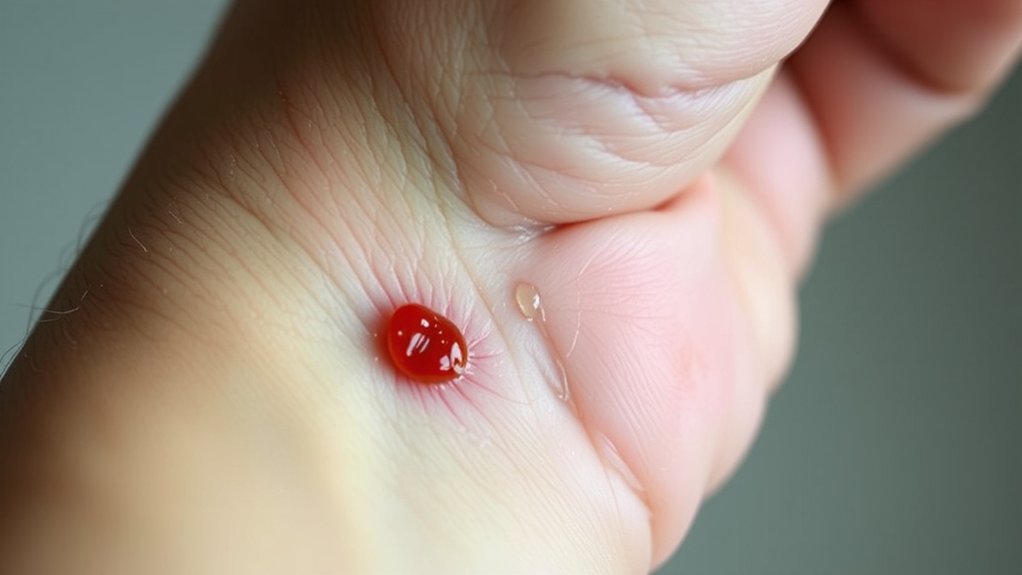
Usually, it starts like a cheap prank—quick, small, and annoying. You flinch before you think. That snap in your nerves? The startle reflex, loud and ridiculous. Pinprick sting, like a static bite with attitude. You slap at nothing. Smooth move. Then heat blooms a little, sharp as a match head. You glare at your skin, squinting for teeth marks you’ll never see. Immediate disbelief. Seriously? From that tiny ninja? The spot nags. Tight. Itchy. A pushy itch that heckles you. You rub, because of course you do. It answers with sass. You mutter, you scan the chair, you accuse the air. Pain stays local, rude but small. It dares you to ignore it. You won’t. Not with your nerves yelling. So scratch, then swear.
Symptom Timeline: Minutes to Days After the Bite
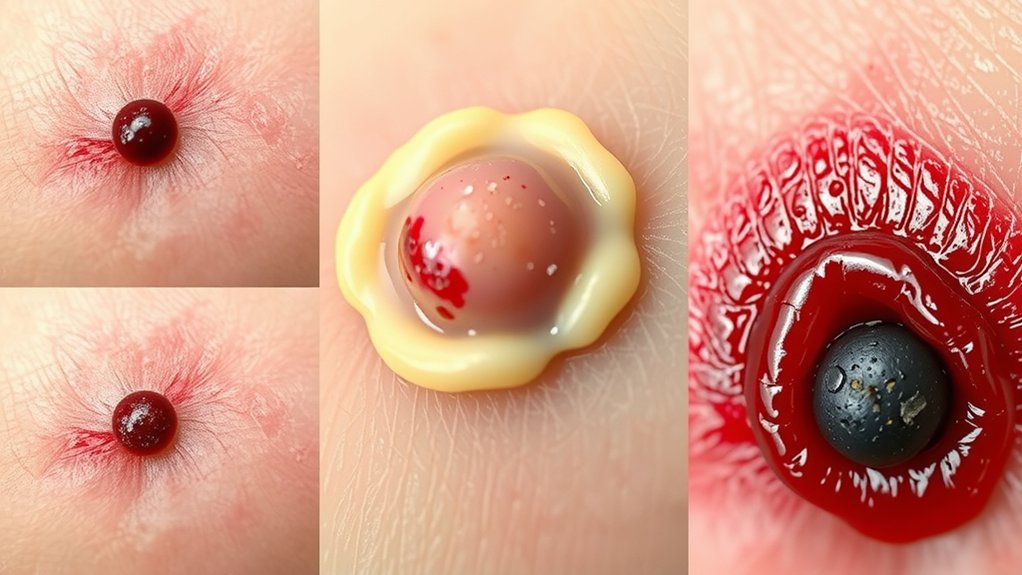
Often it escalates on a schedule your skin never approved. Minutes in, you notice a sharp nag, then a dull throb that won’t take a hint. Your nerves gossip. You feel heat bloom under the surface, like a tiny battery chewing your arm. An hour later, your body gets loud. That’s the Immune response flexing, not subtle, not shy. You feel tightness, maybe tingles, maybe a twitchy muscle that won’t clock out. By evening you’re cranky, headachy, mildly nauseated, swearing it’s nothing—until it isn’t. Sleep? Spotty. Dreams fight you. Next day, fatigue drapes over you like wet denim. Joints complain. Lymph nodes puff drama. Then the slide eases. Recovery duration ranges from a day to several, depending on venom, dose, and you and habits.
Common Skin Changes: Redness, Itch, Warmth, and Swelling
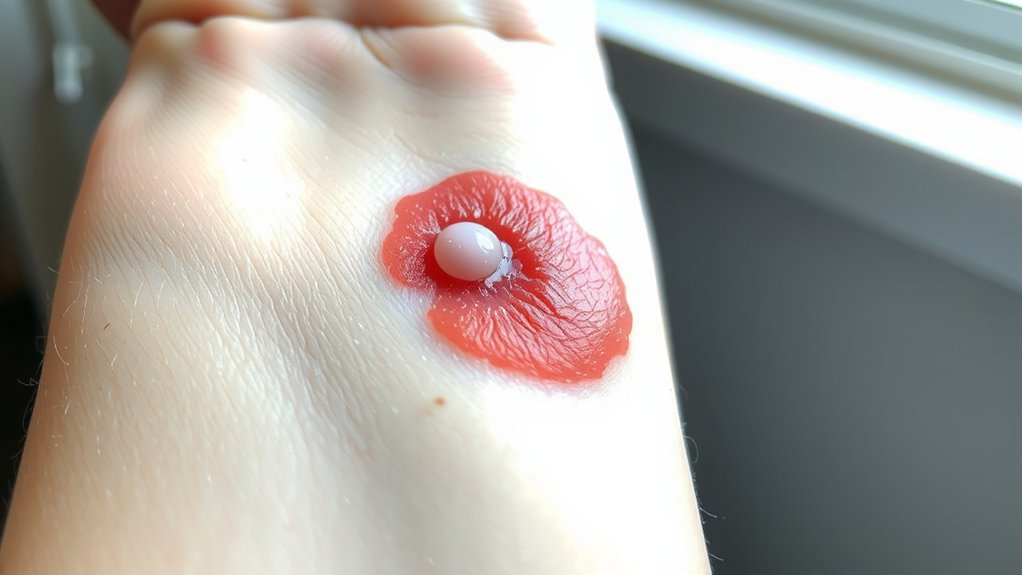
All that noise inside shows up on the surface, loud and rude. You see red first. A hot ring, bossy and bright. Then itch barges in. You scratch, it laughs. Swelling follows, slow but greedy, because vascular permeability just opened the floodgates. Warmth? Your skin’s mini furnace—stoked by immune signaling, not drama. You want calm now. Your body says wait. Elevate, cool, stop picking the scab you’re inventing. Watch the edge. Is it spreading, or just loud? Measure, don’t guess. Snap a photo. Breathe. Hydrate. And seriously, hands off.
| Look | Feel | Why |
|---|---|---|
| Red rim | Prickle itch | Capillaries open |
| Puffy edge | Tight stretch | Fluid leaks |
| Warm patch | Gentle throb | Local mediators |
If it calms within days, good; if not, you call the shots today, hard.
Pain Patterns That Suggest a Venomous Bite
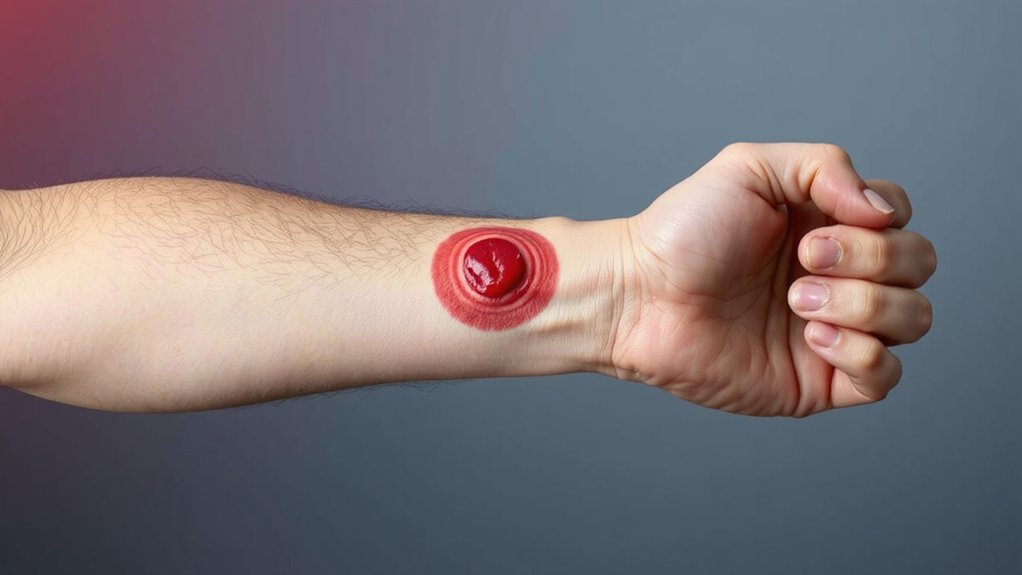
How do you know the bite isn’t just drama but venom picking a fight? Pain that surges fast then keeps marching. It doesn’t stay polite. It spreads up the limb, hooks your joints, makes muscle groups twitch like bad Wi‑Fi. Burning flips to deep ache then back again. Touch hurts too much. Clothes feel like sandpaper. That’s Central sensitization kicking doors. You press the spot and a lightning jolt answers. Then cramps join, uninvited. Stabbing at rest, worse with movement, still there at night. Neurotoxic mechanisms love that chaos, hijacking nerves, spamming signals, turning volume to max. Ice nags it. Heat mocks it. You can’t ignore it. The pattern escalates, not fades. If the pain keeps recruiting new territory, stop guessing. Get help now.
Species Clues: Black Widow vs. Brown Recluse vs. Others
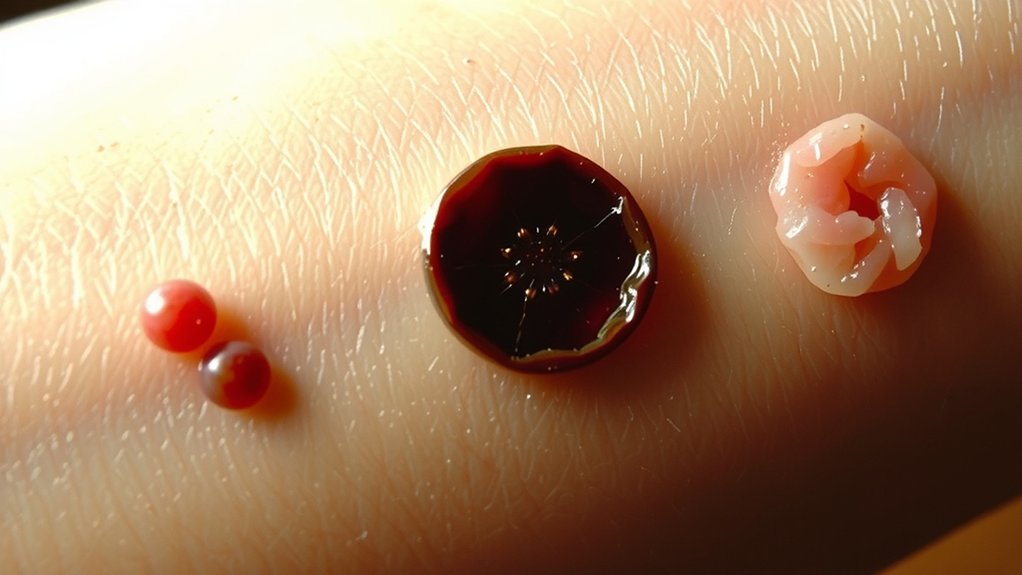
Feel brutal cramps ripping your back and belly minutes after the sting? That’s black widow territory, while a slower burn that blooms into a pale blister then a sinking ulcer screams brown recluse, and most others just sting, itch, and move on. Check the scene—tangled garage web, woodpile ambush, bed at night—because habitat and behavior rat them out and you need answers now.
Bite Pain Patterns
Ever notice how the pain snitches on the spider? Black widow pain stabs, then spreads like hot wires winding through your back and belly. Cramps hit. You sweat. You curse. It escalates fast, and it radiates, like your nerves filed a complaint. Brown recluse pain starts polite, a faint sting, then a dull deep ache that keeps nagging for hours. Creepy quiet, then worse. Not fireworks. A slow grind. Other common spiders? Quick pinch, brief burn, then boredom. You move on. Unless you don’t. Here’s the catch: individual variability wrecks neat boxes. You bring psychological factors too—fear, stress, expectations—so the volume knob swings. Still, patterns talk. Sudden systemic fire screams widow. Delayed deep ache whispers recluse. Fleeting ouch? Probably nobody famous. Take a breath.
Skin Lesion Differences
Pain screams, but skin snitches with receipts. You want species clues? Read the lesion. Black widow bites usually keep the surface quiet—tiny punctures, minimal redness—while your muscles cramp like a vise. Sneaky. Brown recluse bites play dirty: early sting, then a pale center, red ring, sometimes a blue halo. Target sign, then blister, then ulcer. Necrosis if you ignore it. That’s your ugly truth.
Check border definition. Widow lesions look clean and small. Recluse wounds grow ragged, star‑shaped, undermined. You see spread, you worry. For others, think itchy wheals, hives, or simple papules—annoying, not apocalyptic.
Do a fast morphologic classification. Papule, vesicle, ulcer. Central pallor or not. Dry or weeping. Symmetry or chaos. You don’t guess. You document, then act. Fast, focused, no drama.
Habitat and Behavior
While you obsess over the bite, the spider already confessed by where it lives and how it moves. Want answers fast? Track habitat. Black Widow skews garage, meter boxes, lawn chairs. Chaotic Web Architecture under ledges. Night. Brown Recluse hugs closets, attics, cardboard. No web mess, just sheets and retreats. It roams. Others? Cellar, woodpile, window frames. Seasonal Activity screams too: widows surge summer nights, recluses creep spring to fall. You missed that? Look harder. Observe. Stop guessing. Start stalking the scene.
| Species | Hangout | Telltale Move |
|---|---|---|
| Black Widow | Garages, chairs, meter boxes | Hangs upside, jerks on silk |
| Brown Recluse | Closets, attics, cardboard | Wanders flat, hides under stuff |
| House/Cobweb | Basements, window frames | Quick starts, messy web shake |
| Wolf/Jumping | Lawns, patios, walls | Darts, pounces, no web |
Spider Bite or Something Else? Mosquito, Tick, Bee, and Infection
How do you tell a spider bite from the million other things that chew, stab, or infect you? Start with the story your skin tells. Mosquitoes leave itchy welts. Fast. Spiders? Two tiny punctures, maybe a sharp pinch, then a slow burn. Ticks play hide-and-suck. You’ll find a stubborn dot with legs, not drama. Bees hit like a match. Instant fire. Maybe a stuck stinger. Infection feels sneaky. Warm, angry, thick, and pushy over time, not a single moment. Still guessing? Use photo comparison, not wishful thinking. Match shape, color, center, edge. Zoom in. Be ruthless. Or go nerdy with lab diagnostics when it actually matters. Don’t glorify spiders for every bump. Own the evidence. Decide. Act. Then move on. Seriously. Stop blaming everything.
What’s Normal vs. Concerning: Red Flags to Watch For
You sorted the suspects. Now call the shot: normal vs nightmare. Normal looks boring—small red bump, mild itch, faint sting, tenderness that fades in a day or two. Annoying, not epic. Concerning? It escalates. Fast. Pain spreads beyond the spot. Swelling balloons. Heat surges. Red streaks climb like warning flares. Fever hits. Nausea follows. Blistering or a growing ulcer? That’s not cute. Anaphylaxis Signs slam hard—hives everywhere, lip or tongue swelling, wheeze, hoarse voice, dizziness, fainting. That’s an emergency, not a vibe. Neurological Changes matter too—muscle cramps, rigid belly, tremor, numbness, weakness, confusion. Can’t move a finger right? Take that seriously. Pus, foul drainage, or skin turning purple-black? Stop pretending it’s fine. Get evaluated. Yes, urgently. Today. Don’t wait, don’t bargain, act without delay.
First Aid and At-Home Care That Actually Helps
First, clean the bite right now—soap, water, rinse hard, don’t baby it, because germs don’t care about your feelings. Then slap on a cold compress, ten minutes on ten off, because swelling is a drama queen and you’re not giving it the stage. If pain spikes, redness spreads, you get a fever, nasty blister, or any breathing trouble, stop playing tough and get medical help fast—yes, today, not after your shows.
Immediate Wound Cleaning
Before panic wins, clean the bite—fast and on purpose. You saw the mark. Now act. Wash your hands or, better, use gloves. Yeah, glove use isn’t glamorous. It’s smart. Rinse the area with cool running water. Not a dribble. A flood. Add mild soap. Lather like you mean it, then rinse again. Don’t gouge. Don’t pop anything. You’re not a mechanic. Pat it dry with a clean towel or sterile gauze. Fresh only. No crusty bathroom rag. Apply a thin layer of antiseptic. Just a film, not frosting. Cover with a small bandage if it rubs on clothing. Change it daily. Trash the used gauze properly—waste disposal matters. You want bugs? Because that’s how you get bugs. Stay sharp. Stay clean. Right now. Seriously.
Cold Compress Application
While the sting still screams, hit it with cold—hard and smart. Grab a cold pack or a bag of ice wrapped in a thin cloth. Not bare. That’s Skin protection, genius. Press it on the bite for 10 minutes. Then off for 10. Repeat. You’re the thermostat, so do Temperature monitoring like you mean it. Numb the fire, don’t freeze the skin. If it hurts, lighten up. If it tingles, good. Keep the limb still and elevated—less throb, less drama. No crushed ice straight on flesh. No heat, no rubbing, no heroic squeezing. You want calm, not chaos. Pair the cold with deep breaths. Short. Slow. Own the pain, then shrink it. Watch the swelling. Respect the clock. Cycle the cold. Control wins. Today.
When to Seek Care
Ice bought you time. Now stop pretending it’s fine. Seek care if pain spikes, redness races, or you feel dizzy, sweaty, or short of breath. Face or genitals bitten? Don’t wait. Kids, pregnant, immunocompromised? Go now. Severe cramps, rigid belly, or a bull’s‑eye blister scream widow or recluse. Infection wins when pus, fever, or streaks show up. Tetanus shot rusty? Ask.
At home, wash, elevate, ice in rounds, antihistamine for itch, ibuprofen for pain. No cutting, burning, or miracle oils. Photo the bite. Time‑stamp it. Track size.
Call urgent care, not Dr. Internet. Ask about Insurance coverage before you sit. No surprises. Plan Follow up logistics today, not someday. If breathing or swelling goes wild, hit 911. You hesitate, you lose. Not tomorrow. Move.
When to Seek Medical Care and What to Expect
Even if you’re tough, know the line. Fever, streaking redness, spreading pain—don’t flex, act. If your lips swell or you wheeze, call 911. If the bite turns black or you can’t move a joint, urgent care now. Not later. You want proof? Pus, chill, or crushing cramps mean trouble.
Start fast with a Telemedicine consultation. Show the bite. Answer blunt questions. Expect photos, vitals, and triage. If it looks nasty, they’ll push you in. Labs, tetanus check, pain control, maybe antibiotics. Rarely antivenom. And yes, a shot that stings.
Bring the timeline, meds, and allergies. Demand Insurance guidance up front. Don’t guess the bill. Ask costs. Ask options. Get follow‑up, wound care, red‑flag symptoms. Then watch it like a hawk. Improve or escalate now.