
You slam your toe and it screams—knife‑stab sharp, then a bossy throb that won’t shut up. Swelling balloons. Purple blooms. It’s tender to a tap, hates shoes, stiff like wood. Walk? You limp or cheat. It might look crooked, feel numb, even leak blood under the nail. Cold bites harder. Think it’s “just a stub”? Cute. Some signs say ER, not ice. Want the list—and what to do next?
Key Takeaways
- Sudden sharp pain at injury, often followed by intermittent dull, throbbing ache.
- Pinpoint bone tenderness; tapping the toe triggers focused, sharp pain.
- Rapid swelling with tight skin and bruising that turns purple, blue, or black.
- Toe may feel stiff, very tender to move, with limited or grinding movement.
- Walking hurts; the toe is sensitive to pressure and cold, often causing a limp.
Common Symptoms of a Broken Toe
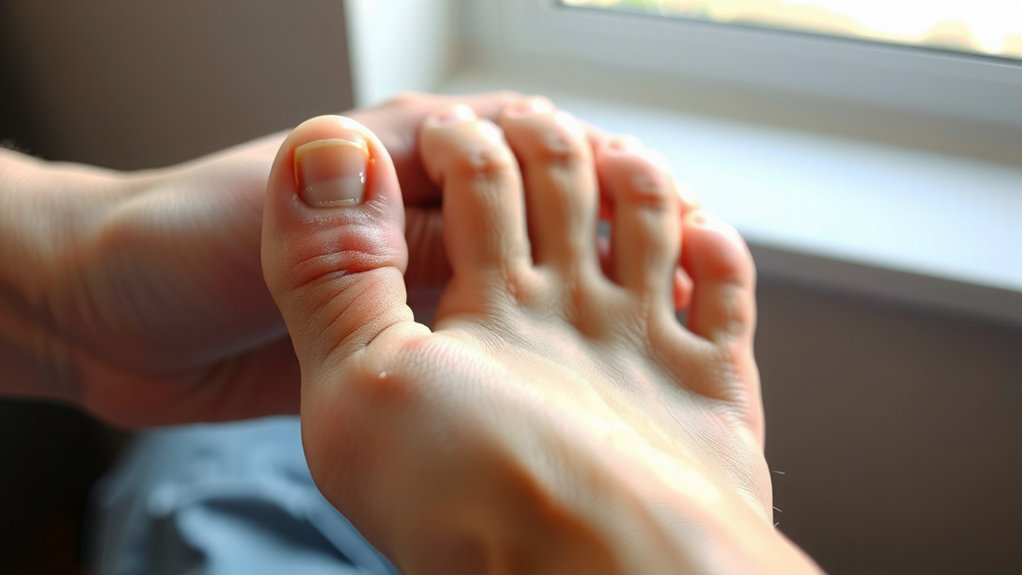
Because you didn’t just “bump it,” your toe screams the second you stand. Pain punches. Sharp. Then dull. Then back again—intermittent throbbing that stalks you down the hall. Swelling balloons the joint, your shoe suddenly a torture device. Color? Oh yes. Angry purple, bruised blue, sometimes a scary black halo. You touch it—bad idea. Tender like a bad secret. Move it and it snaps back with heat and a mutinous jolt. Cold sensitivity kicks in too; a draft hits and you wince like ice knives. Walking turns lopsided, pathetic, louder than you’d like. Stiffness sets like wet cement. Pop, click, protest. The nail may bleed. The skin feels tight. You’re avoiding stairs. You’re negotiating socks. Admit it. It hurts. And no, not tomorrow, now.
Broken Toe vs. Sprain: How to Tell the Difference
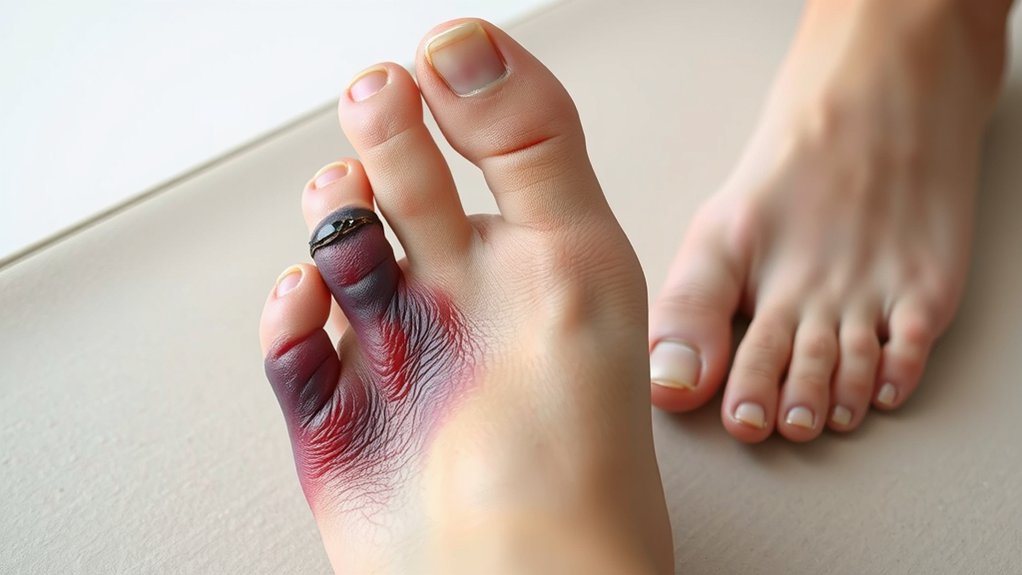
All that pain, all that drama—fine. You want answers. Broken toe or sprain? Start with Mechanism Differences. Drop a dumbbell on the toe—think fracture. Twist it hard in a shoe—think sprain. Direct hit breaks bone; awkward torque trashes ligaments. Now feel it. Sharp, pinpoint bone pain that screams with a tap? Broken. Broader ache with stretch? Sprain, hello Ligament Involvement. Look at it. Crooked toe, short or rotated, nail bed bleeding, instant swelling like a balloon—broken. Bruise spreads but lines stay straight—sprain. Try motion. You can wiggle a sprained toe a little; a fracture rebels, maybe grinds. Press the shaft. Bone tenderness over one spot wins fracture. Press the web or sides—softer, diffused pain favors sprain. Weight-bearing? Fracture says nope—sprain says maybe. For now.
When to Seek Medical Care
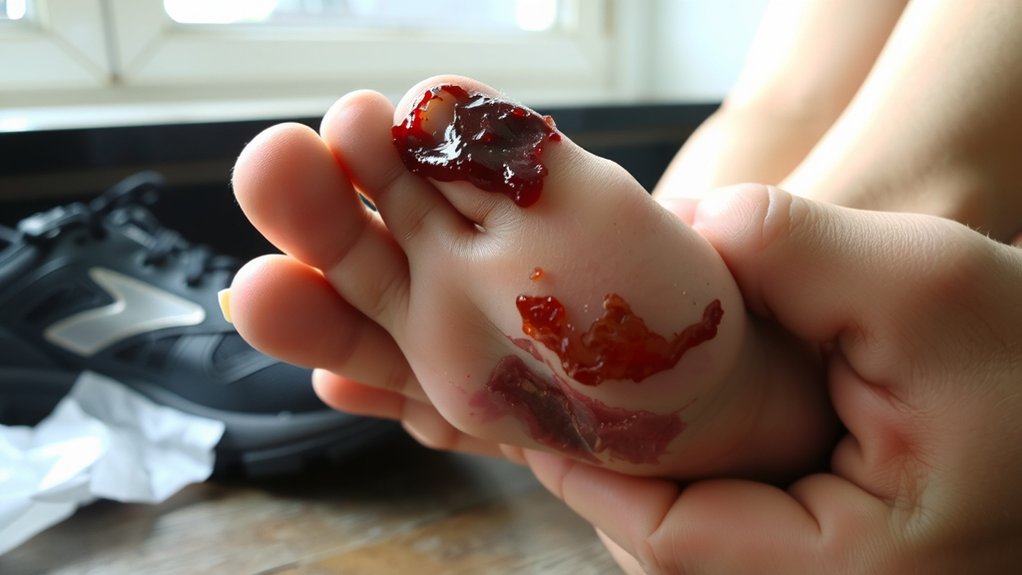
If your toe is crooked or twisted or numb like a dead battery, you stop the hero routine and get care now. Can’t bear weight without hopping, grabbing furniture, or swearing—guess what, you’re not “fine,” you’re injured. Call urgent care or your doctor today because you want a working foot, not a long‑term science experiment.
Severe Deformity or Numbness
When your toe looks crooked or your skin feels dead, stop pretending it’s fine. That twisted angle isn’t “swelling,” it’s a billboard screaming fracture. Numbness isn’t toughness. It’s nerve trouble. Compressed, torn, or just angry. You wait, you gamble. With sensation. With blood flow. With neuroma development that turns every step into a hot wire. And your brain adapts the wrong way—cortical reorganization—teaching pain as the new normal. Brilliant, right?
Check color. Blue? Ghost white? Cold like a soda can? That’s not quirky. That’s risk. Pins and needles that don’t quit? Not cute. Lose the DIY hero act. Tape and hope won’t realign bones or rescue nerves. Get an X‑ray. Get a real exam. Go today. Not later. Not “after work.” Now. Go. Seriously.
Inability to Bear Weight
Though you swear it’s “just a stub,” you can’t stand on it without wincing, flinching, or cheating your weight to the other foot. That’s not bravery. That’s denial. If the toe won’t carry you across the room, it’s screaming fracture. Sit down. Look at your limits. You hobble, you hop, you curse, but you don’t walk. That’s the red flag.
Call a clinician today. Not tomorrow. You need X‑rays and a plan. Buddy taping won’t fix a displaced break, and pain this savage deserves real help. Ask about Mobility aids. Crutches, a stiff‑soled shoe, a boot. Expect temporary Work restrictions. No marathon shifts, no hero sprints. Elevate, ice, medicate as directed, then actually rest. Keep pushing? Enjoy a slower, messier heal, plus new problems.
Home Care and Self-Treatment Tips

Because toe pain won’t baby itself, you need a plan. You rest, now. Elevate that foot like it owes you rent. Ice it 15 minutes, on and off, ruthless and regular. Wrap the toe with buddy tape and a thin pad, not a tourniquet, just firm. Sock modifications help: cut a pressure window, switch to wide, cushioned socks. Wear a stiff‑soled shoe or a walking sandal; no flimsy sneakers, no heels, obviously. Night padding protects you from the midnight sheet ambush. Pillows under the calf, toes floating free. Keep steps short. Keep floors clear. Pain meds? Use acetaminophen or ibuprofen as directed, not heroics. If pain spikes, stop. Swelling up, foot purple, numb or cold? Don’t argue—unweight it, protect it, and seek care today.
Diagnosis and Imaging: What to Expect
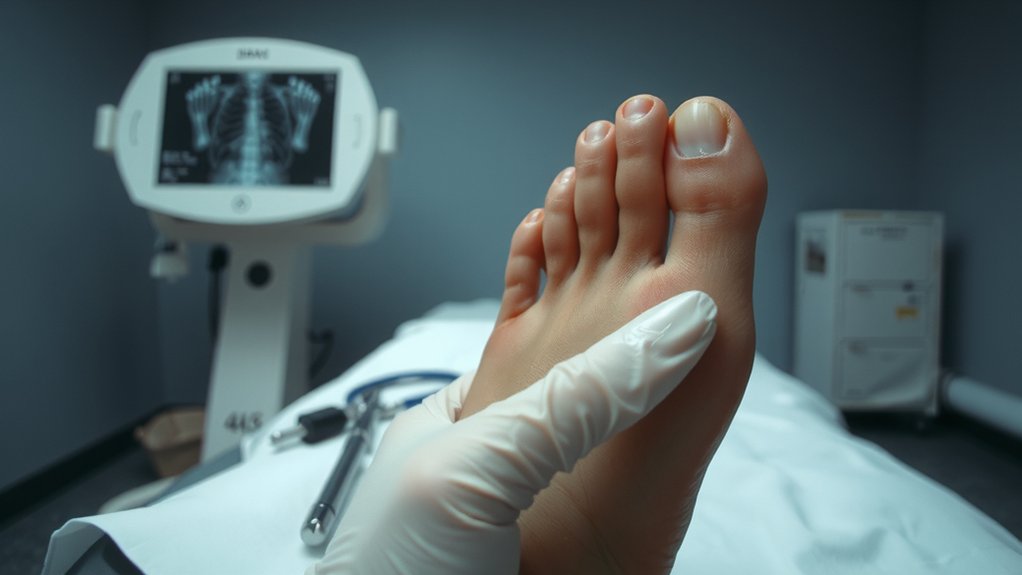
How do they actually know it’s broken and not just “angry toe drama”? First, a clinician grills you. How, when, where. Then they poke the toe. Hard. They check alignment, skin color, cap refill, nerve vibe. You wince. Good. Data.
Now imaging. You get X-rays. Not one lazy snapshot, either. Proper X ray positioning matters, with multiple views, maybe weight‑bearing if you can stand the heat. They compare sides. They hunt for cracks, joint step‑offs, sneaky dislocations.
Still murky? Cue ultrasound utility. It spots hematomas, tendon tears, even a tiny cortical break trying to hide. Fast, bedside, zero radiation.
Edge cases demand CT or MRI when the joint looks cursed or pain screams but films play dumb. Bottom line. You want answers, not guesses.
Recovery Timeline and Prevention Strategies
While the toe sulks, you run the clock. Week one, you fight swelling, ice and elevation like it’s your job. Pain rules, you obey. By week two to three, bruises fade, motion creeps back, and you start light weight bearing without pretending you’re invincible. Those are healing milestones, not trophies. By weeks four to six, walking feels honest again. Push past that, you pay.
Now prevention. You love shortcuts? Don’t. Tape the buddy toe. Wear a stiff‑soled shoe. Ditch flimsy sandals. Inside at night, clear the floor war zone. No midnight Lego ambush. At the gym, own activity modification. Swap sprints for the bike. Lift seated, not swaggering. Sports return? Earn it with balance drills and calf strength. Rush the comeback, repeat the break.