
No, it’s not “just your smile.” If your top teeth bury the lowers, that’s an overbite. Think half-hidden lower incisors, a tight smile, maybe a puffy upper lip or a chin that ducks back. Photos don’t lie. See a dark strip under the lip? Palate dents? That wear isn’t “normal,” it’s warning. Want the quick mirror test and the fix that actually changes your profile? Good—because you’ll spot it today.
Key Takeaways
- Upper front teeth overlap lower teeth when smiling; lowers may be hidden.
- Ideal overlap is 2–3 mm; overbite looks excessive when coverage exceeds about half of lower incisors.
- Side profile: upper incisors and upper lip protrude ahead of lowers; chin may appear recessed.
- A deep overbite compresses the smile, shows little lower teeth, and can leave palatal bite marks.
- Simple at-home checks: gentle bite closure, mirror photos, chewing symmetry, and saying “f,” “v,” “s” to notice abnormal effort.
What an Overbite Looks Like at a Glance
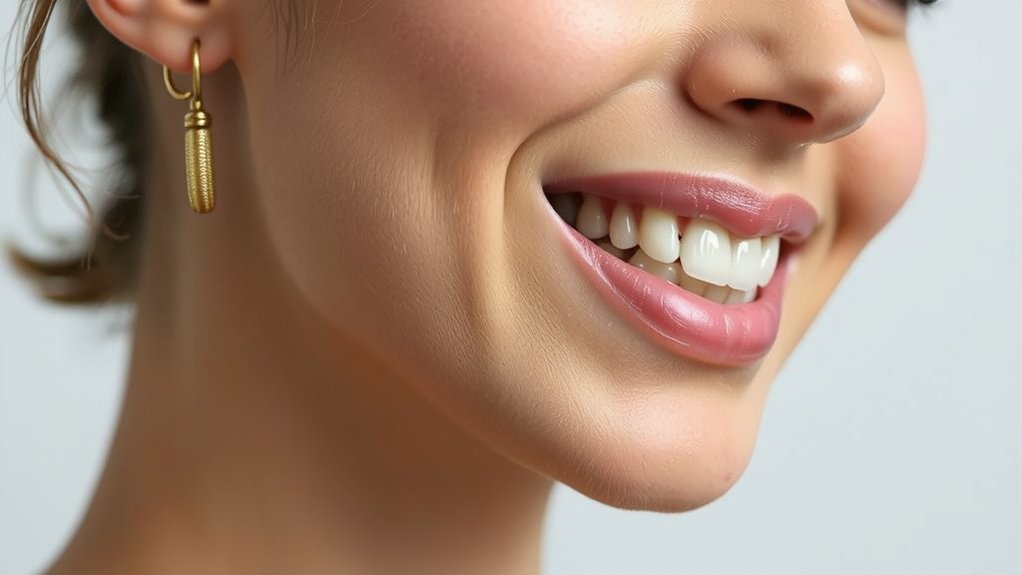
Ever glance at your smile and notice the top row hogs the stage? That’s an overbite shouting, I run this show. Your upper incisors drop forward, curtain down over the lowers, stealing light in photos and mirrors. Teeth peek first, lips play catch‑up. Jaw looks tighter, chin seems shy. You see shadow lines under the top teeth, like tiny awnings. Close your mouth and the upper edge still presses its opinion. Look from the side. The profile says, drama. You want quick fixes? Try angles, not excuses—tilt your head, lower the camera, test these photography tips. Soften the contrast with makeup concealment—lighter on the chin, depth under the lip. Don’t hide forever. Name it. Own it. Then plan what’s next. Start bold, smile sharper—now.
Normal Overlap vs. Deep Overbite
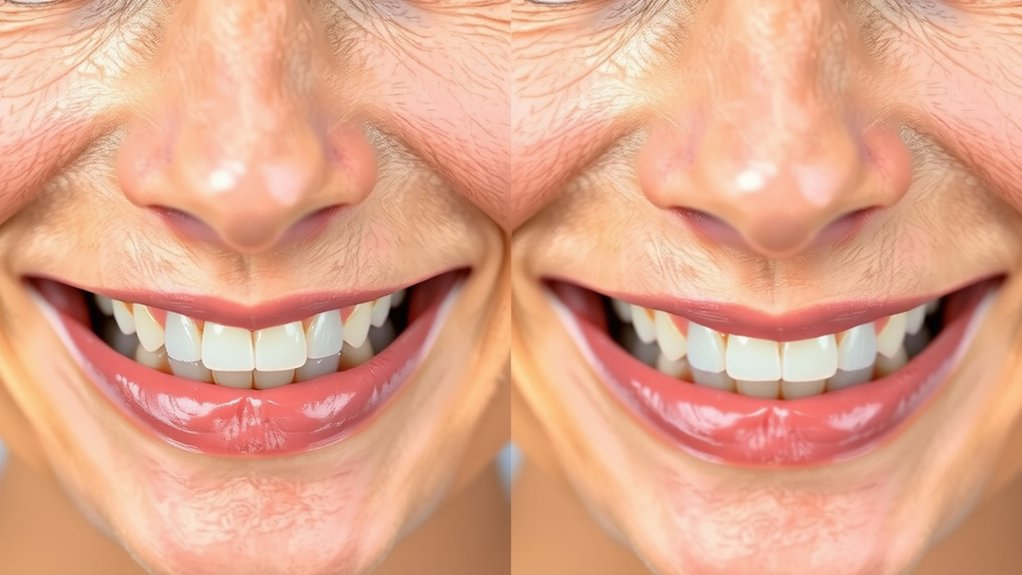
You need a simple target: about one‑third to one‑half of your lower front teeth covered—clean, controlled, normal. If your uppers bury the lowers, your lower teeth tap your palate, or your smile looks cramped, that’s a deep overbite—own it. Ignore it and expect chipped edges, gum trauma, jaw pain, headaches, and a worn, older look fast, so stop pretending it’s fine.
Ideal Vertical Overlap
While a smile seems basic, the vertical overlap decides who’s in charge—your top teeth or your bite.
You need balance, not drama.
Ideal means your upper incisors cover about a quarter to a third of the lowers.
Think 2 to 3 millimeters.
Enough to guide chewing, not enough to bully.
Too little and your bite wanders.
Too much and it steamrolls.
You feel that difference every time you snap into a sandwich.
Yes, numbers matter—because your jaw listens.
Cultural aesthetics whisper one thing, but biology sets the beat.
Historical standards worshipped tiny mouths and dainty chins.
Cute, sure.
Functional, not always.
Aim for harmony.
Centered contact.
Clean glide.
Teeth meet, then release.
You own the bite, not the other way around.
Demand it today.
Deep Overbite Indicators
Because numbers matter, the line between normal overlap and a deep overbite isn’t vague—it’s a tripwire. Two to three millimeters, fine. Four, five, more—now we’re blowing past the guardrail. You see less lower teeth. You see upper incisors swallowing smiles. Your bite marks your palate with palatal scalloping. Subtle? Please. Your bite closes fast, your smile compresses, your chin looks tight on photos. Mirrors don’t lie. Photos don’t either. Try saying “s” and hear the slide—a speech lisp sneaks in. Chewing feels loud. Lips strain. The front teeth look long, almost bossy. You hide your grin, then deny it. Stop. Look straight on, then profile. Count coverage. If the uppers blanket half or more of the lowers, you’ve got the message. Loud. Clear. Now.
Risks and Complications
If the overlap stays in the 2–3 mm lane, your mouth mostly cruises; push past it, and the crash costs start stacking. Teeth hit wrong. Enamel shatters, fillings quit, gums retreat. You chew like a grinder, not a human. Jaw joints howl. Headaches clock in early, stay late. Bite deeper and your lower incisors saw the palate—yep, literal dents. Ulcers follow. Bad breath tags along. Sound dramatic? Good, because it is. Crowded bite narrows the arch, nudges the tongue back, flirting with airway obstruction and even sleep apnea. Speech blurs. Smiles look tense. Confidence drops. Your dentist? Constant repairs. Your wallet? Lighter. Orthodontics waits either way. Fix it early, pay less pain. Ignore it, and fractures multiply. Jaws adapt, but teeth always lose, eventually.
Front View: How Much Should Upper Teeth Cover Lowers?
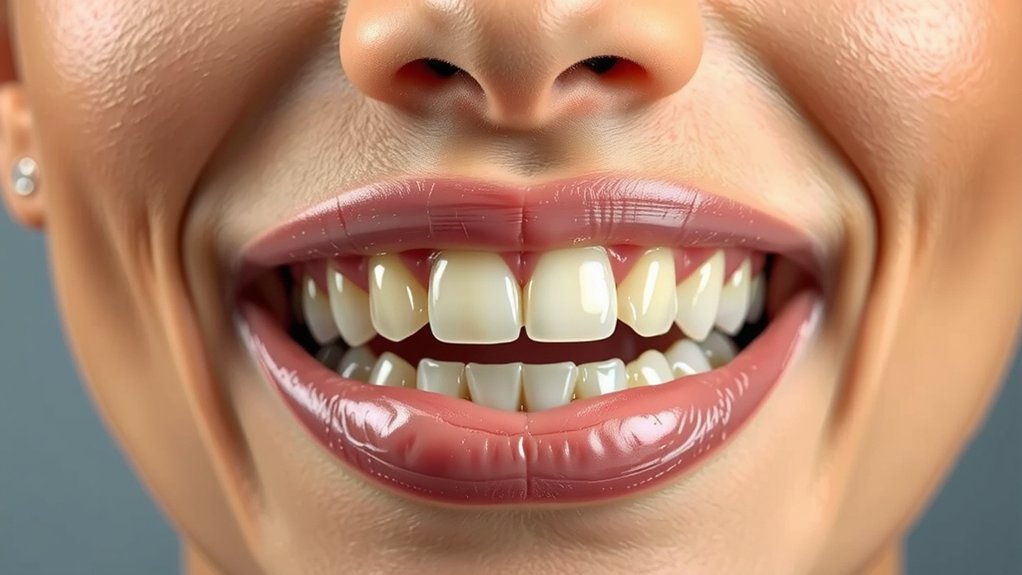
You should see your uppers cover about one third to one half of your lowers—clear, simple, non‑negotiable. If your uppers swallow the lowers, you’re not special, you’re crushing enamel, nipping gums, and daring your jaw to ache. But if they barely cover at all—hello edge‑to‑edge grind, hello chips, and yes, hello “why do my teeth look shorter?” now today.
Ideal Coverage Percentage
Two numbers matter: 20–30%. That’s your target window when you smile straight on. Your upper incisors should cover the lowers by about a quarter. Not half. Not barely. A quarter. You want balance, not drama. Think clean lines, even light, no weird shadows. You can measure with a mirror and a photo. Eyeball the overlap against the tooth height. Don’t invent math. Use common sense. Clinicians do, with reporting standards and confidence intervals, but you don’t need a lab coat to spot harmony. If the uppers hide just the right slice, your bite looks calm and strong. Chewing feels natural. Speech stays crisp. Cameras love it. You’ll know because it looks obvious. Right ratio. Right now. Stop guessing. Start checking. Own your smile today.
Signs of Excessive Overlap
Miss the 20–30% window, and the warning lights start flashing. In the mirror, you don’t see lower incisors, you see a disappearing act. Upper teeth hog the stage. Fifty percent, sixty, more? That’s not “cute.” That’s crowd control by enamel. Your jaw clamps. Your lips strain. Chewing gets weird. S sounds smear, T taps stumble—hello speech difficulties. You tilt your chin to compensate, then wonder why neck tension stalks you by lunch. Chips on lower edges. Red notches on the palate. Bite marks where your teeth kiss the gums like tiny vandalism. Tender front teeth? Of course. Your smile looks heavy, like a curtain that won’t lift. Test it now: bite and show. If lowers vanish, stop pretending. That’s excessive overlap. Fix it fast.
When Coverage Is Insufficient
When coverage drops below the 20–30% sweet spot, the bite stops behaving. Your uppers barely shield the lowers, so edges clash. Chips happen. Sensitivity screams. You feel it when you snap noodles, bite apples, kiss. Chewing difficulty shows up fast, like your jaw forgot the playbook. And yes, speech changes sneak in—whistling S sounds, lazy Fs. Cute? No. Your jaw muscles overwork, your joints complain, your smile looks collapsed not cool. Food slips forward. Lips strain. You start avoiding crusts and confidence. Enough? Look in the mirror, straight on. You should see a modest overlap, not a near tie. If you see twins, you’re under-covered. Stop guessing. Get an exam, photos, and a plan. Stabilize. Add coverage. Protect enamel. Own your bite. Starting now.
Side Profile Clues You Can Spot in Photos
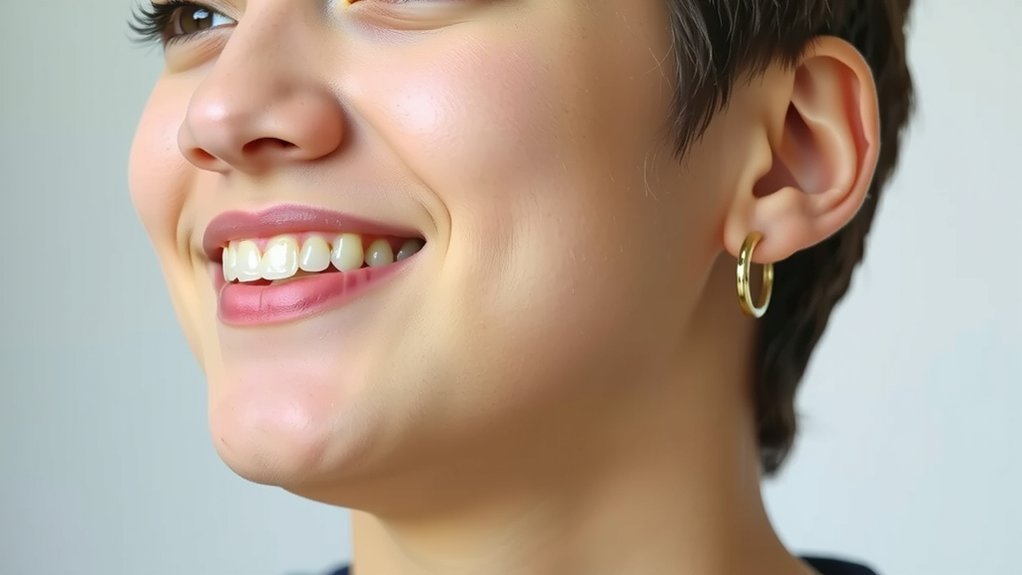
How do you spot an overbite from a side pic you already posted without thinking twice? Start brutal. Check the camera angle. Low shot makes your chin retreat. High shot fakes a hero jaw. Face true profile. No cheating. Now squint at lighting shadows. See that dark strip under the upper lip? That’s overlap bragging. Upper teeth push ahead, lower lip looks trapped, chin sulks. Nose to chin line—draw it with your finger—do the incisors jump the queue? Be honest. Lips closed? Do they bulge like a secret? Smile? Do the upper edges bury the lowers like a snowplow? Screenshot. Zoom. Compare photos on different days, same pose. Consistent clues shout truth. Filters lie. Angles lie. Your side profile doesn’t. Face it right now.
Dental Overbite vs. Skeletal Overbite
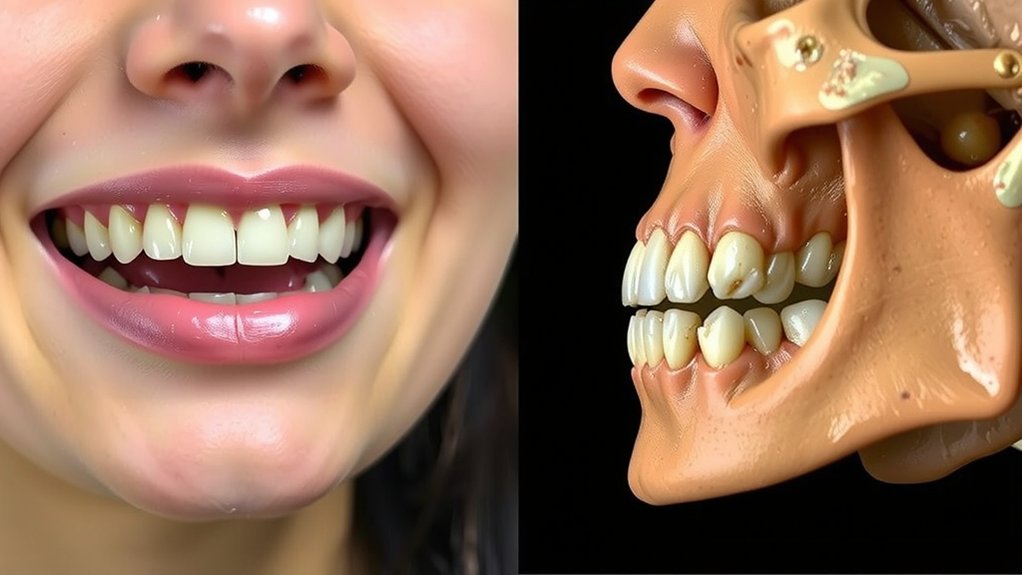
You think it’s just teeth—cute—because a dental overbite is about tooth position, but a skeletal overbite screams jaw-bone mismatch from growth patterns, habits, or straight-up genetics. So what now—guesswork? No; your orthodontist measures, takes photos and X-rays, calls the cause, then you face the fix: braces or aligners and elastics for dental issues, jaw-guiding appliances in growing kids or surgery in adults for skeletal ones—pick your battle and stop stalling.
Causes and Anatomy
Teeth or bones—that’s the fight. Your overbite starts with parts at war: teeth drifting forward, or jaws growing off‑track. Dental? You crowd, tip, and flare the incisors; habits push them—thumbs, tongues, even sloppy posture. Skeletal? The maxilla outruns the mandible, or the mandible stalls, because growth plates and cranial sutures set the blueprint while hormones hit fast and hard. Jaw musculature piles on; tight, overactive, or lazy muscles yank bones and teeth into bad positions. Genetics whispers, then shouts. Early mouth breathing narrows arches. Late bottle or pacifier time? Yeah, that too. Trauma can twist growth. Asymmetry sneaks in; you chew one side, the bite tilts. Result? Vertical overlap deepens. Not cute. Not “minor.” It’s structure versus surfaces. Choose your culprit. Face pays, daily.
Diagnosis and Treatment
Although the overlap looks the same in a mirror, the source decides everything: teeth gone rogue or jaws off track. You need proof, not guesses. Your orthodontist checks your bite, measures overjet, and orders Diagnostic Imaging. Photos. Ceph X‑rays. Maybe 3D scans. If teeth drift, that’s dental. Braces or aligners move them. Elastics pull. Small reshaping trims crowding. Bite turbos stop clashing. Easy? Not quite. If bone is the bully, that’s skeletal. Kids get growth guidance with functional appliances. Adults? Orthognathic surgery plus braces. Scary word, real fix. Pain now, peace later. You want results or excuses. Choose. Stick with retainers or watch relapse sprint back. Show up. Do elastics. Keep appointments. Demand Follow up Care. Own the bite, or it owns you today.
Common Signs Beyond Appearance (Wear, Chipping, Gum Impact)
When an overbite shows up, the real trouble isn’t the mirror. It’s the grind. Your front teeth hit too soon and wear like sandpaper. Edges chip. Little flakes, then bigger fractures. You feel Tooth sensitivity with cold water, like a lightning jab. Fun, right. Your back teeth overwork, crack lines spread, fillings fail. Gums protest. They recede, get puffy, bleed after a normal brush because pressure lands wrong. And the bites you never planned? Cheek biting, tongue nicks, tiny but brutal. Joints pop. Morning jaw aches laugh at your coffee. Breath worsens when food traps in uneven contacts. Don’t call it cosmetic. It’s mechanical. It’s chronic. It’s avoidable damage stacking daily. You can ignore it. It won’t ignore you. Not cute. Not harmless. Now.
Self-Check: Simple At-Home Ways to Assess Your Bite
How sure are you that your bite isn’t bossing you around? Close your jaw gently. Don’t clench. Do your front teeth cover most lowers? That’s your first flag. Now test chewing symmetry. Bite a cracker on the left, then the right. Hear a louder crunch on one side? Feel crumbs collect in one cheek? That imbalance is calling you out. Grab a mirror. Smile hard. Do the top teeth sit far ahead in profile? Take a selfie from the side. No filters. Brutal truth.
Next, speech assessment. Say “f,” “v,” “s,” and “ch.” Do your lips work overtime, do your tongue hiss or spit? Not cute. Finally, jaw comfort. Open three fingers wide. Pain or clicks? You’ve got data. Stop guessing. Write it down.
Why Overbites Happen: Genetics, Habits, and Growth
Blame runs in two directions—your DNA and your daily habits. You inherit jaw size, tooth size, even bone timing. Thanks, family. Then you stack habits: thumb sucking, lip biting, mouth breathing. Night grinding. Phone neck. Jaws drift. Teeth follow. Growth hits like a drumline, not a lullaby, and tiny mismatches explode. And yes, socioeconomic determinants shove too—food access, care access, stress, sleep. Cultural norms matter—bottles forever, pacifiers as trophies, soft diets that baby your bite. You think you’re immune? Cute.
| Root Cause | Snapshot |
|---|---|
| Genetics | Small jaw vs big teeth |
| Habits | Thumb suck, mouth breathe |
| Growth | Spurts skew timing |
| Environment | Stress, soft foods |
No villain. Just inputs. You choose some. Others choose you. Adjust what bends. Don’t excuse what you control. Start fixing it now.
When to See a Dentist or Orthodontist
If your bite is chewing you instead of your food, book the chair. You don’t wait for a tooth to wave a white flag. You go when your front teeth cover most of the lowers, when edges chip, when gums recede, when jaws click. Pain? Go. Headaches on waking? Go. Mouth-breathing, snoring, speech lisp, or chewing like it’s a chore? Go now. Kids? First check by age seven. Adults? Yearly evaluation, sooner if something changes. Appointment timing matters—don’t chase emergencies, prevent them. Photos and quick videos help. Use telehealth options for a fast screen, then commit to an exam with x‑rays and measurements. Second opinion if you smell doubt. Delay is a decision. And it’s the wrong one. Book. Show up. Bite fights back.
Treatment Options and What Results Look Like
You booked it. Now act like it. Braces, clear aligners, bite plates—pick your weapon. Mild overbite? Aligners snap on, stealthy, steady. Big bite? Braces move bone and bite, not just vibes. Rubber bands pull. Sometimes extractions. Rarely surgery—yes, real knives, real payoff.
You want results. Straighter teeth, less jaw strain, no lip bite, a cleaner smile line. Photos don’t lie—upper teeth meet, not smother. Chewing stops clicking. Headaches back off. Confidence gets loud.
Money talk. Don’t flinch. Get cost estimates up front. Ask about insurance considerations, pretax funds, payment plans. You can’t fix what you won’t price. Timeline? Six months to two years. Retainers after, or drift wins. Do your part. Wear the trays. Clean the gear. Miss visits, lose momentum. Your move. Now.