
See that broken yellow line? It’s not decoration. It means you can pass—if you earn it. Check mirrors. Signal. Glance over your shoulder. Judge speed. Own the move and finish before that grill appears. But don’t try it near intersections, school zones, bridges, or blind hills unless you enjoy tickets and close calls. You want control, not luck, right? Good. Because the real traps aren’t the lines. They’re your bad timing—and what comes next.
Key Takeaways
- Indicates two-way traffic with opposing flows; crossing permitted for passing or left turns when safe and legal.
- Passing allowed only with clear sightlines, sufficient space, and speed differential; complete before oncoming traffic becomes a hazard.
- If paired with a solid yellow on your side, you may not pass; broken on your side governs permission.
- Crossing is still prohibited in zones with overriding controls: construction, school zones, intersections, bridges, tunnels, railroad crossings, or posted no-passing signs.
- Signal, check mirrors and blind spot, accelerate decisively, and return only when you see both headlights of the passed vehicle in your mirror.
What a Broken Yellow Line Indicates
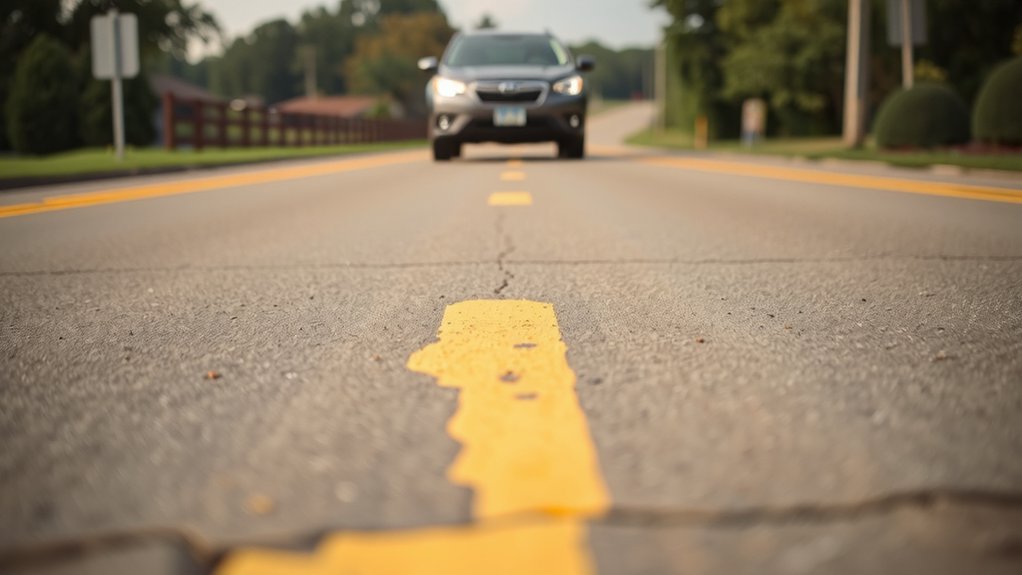
Permission slip, not a free‑for‑all. That broken yellow line tells you something simple and sharp. Two-way traffic. You may cross to pass or turn left when the path is clean and your brain is on. Not blind. Not lazy. You check mirrors. You judge speed. You commit. If it’s tight, you back off. Patience beats sirens. That paint isn’t decoration; color standards make the message uniform from cornfield lanes to coastal highways. You’re supposed to know it at a glance. Agencies own the maintenance responsibility, too, so if the line’s faded, you still think, not drift. Read the gaps. Feel the timing. Use power, not ego. And if a doubt whispers, you listen. Because pavement punishes arrogance. You decide. Then you act. With care.
Broken vs. Solid Yellow Lines
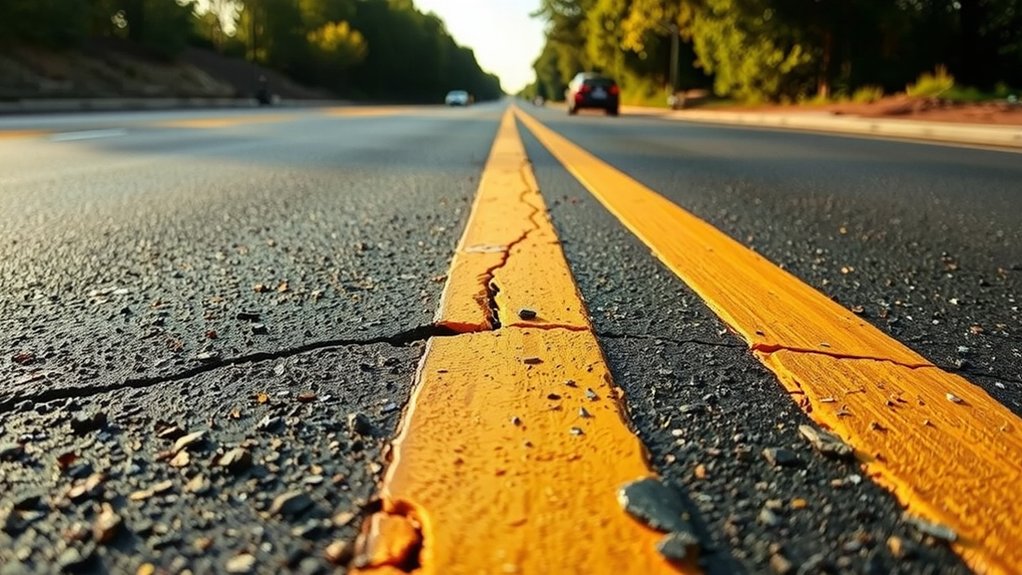
You think lines are paint; they’re rules—broken yellow lets you pass, solid yellow slams the door. That centerline isn’t art, it’s a border, and you don’t cross a solid wall unless you’re turning left into a driveway or avoiding a true hazard. Crossing’s allowed when the broken line sits on your side—signal, check sightline, go—otherwise sit tight and own your patience.
Passing Permissions
When the center line breaks, the rules shift fast. Broken on your side? Go, but prove you can finish before oncoming traffic arrives. Solid on your side? Don’t even twitch. Double solid? Forget it. You’re not a stunt driver. You pass only when sight lines are clear, speeds match, and space is real, not wishful. Miss that, and hello tickets, insurance hikes, and legal penalties that sting. Think you’re special? Some states carve tiny commercial exemptions for slow farm rigs or service convoys, but you still own the risk. No tantrums. No tailgating. Set up. Signal. Check mirrors. Commit. Abort if it goes sideways. And if a hill or curve hides danger, back off. Pride doesn’t outrun physics. Your call. Your lane. Your consequences.
Centerline Separation Meaning
Reading the centerline is like reading a mood ring for the road.
Those yellow stripes aren’t art. They define the boundary between opposing lives. Broken means flexible rhythm. Solid means locked spine. The pavement is talking. You listening? It marks direction, separates conflict, and sets expectations before you even blink. Engineers bake in design standards: speed, sight distance, hills, intersections, chaos. Lawyers add teeth with legal interpretations that turn paint into duty. You’re not guessing. You’re accountable. Broken suggests shared negotiation. Solid declares no-nonsense separation. Two moods. Two messages. One job—respect the divide. Picture fog, glare, a blind curve—lines speak when your eyes don’t. Trust them more than your ego. Argue with the line, lose with a ticket. Or worse. The centerline doesn’t bluff.
When Crossing Allowed
So the centerline called the shots—now it decides if you get to cross or sit tight. Broken yellow? You can pass. But only when it’s clear. No pity parties. You check mirrors, signal, punch it, and finish fast. Solid yellow? Stay put. It’s a wall you don’t see until the ticket hits. You wait. You breathe. You chill.
See one solid, one broken? The side you’re on rules. Your broken side says go. Their solid side says nope. Don’t swap morals at 55.
Legal exceptions exist. Slow tractor clogging life? Maybe. Driveway turn? Yes. Left turn into a side road? Allowed.
Emergency maneuvers? Do what saves lives, then explain it. But don’t dress dumb risk as heroics. Patience beats sirens. Every. Single. Time. Today.
When Passing Is Allowed

Although that dashed yellow begs you to move, it only means this—pass if it’s clear. You own the decision. You own the risk. You see open lane, safe gap, and a speed edge. Then go. Signal. Check mirrors. Punch it, pass clean, and slide back without cutting off a bumper.
You respect driver etiquette or you don’t pass. Don’t tailgate the slow car like a hero in a grocery line. Leave room, commit once, and finish fast. No parade passing. One car. Then breathe.
Remember vehicle differences. Your compact sprints. A loaded truck doesn’t. A motorcycle darts but vanishes in blind spots. Adjust. Use power you actually have, not power you imagine. If it takes forever, it wasn’t your pass. Pick your moment now.
Situations Where Crossing Is Prohibited
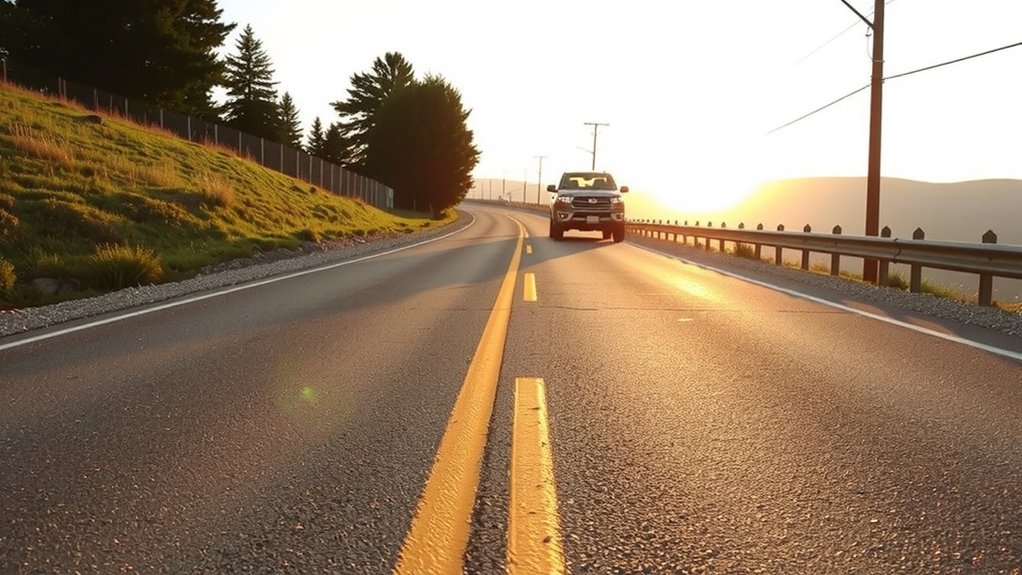
That freedom ends fast. You can’t cross just because dashes tease you. Work crews ahead? It’s a hard no in construction zones—cones rule, not you. School zone with kids swarming? Don’t even blink. Sirens behind you or flashing on the shoulder? Yield and stay put for emergency vehicles. Railroad crossing coming up? Stay in your lane unless you enjoy wrestling trains. Intersections, bridges, tunnels—tight space, zero excuses. Double yellow appears? Game over. No‑passing signs? They mean it. Traffic stacked and nowhere to land? You’ll block someone and earn horns. Limited lanes, hidden driveways, funeral processions—don’t be that headline. Snow or slick oil? Crossing turns dumb into disaster. Think you’re special? You’re not. Wait it out. Live longer. Drive smarter. Save tickets, cash, pride, time.
Safe Passing Techniques and Visibility Tips
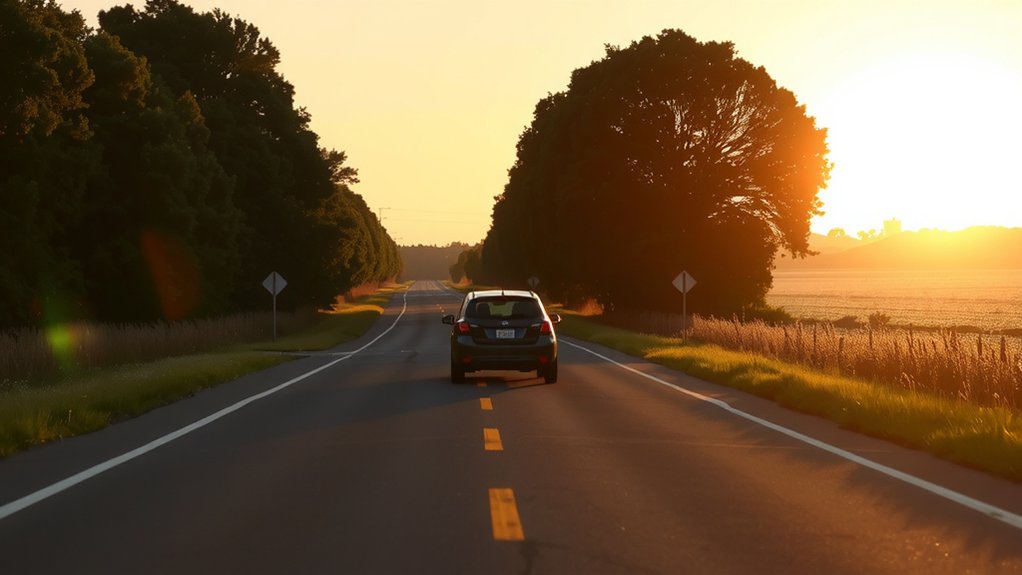
When you pass, you’re either sharp or you’re a hazard—pick a side. You spot a gap. You commit. You don’t drift and pray. You signal early, do mirror checks, quick shoulder glance, then punch it. Hold the lane like you mean it. If you hesitate, you lose. If you dawdle, you endanger everyone. Use headlight use in daylight to pop in mirrors. Yes, daytime. Be seen or be scraped. Judge speed like a hawk, not a house cat. Close distance cleanly, then return only when you see both headlights in your mirror. Not before. Never.
Eyes up. Scan far. Read brake lights and body language. Bail if it feels wrong. Pride heals slower than fenders. Rain? Extend space. Night? Kill glare, keep focus. Now.
Special Cases: Center Turn Lanes and Rural Roads
You think you’ve got passing nailed? Good. Prove it in the center turn lane. That two‑way stripe party isn’t a fast lane; it’s a waiting room. Use it only to turn left, not to rocket past grandma, not to cruise. Enter near your turn, check both directions, then commit. See someone opposite? Share it or back off. Don’t camp there. Don’t merge from it. Simple.
Now rural roads. Broken yellow can tempt you, but blind hills load the dice. Hidden driveways. Livestock. Slow agricultural vehicles chewing up daylight. Gravel shoulders that grab tires. And seasonal maintenance that flakes—potholes, faded paint, snow berms, leaf slime. Pass only when you see exit space, not hope. If you can’t finish clean, you don’t start. Period. Not negotiable.