
About 10% of fractures hit your fingers. Yours hurts, swells fast, and turns ugly purple. The knuckle looks vanished. The tip points east. You can’t make a fist. But sure—call it a sprain and tough it out? Bad plan. Broken fingers fool people, then steal grip, speed, and sport. You need the telltale signs, the red flags, and the fix—now. Ready to keep your hand working, or gamble it away?
Key Takeaways
- Obvious deformity: finger crooked, bent at odd angles, rotated fingertip, or Z-shape compared to the other hand.
- Rapid swelling and purplish bruising, sometimes skin ballooning, especially along the bone line.
- Intense, sharp, localized pain that worsens with touch or gripping; sometimes an audible crack at injury.
- Trouble using the finger: inability to make a fist, grip, pinch, or straighten/bend normally.
- Red flags: pale or numb fingertip, pooling blood under the nail, open wound or bone protruding.
Key Signs a Finger May Be Broken
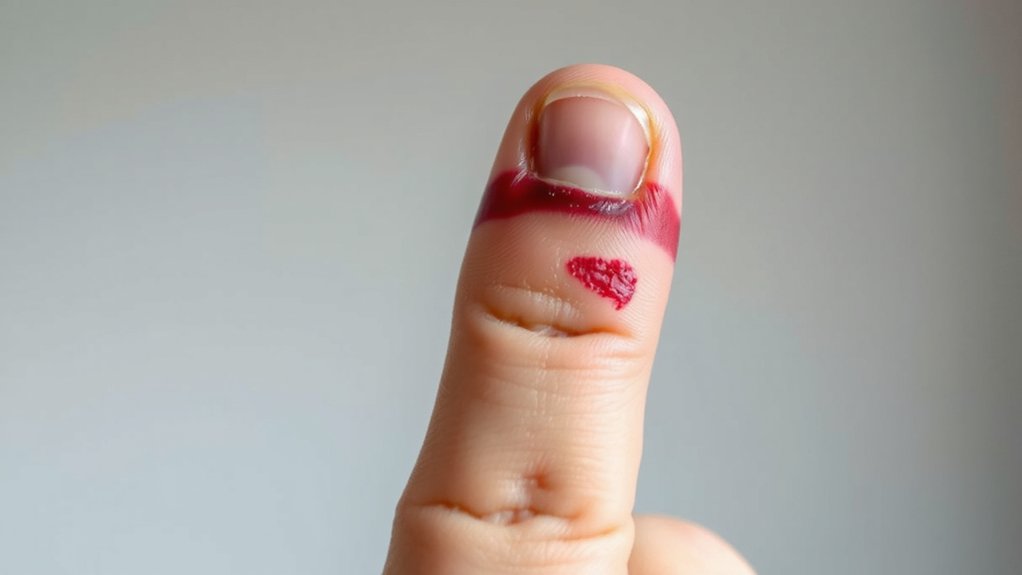
If it’s broken, your finger won’t be shy. It screams. Swells fast, balloons under the skin, turns purple like it’s auditioning for a bruise parade. It points the wrong way. Or refuses to bend, stubborn as a locked door. Touch it and you’ll flinch. Try gripping a mug and feel that sharp, electric nope. Hear a snap? Yeah, that too.
Numb? Tingling? Bad sign. The nail may pool blood, the tip may go pale or cold—circulation complaining. An open cut over bone? Stop pretending. That’s urgent. Ice it, splint it straight, and get seen. Take photos, note the time, keep the story tight. You’ll need proof for Insurance Claims and any Legal Considerations. Pain talks. Documentation shouts. Don’t argue. Move. Now, go fix it.
Fracture vs. Sprain vs. Dislocation: How to Tell
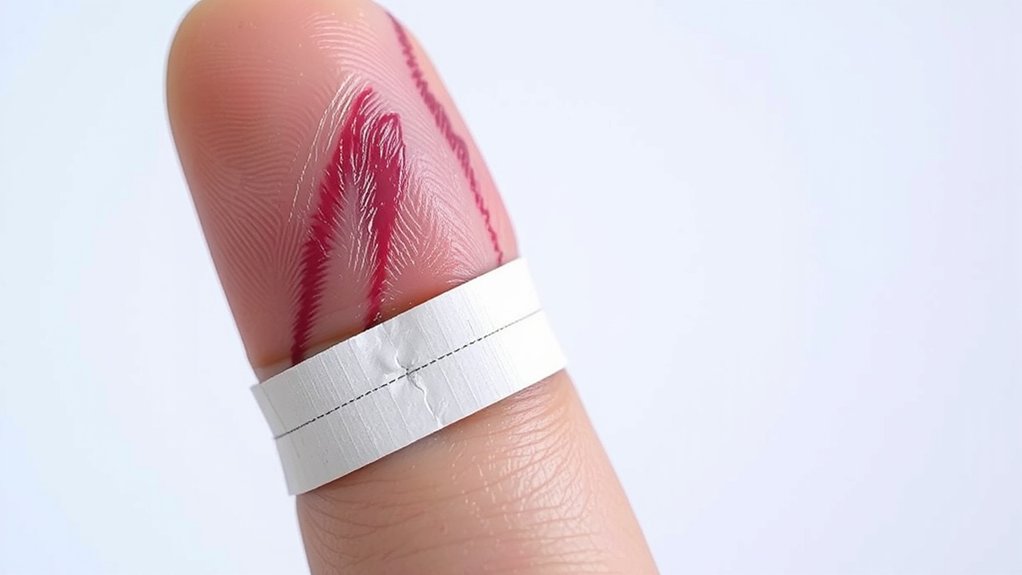
Is it a fracture, a sprain, or a dislocation—do you even know, or are you guessing? Look at it: crooked Z-shape, knuckle vanished, fingertip rotated like it’s pointing at the wrong team—yeah, that screams dislocation or fracture, not a cute little sprain. Now move it, press it, grip a pen—can’t straighten, can’t bear touch, can’t pinch without yelping, then stop pretending and treat it like a serious break until proven otherwise.
Key Symptom Differences
Though it all screams pain, the clues aren’t the same. Fracture pain bites hard and stays. Sharp. Deep. You touch the bone line and yelp. Swelling shows fast. Bruising follows like a bad headline. You hear a crack? Yeah, that. Sprain pain nags more than knifes. It throbs, eases with rest, then flares when you twist. Tender around the joint, not just one spot. Grip feels weak, wobbly, annoying. Dislocation shouts loss of control. The joint won’t move right. It locks, then resists, like a door with three deadbolts. Numbness or tingling? That’s your nerve complaining. And yes, sleep disturbance, mood changes, because pain doesn’t clock out. So be honest. Try to clench. Try to pinch. Can’t do it? Stop pretending. Get help now.
Visual Deformity Clues
While pain yells, shape tells the truth. Look at the lineup. A fracture cheats the finger’s blueprint: crooked angles, step-offs, skin puckering that screams trapped tissue. Sometimes a bump, sometimes a dent. Swelling patterns don’t lie—localized ridge over bone, not just a puffy sausage. Dislocation? The joint sits wrong. Obvious. The tip points east while you face north. A knuckle vanishes, or pops high like a tent pole. Snap it back with your eyes? No, don’t be a hero. Sprain? It stays straight but sulks. Mild drift at most. Bruise halo, diffuse puff, nail still tracks the finger’s line. Compare hands. Symmetry is savage; it exposes fakes. Rings feel tight? That’s your clock. Stop flexing. Photograph it. Then act. Now, protect it and wait.
Pain and Function Tests
You eyeballed the shape. Now prove it. Press the bone line, not the pad. Sharp, localized, lightning pain? Fracture screams. Dull ache that eases with rest? Sprain whining. Try a gentle fist. Can’t touch thumb to pinky or the finger won’t track straight? Dislocation waving hello. Grip a pen. Drop it and curse? Yeah, that’s not “just a tweak.” Check sensation. Any numb patch or pins‑and‑needles marching up? Stop. Splint and seek help. Compare sides. Swelling that balloons fast and pain on tap with tiny taps equals break territory. Move only what’s safe. Use Tele assessment protocols if you’re stuck at home. Log function in Activity diaries. Patterns don’t lie. Pain with every load, every time, every angle? Get imaging now. No excuses today.
When to Seek Urgent or Emergency Care
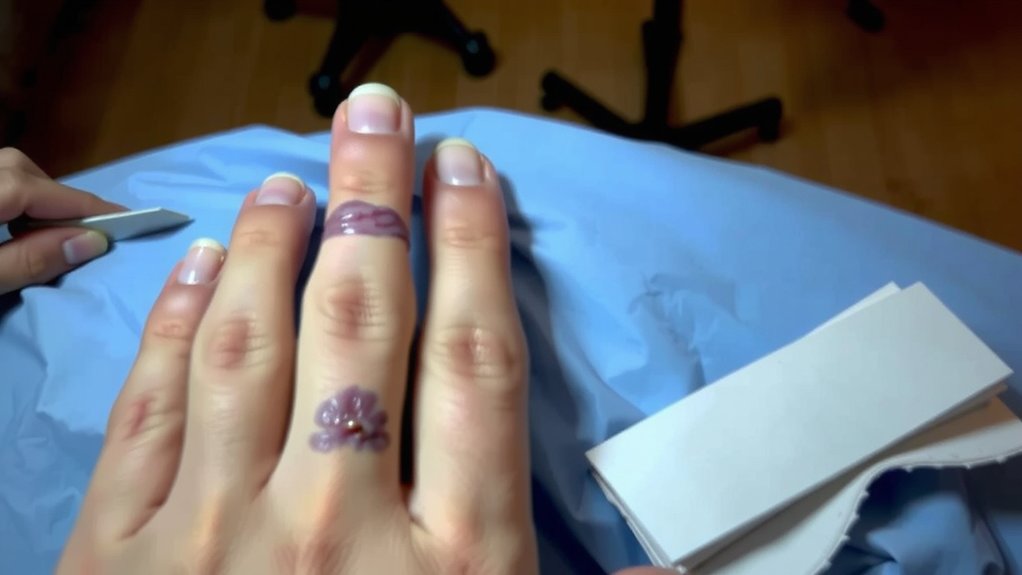
You want to gamble with your hand? Fine—when your finger points the wrong way, feels numb, turns white or blue, or bone peeks out, you go to the ER now. For urgent care today: brutal pain, ballooning swelling, can’t bend, a snap or pop at impact, a deep cut or smashed nail—stop pretending it’s “just a jam.”
Immediate ER Signs
If that finger looks wrong, move now. Bone peeking through skin? Don’t Google it. Go. Finger bent like a Z or twisted backward? That’s ER, not pride. Bleeding you can’t stop after 10 minutes of hard pressure? You’re losing time. Finger turns pale, blue, or numb? Circulation’s tanking. Ring stuck on a swelling sausage? Cut it off or they will. Partial amputation, crushed tip, machine injury, loud snap then instant deformity—stop pretending. Drive or call 911 if you’re faint or far. Tell triage “possible open fracture, severe deformity.” You boost ED Workflow and Staff Communication. Keep the hand elevated. No food, in case surgery waits. Ice outside the wound, never inside. Splint it straight if you must, but don’t play hero. Go now, tonight.
Urgent Care Indicators
When the drama dials down from gory to gnarly, urgent care is your lane. You’ve got a closed injury, big swell, ugly bruise, and pain that laughs at ice. You can’t make a fist. You can’t grip your keys. Fine. Go now.
Expect Triage protocols the second you walk in. Quick questions. Vital signs. Fast look for red flags. Then X‑ray, splint, and a referral if the break angles weird.
Rings stuck? Don’t play hero. They’ll cut them. Nail cracked but not gushing? Still fine for urgent care.
Insurance considerations matter. Urgent care usually costs less than the ER, and yes they check networks. Bring ID. Bring the card. No coverage? Ask cash price before films. Don’t stall. Move. Protect the hand. Keep it elevated.
Immediate First Aid and Immobilization Steps
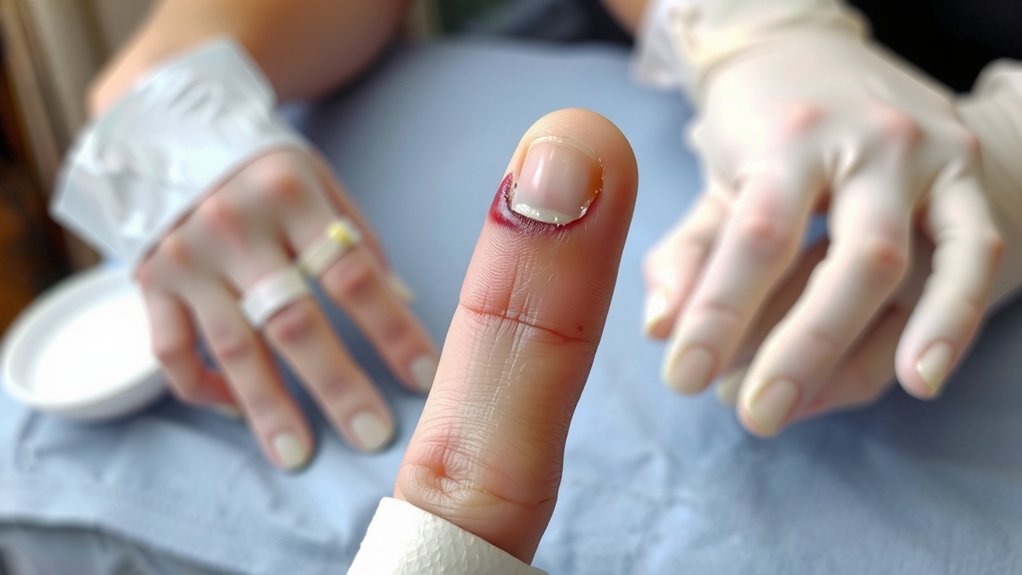
Act fast. Pain screams. You answer. First, scene safety. Don’t be a hero in traffic or chaos. Rings off now. Swelling wins otherwise. Check circulation, color, feeling. You see deformity? Treat it like a fracture. Align nothing. You’re not a sculptor. Ice wrapped in cloth. Elevate above the heart. Bleeding? Direct pressure, clean dressing. Splint next, no excuses. Use a pen and tape, gauze, anything straight. Build your supplies checklist fast.
| Item | Purpose | Got it? |
|---|---|---|
| Ice pack and cloth | Cool swelling | Yes/No |
| Rigid splint or buddy finger wrap | Immobilize joints | Yes/No |
| Tape or elastic wrap | Secure splint | Yes/No |
Secure the finger to its neighbor or a rigid splint. Joints above and below stay still. Too tight? Numbness means loosen. Then get medical care. Now.
Common Causes and Risk Factors
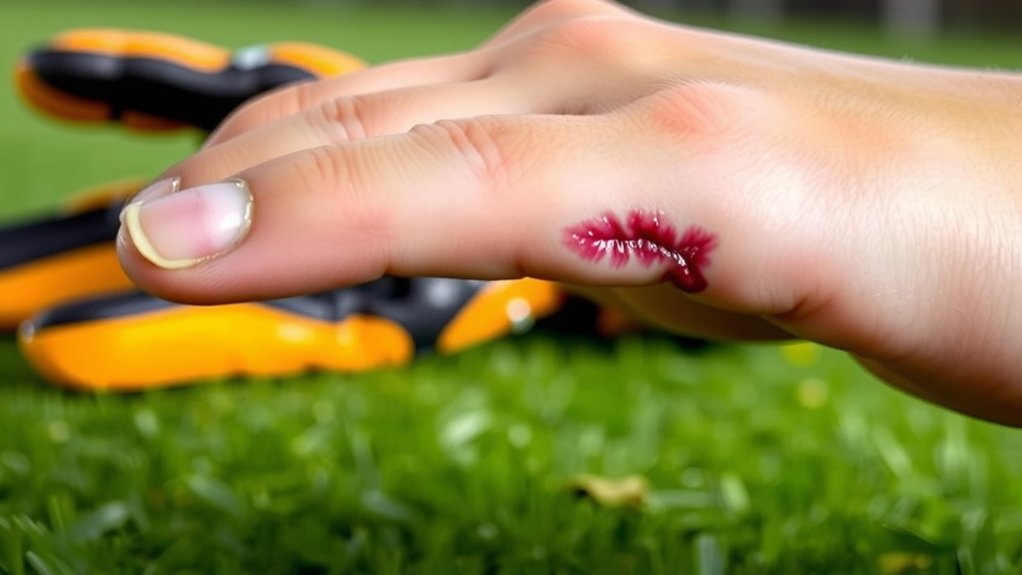
Though you want to blame bad luck, broken fingers usually have a clear culprit. You crash. You slip. You punch something dumb. Sports do it fast—basketball jams, football piles, martial arts bravado. Doors bite. Hammers miss. Power tools say hello to your knuckles. Occupational hazards? Absolutely—construction, kitchens, warehouses, anywhere heavy stuff drops and you look away for one second. Distraction breaks bones. So does ego. Fatigue too.
Risk rides with your body. Weak grip strength. Stiff joints. Terrible bone health from low calcium, no vitamin D, smoking, or binge dieting. Age raises the odds; so does a past fracture. Poor technique makes it worse, no padding, no training, no respect. You wanted invincible. Your fingers want helmets. Grow up. Protect them. Now. Every day.
What to Expect at the Clinic: Exams and X-Rays
How does this go at the clinic? You check in, you flash ID, and yes, you argue with Insurance coverage because paperwork loves pain. appointment logistics? Simple until it isn’t. Forms, signatures, a buzzer. Then the exam. The clinician grills you: when, where, how. They press the finger, watch you flinch, compare hands, count knuckles. Sensation intact? Cap refill fast? Rings off now, hero. Swelling measured, motion tested, not coddled. You’ll rate pain, they’ll note deformity, and no, you can’t “walk it off.” Next, X-rays. Two or three views, straight and oblique, hand flat, fist sideways, don’t move. Lead shield on. Quick snaps. Pop pop. They check for cracks, lines, displacement. You wait, pacing, demanding answers yesterday. Results hit hard. Truth doesn’t blink. Period.
Treatment Options and Splinting
X‑rays don’t whisper; they boss you around. They tell you if it’s a simple crack or a diva fracture that needs more than tape. For stable breaks, you buddy‑tape. Cheap. Fast. Works. Add an aluminum‑foam finger splint for control, or a Stack splint for tip injuries. Crooked? You get a reduction, then a splint or short cast. Shattered or joint‑involved? Stop arguing—pins or a tiny plate keep order.
Material comparison time: aluminum‑foam bends easy, breathes, dents; thermoplastic custom splints fit clean, last longer, cost more; fiberglass casts lock you down, hate moisture. Cost considerations? Buddy tape is lunch money. Off‑the‑shelf splints hit mid‑range. Custom shop work climbs. Surgery skyrockets.
Protect it. Keep it straight. Don’t freelance. Follow the plan. Ask questions. Demand clear instructions.
Healing Timeline, Pain Control, and Return to Activity
Because bone heals on a schedule, not your ego, you play by the clock.
Week one hurts. Swelling screams. Elevate, ice, respect the splint. Seriously. You take over-the-counter pain meds as directed, not like candy. Move the other joints. Don’t baby everything. Gentle tendon glides keep you honest. By weeks two to three, pain backs off, stiffness barges in. At four to six, bone knits, but you’re not invincible. Grip work returns slow, with putty, with patience. Eat for repair: protein each meal, vitamin C, calcium, vitamin D. That’s Nutrition Support, not Instagram fluff. Your Sleep Positioning matters too: hand elevated on pillows, splint on, drama off. Back to sport? Only when you can make a fist, extend, and tolerate load without spike pain.
Prevention Tips and When to Follow Up
If you don’t want a repeat performance, act like it. Tape your ego first, then your fingers. Use Protective gear that actually fits; gloves for sticks, splints for drills, wraps for chaos. Warm up, don’t just wander in cold like a hero in flip‑flops. Keep nails trimmed. Ditch rings. Watch the ball, the door, the weight stack. Catch with your palms, not your tips. Tell teammates to stop rocketing passes at your face.
Now follow through. Swelling drops, pain fades, you still follow up. That’s not optional. Do Follow up scheduling before you forget, then show up. Red flags? Numbness, crooked bend, stuck joint, fever, popping. Return fast if pain spikes after use. Missed visit? Call today. Don’t argue. Protect the win. Stay smart.