
You step off a curb, hear a snap, and it feels like glass under your skin. Then the throb hits. Deep. Bossy. Worse at night. Swelling balloons fast, skin turns shiny and hot, shoes suddenly feel like torture. Try a few steps—stabbing spikes say stop. Tap the bone if you enjoy pain. Think it’s a sprain? Prove it. Want the real signs, the urgent red flags, and what to do in the next ten minutes? Keep going.
Key Takeaways
- Sharp, stabbing pain on planting foot, followed by deep throbbing that feels bossy and focal.
- Extreme tenderness; tapping bone or moving toes triggers sharp spikes, like glass under the skin.
- Rapid, tense, hot swelling with color change; even loose shoes become intolerable.
- Night-time worsening with throbbing; light pressure increases pain and disrupts sleep.
- Inability to bear weight or take 2–4 real steps strongly suggests a fracture, not just a sprain or bruise.
Key Signs and Sensations of a Broken Foot
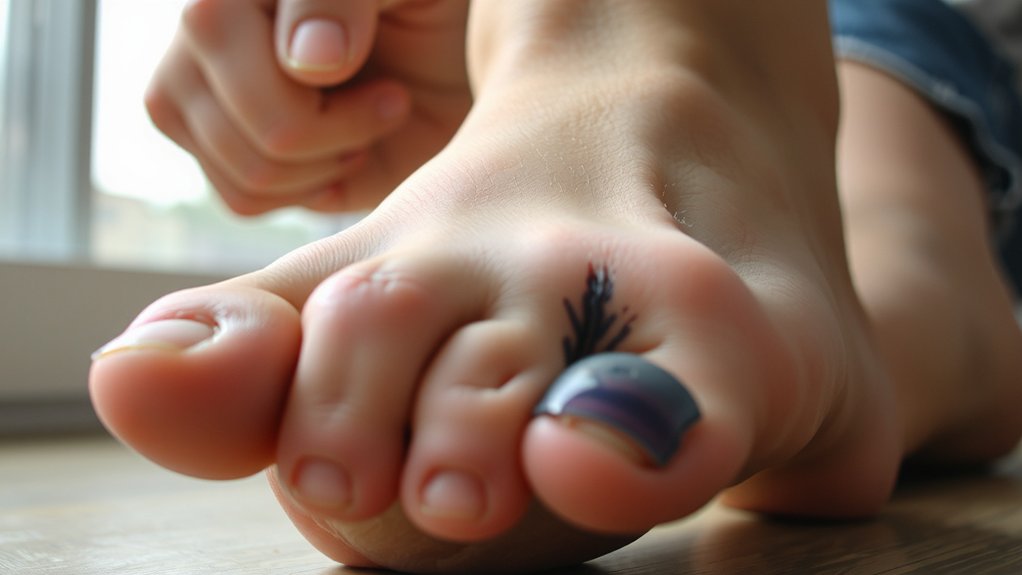
Often it’s not subtle. Your foot screams. Not whispers. A sharp stab hits when you plant it, then a deep throb follows like a drum you can’t shut off. Swelling balloons fast. Heat rises. Color goes weird. You feel glass under skin. You baby it, then it bites back. Shoe intolerance? Oh yeah. Even your loosest sneaker turns into a vice and laughs. You limp, you bargain, pain still wins.
Night’s worse. Your heartbeat taps the fracture. Hello sleep disruption, goodbye sanity. The sheet brushes your toes and you curse out loud. Pressure punishes. Rest doesn’t erase it. You try to be tough. It mocks you. Tiny movements trigger jolts. Big ones trigger yelps. Your body knows. You know. Stop pretending. Get help now.
Broken Foot vs. Sprain or Bruise: How to Tell the Difference
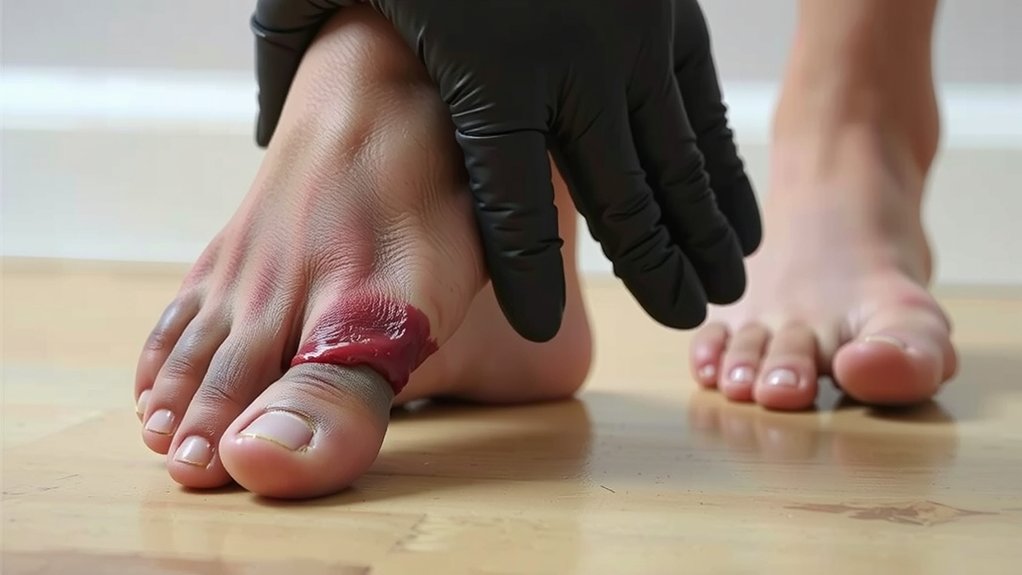
Your foot’s screaming, but is it broken or just throwing a tantrum—watch how the pain hits and where the swelling camps out. Sharp pinpoint pain with swelling that balloons fast and stays in one spot screams fracture; mushy spread-out puffiness with ache that wanders says sprain or bruise. Now the gut check—can you put weight on it without cussing, or does a single step feel like glass and fire, because if you can’t walk two to four steps, stop pretending and call it serious.
Pain and Swelling Patterns
When your foot blows up like a balloon and every step feels like a nail, you don’t need vibes—you need facts. Fracture pain is sharp, focal, bossy. It hammers one spot and doesn’t shut up. Sprain pain roams, aches, sulks. A bruise? Tender but lazy. Swelling tells stories. With a break, it rises fast, turns tense, shiny, stubborn. Sprains puff too, but softer, more spread. Bruises bloom slow and wide. Color matters: violent purple at the impact zone screams fracture, while yellow-green drift whispers bruise. Heat speaks as well. Temperature fluctuation around the hot spot hints deeper damage. Night makes it louder—classic circadian variation—throbbing wakes you, mocks you. Tap the bone and it yelps. Wiggle a toe and pain spikes. Still think it’s nothing?
Weight Bearing Ability
Because weight tells the truth, the test is simple—can you stand and take four real steps without seeing stars? If yes, maybe sprain or bruise. If no, stop pretending. Bones don’t negotiate. They scream. You try to tiptoe, the foot buckles, your face lies for a second then quits. Sharp, deep, instant. That’s fracture energy.
Now be honest. Can you push off the toe? Hop once? Walk to the door without grabbing furniture? If every step feels like biting a wire, you’re done. Sit down. Ice. Elevate. Call care.
And work accommodations? Demand them. Crutches mean distance. A scooter means dignity. Make daily ergonomics your shield—chair height, footrest, fewer trips. No hero laps. No “I’m fine.” You break it worse, you own the bill.
Types of Foot Fractures and Where Pain Shows Up

Although the names sound fancy, the clues are simple—pain maps the break. Toe throbbing after a stub that felt like lightning? Think phalanx crack. Big toe base screaming with every push‑off? Sesamoid fractures love to nag right under the joint. Midfoot aches, bruised arch, shoes suddenly traitors? That hints at a Lisfranc injury. Side of your foot tender and swollen after a misstep off the curb? Fifth metatarsal, classic. Top of the foot feels like a hot rail after miles? Stress fracture, metatarsals, pick your number.
Heel pain that punches when you land or squeeze the sides? Calcaneal fractures shout from the back. Ankle twist plus sharp pain below the outer knob? Distal fibula or talus. Pain tells the story. Listen. Now pay attention.
When to Seek Urgent Care
Spot the red flags and stop pretending: a crooked shape, ballooning swelling, numb or tingling toes, cold or blue skin, crushing pain that makes you sweat. If you can’t bear weight—forget a proud stride—if you can’t take three lousy steps without yelping, that’s your alarm. Go to urgent care now today, not when the game ends, because toughing it out isn’t brave, it’s reckless.
Red Flag Symptoms
When your foot screams instead of aches, stop pretending it’s fine.
Red flags aren’t cute. They’re sirens. Swelling balloons fast, skin turns tight and shiny, pain crushes you even at rest. That’s not drama. That’s danger.
See blood? An open wound over a fracture invites infection and chaos. Don’t tape it. Don’t rinse and run. Get help. Now.
Numb toes, or weird pins and needles? Bad sign. Blue, pale, or cold foot? Worse. Can’t move your toes because the pain explodes when you try? That’s your body yelling.
The monster you can’t ignore: compartment syndrome. Pain out of proportion, relentless, with tense muscle compartments and creeping numbness. That can kill tissue, and fast.
Stop negotiating with pain. Call urgent care or hit the ER.
Inability to Bear Weight
If you can’t put your weight on that foot, stop the hero act and call for help. Pain that steals your step isn’t “just a tweak.” It’s your body screaming fracture. Test it once. Fail. Don’t keep limping like a movie cowboy. Sit down. Elevate. Ice. Call urgent care or hit the ER if numbness or deformity pops up. Hear that crunch? Game over.
No, you won’t “walk it off.” You’ll wreck it worse. Crutches, boot, imaging. That’s the plan. You want speed? Start now. Arrange a ride. Clear stairs. Do quick home modifications so you’re not cliff‑diving the bathroom. Tell your boss you need work accommodations. Desk duty beats surgery. Pride is expensive. Bones are stubborn. Choose healing, not headlines. Today. Not tomorrow.
What to Do Immediately After Injury
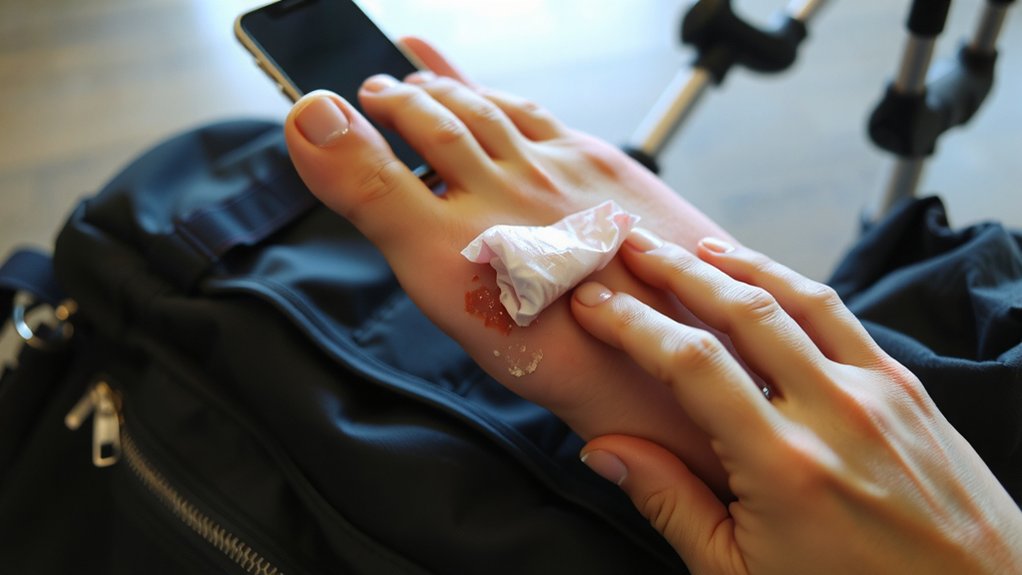
Though it hurts, shut it down—now. Stop walking. Sit. Breathe. Pain screams; you listen. Shoe off if swelling surges, laces cut if needed, because circulation beats fashion. Elevate that foot above your heart. Ice it—wrapped, not raw—for twenty minutes, then break. Repeat. Don’t be a hero. Splint with stiff board or magazine and tape; add Protective Padding so edges don’t bite. Keep toes visible. Pink good. Blue bad.
Call a ride. No driving stick with a busted pedal foot, champ. Crutches or a chair, not bravado. Document Incident while it’s fresh: time, place, how it snapped, photos, names. You’ll forget later. Avoid heat, massage, and booze. Hydrate. Keep the foot quiet, the rest loud. You’re in charge. Act like it. Right now. No excuses.
How Doctors Diagnose a Foot Fracture
How do they know it’s broken and not “just sore”? They don’t guess. They grill you. Where, when, how. You point. They poke. You flinch. They note swelling, bruising, deformity, that lovely can’t‑bear‑weight shuffle. They compare sides. They map pain to bones, not vague vibes. Then the cameras roll. X‑rays first, weight‑bearing if you can stand the truth. Imaging protocols dictate views, angles, timing. No shadow games. Still murky? CT slices it thin. MRI hunts stress fractures hiding like cowards. Ultrasound spots tendon drama that muddies the story. Numbers count: Ottawa rules, yes, those. Red flags? Nerve tingle, open wounds, ugly alignment. You get Specialist referrals—orthopedics, podiatry—because precision matters. Bottom line: evidence wins. Denial loses. Your foot doesn’t negotiate. Pain talks. Doctors listen. Hard.
Treatment Options and Recovery Timeline
Because broken bones don’t care about your schedule, treatment gets real fast.
You get a boot, crutches, or a cast, and you march anyway.
Swelling fights you; elevation wins.
Ice early, discipline always.
Hairline crack? You rest and walk later.
Pieces shifted? Surgical Intervention steps in—pins, plates, drama, relief.
| Phase | What You Do | Timeframe |
|---|---|---|
| Acute | Rest ice elevation | Days 1–7 |
| Immobilize | Boot or cast weight off | Weeks 2–6 |
| Physical Therapy | Range strength balance | Weeks 3–12 |
| Return | Jog cut jump carefully | Months 3–6 |
You want shortcuts.
Don’t.
Push stupid and you rewind the clock.
Move smart, load gradual, heal faster than your excuses.
Pain nags.
You answer with patience, grit, and boring consistency.
Miss a day, pay a week.
Your move, now.