
Your toe had a rough moment. Now it’s swollen, screaming when you step, maybe turning that lovely purple, and yes, it might look crooked—don’t pretend it didn’t pop. Push off and it stabs deep. The nail? Lifting or dark like a bad secret. Sprain or break—you sure you know the difference? Because the wrong move could cost you. Want the fast tell‑tales and the stop‑now red flags?
Key Takeaways
- Toe appears crooked or misaligned compared with the other foot, sometimes shortened or overlapping neighboring toes.
- Immediate swelling and bruising that spreads from the base and sides, shifting colors from red to purple/blue to yellow.
- Nail changes: dark blood under the nail, lifting or splitting, with increasing pressure and pain.
- Severe, deep pain worsened by weight-bearing or squeezing; push-off fails, causing a protective limp.
- Grinding sensation or a stepped joint line; an audible pop at the moment of injury may be reported.
Signs and Symptoms You Can Spot Right Away
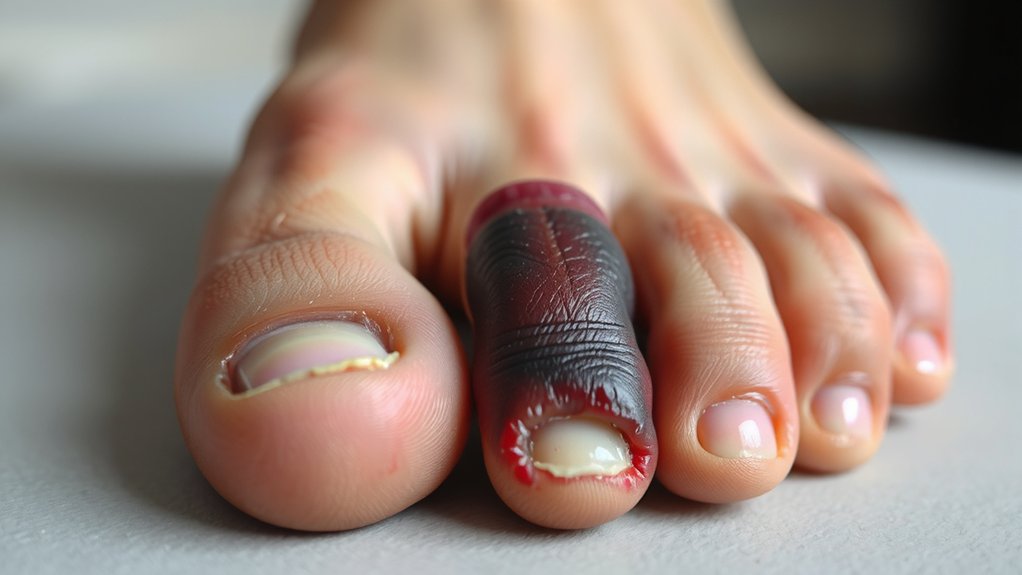
How do you know when a stub turns into a break? You hear that audible pop, like a cheap pen snapping, and your toe suddenly refuses the job. It goes crooked. It points east when you’re walking north. You try to wiggle it. It says no. You plant your foot and the push-off collapses. So you cheat. You throw a protective limp, dramatic and real, because motion feels wrong, not just tough. Look at the nail—tilted, lifted, or split. Look at the joint line—stepped, not smooth. The toe shortens or overlaps its neighbor like a rude guest. It grinds when you flex. It won’t line up with the others no matter how you will it. Don’t debate. Check it, tape it, and stop pretending.
Pain, Swelling, and Bruising Patterns That Signal a Fracture
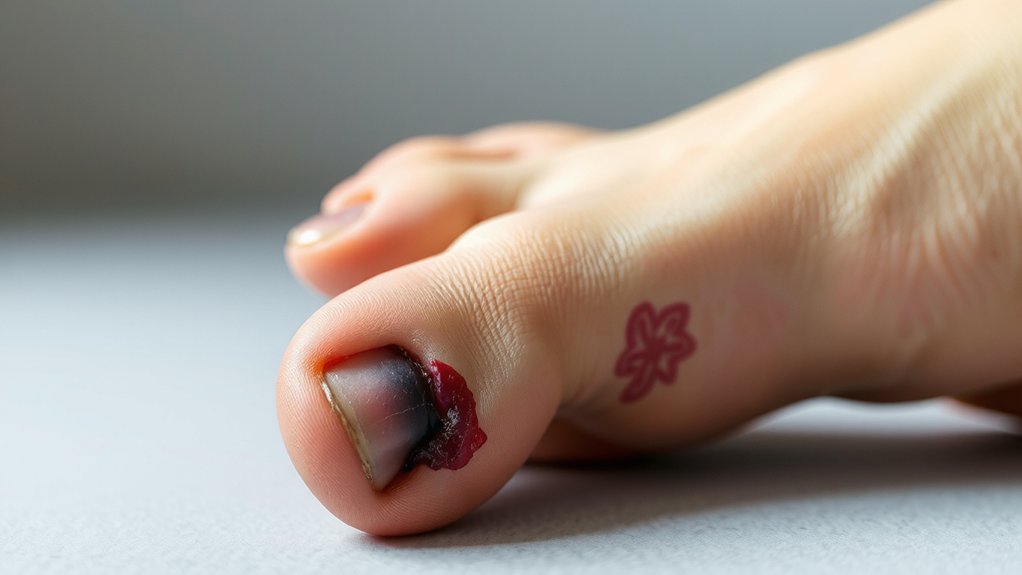
Because your body hates lies, the pain tells on itself—fast. You step, it spikes. You sit, it throbs. Sharp at first, then deep and mean, like a drill with attitude. Push the toe and it snaps back with heat. Don’t pretend. Weight-bearing becomes a dare you lose.
Swelling? It rises early and loud. Puffy, tight skin that feels too small. You’ll feel pressure mapping with every step—hot zones screaming, cold zones numb. Ice won’t erase it. It just argues.
Then the bruise marches. Purple to blue to sickly yellow—classic hematoma progression. It spreads, not shy, pooling along the base, shadowing the sides. Touch it and your brain flinches. Pain on squeeze test? Brutal. Night pain that wakes you? Louder. That pattern screams fracture. Now.
Visual Clues: Shape, Alignment, and Nail Changes
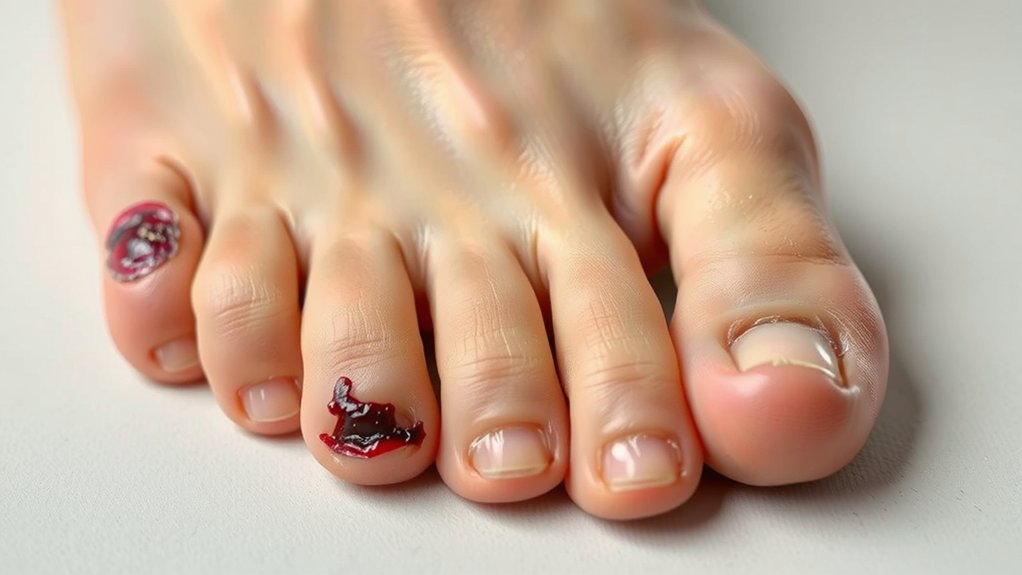
Staring at the toe tells you the truth. The shape looks wrong, and you know it. A clean line becomes a crooked mess. That’s an Angular deformity you can’t sweet‑talk. The toe points left when life goes right. It overlaps its neighbor like a rude guest. Joints don’t line up. Knuckle bumps pop where they shouldn’t. Compare feet. That odd tilt? Not fashion.
Now the nail. See the dark pool creeping under it? That’s a Subungual hematoma, and it screams impact. The nail may lift, split, or sit high like a tent. Blood edges appear. Pressure builds. You feel it. You see it. Color shifts from fresh red to ugly purple to tar.
Still debating? Stop. Your eyes already delivered the verdict. Case closed.
How a Broken Toe Differs From a Sprain or Stub
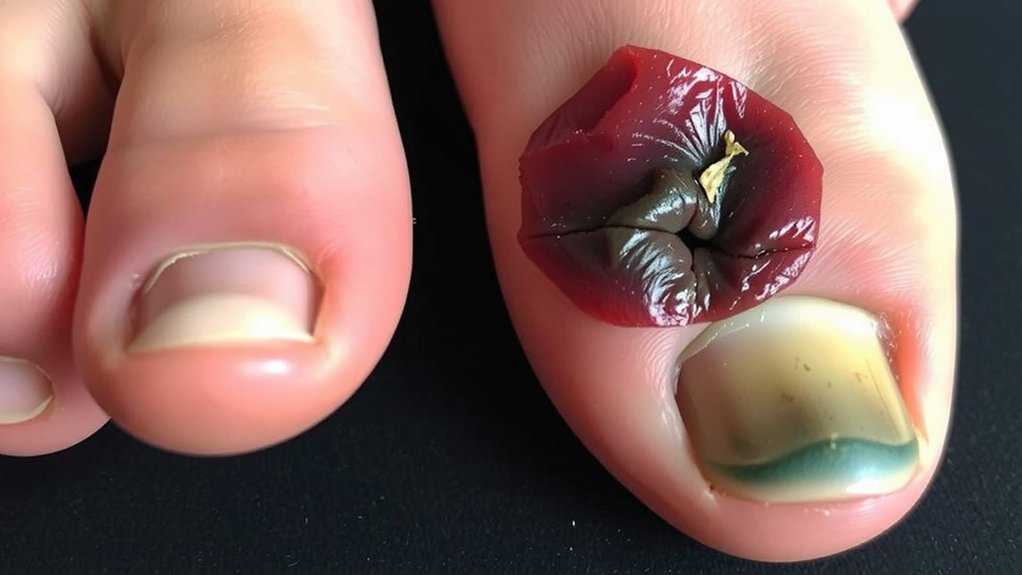
Why does this toe feel different? Because a break isn’t a cute little stub. It’s force versus bone, not skin versus coffee table. Mechanism differences matter. A stub smacks and fades. A sprain yanks the ligaments. A fracture cracks the structure. You feel a sharp, deep ache, not just surface sting. Pressure screams. Motion quits. That’s the Functional impact. You try to push off. The toe refuses. You tape it and it still mutinies. Shoes become enemies. Bruise spreads like spilled ink, but the shape tells the truth. Crooked? Shortened? Grinding? That’s not a sprain’s drama. That’s hardware failure. Touch the tip. Pain shoots along the shaft. Step again. The floor bites back. Still think it’s “just stubbed”? Prove it—walk. Or stop pretending today.
Red Flags That Require Urgent Medical Care
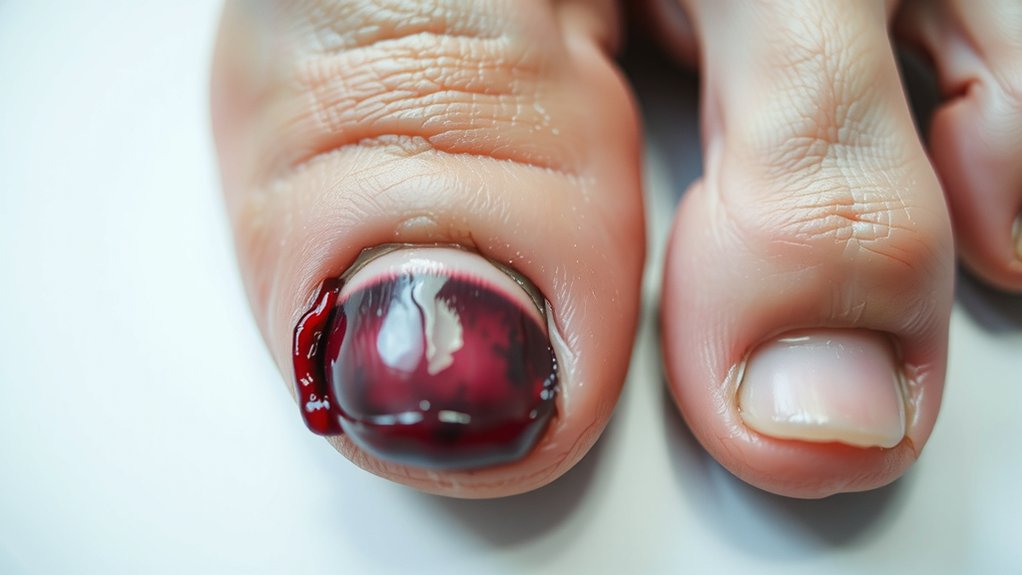
If your toe looks wrong, act like it. Swelling explodes, skin turns gray or waxy, pain burns like a live wire—you don’t wait, you move. Can’t bear weight? That’s a siren. Toe points sideways like a busted antenna? Another siren.
See bone, or a cut down to bone? That’s an Open fracture. Blood won’t stop, shoe filling like a horror prop—go now. Numbness spreading, pins-and-needles fading to nothing? Think nerve damage, not bravery.
Toe feels cold, pulses vanish, nail goes blue? Circulation’s crashing. Infection stink, fever, red streaks racing upward? That’s not drama; that’s danger. Hear a snap, feel grinding, joint looks dislocated, skin tight as a drum—don’t argue.
You want your foot later? Prove it. Seek emergency care now. Don’t test luck. Go.
At-Home Care and What to Avoid After an Injury
Though the adrenaline lies, your toe doesn’t. Stop pretending. Ice it now, twenty minutes on, then off. Elevate it high; heart level isn’t cute, higher is. Buddy tape the injured toe to its calmer neighbor with soft padding in between. You want pain? Skip padding. Activity modification isn’t optional; it’s oxygen. Walk less. Jump never. Crawl if you must. Footwear restrictions matter: rigid sole, wide toe box, no heels, no flip‑flops. House shoes count.
| Feel | Fix |
|---|---|
| Throb | Ice, elevate |
| Panic | Breathe, sit |
| Impulse | Stop, think |
Don’t heat it today. Don’t massage the break. Don’t rip off tape because it itches. Protect skin with gauze, change it daily, keep it dry. Drive less; braking hurts. Alcohol? Your enemy. Tough? Be smart, not stubborn.
What to Expect From Evaluation and Imaging at the Clinic
How does this go at the clinic? You limp in, they don’t coddle you, and good. The clinician grills you—how, when, where. You point, they poke. Sharp pain? Noted. Swelling like a balloon? Noted. Then imaging. Shoes off, pride off. X ray positioning matters, and you’ll hold still or they’ll retake it again and again. Front view, side view, maybe oblique, because guesswork is for amateurs. You see the screen. Line straight? Fine. Line broken? Game on. They compare joints, hunt for tiny fractures that ruin weekends. Treatment gets real fast—buddy tape, boot, or a hard no to sports. Clear rules. No hero moves. Questions? Ask now. Then Follow up scheduling locks it in, because healing hates procrastinators. Show up, stick with it, heal.