
You spotted grooves on your tongue and panicked—cracks, trenches, the whole horror show. Is it disease or just dry mouth, genetics, and time being dramatic? Sometimes it’s harmless. Sometimes it traps gunk and throws a fit. Pain, bleeding, weird white patches? That’s not “ignore it and hope.” You want the blunt truth—what’s normal, what’s nasty, and when to call a dentist. Fine. So, what’s your tongue actually saying?
Key Takeaways
- A cracked (fissured) tongue has grooves and trenches that trap debris, often resembling a dried riverbed.
- Often it’s a benign normal variation, linked to age or family tendency, and usually causes little or no pain.
- Dry mouth, dehydration, mouth-breathing, certain medications, nutrient deficiencies, smoking, alcohol, and chronic conditions can deepen fissures.
- Seek care for persistent pain, redness, swelling, bleeding, non-healing ulcers, white/yellow patches, fever, hard lumps, taste loss, or worsening symptoms.
- Manage with gentle tongue cleaning, good oral hygiene, hydration, balanced nutrition, and avoiding irritants; see a clinician if problems persist or recur.
What a Fissured or “Cracked” Tongue Looks Like
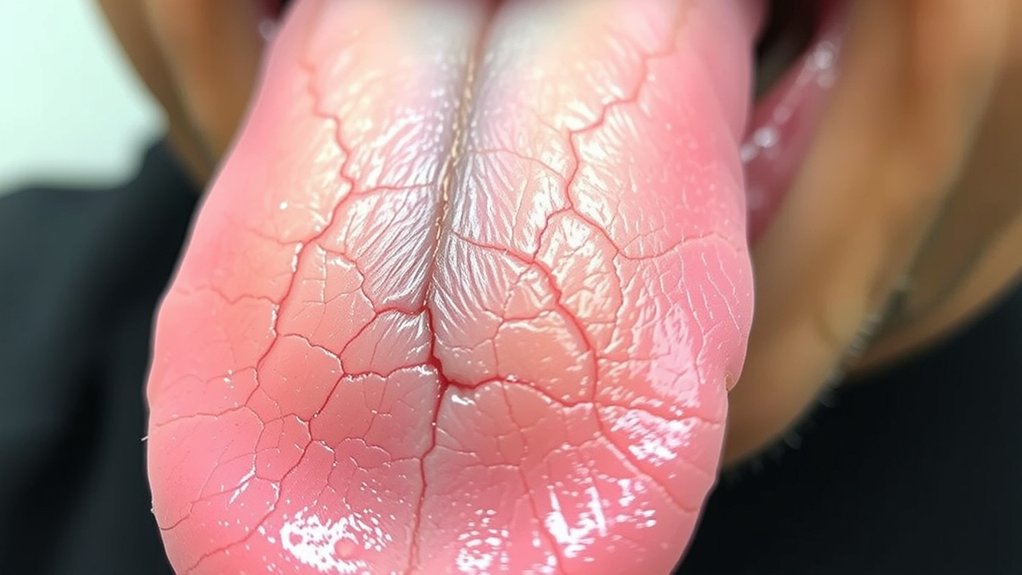
That tongue of yours looks like a dried riverbed, and you know it. Deep grooves run front to back, with side cracks branching like lightning. A bold central trench. Smaller cuts veer off. You see Surface patterns, not one smooth sheet but a map, a maze. Some lines shallow, others dark and shadowed. Edges look rugged. The tip looks split, a tiny canyon. Color contrasts jump out: pink ridges, red gaps, maybe pale patches, a chalky film hiding in creases. Saliva pools in the valleys. Bits cling. You feel it snag on teeth. You hate that. Look again. Those cracks create texture, relief, contour. Light catches and exaggerates everything. It’s dramatic. It’s obvious. It’s your tongue. Own the view. Stop pretending it’s not there.
Common Causes and Risk Factors
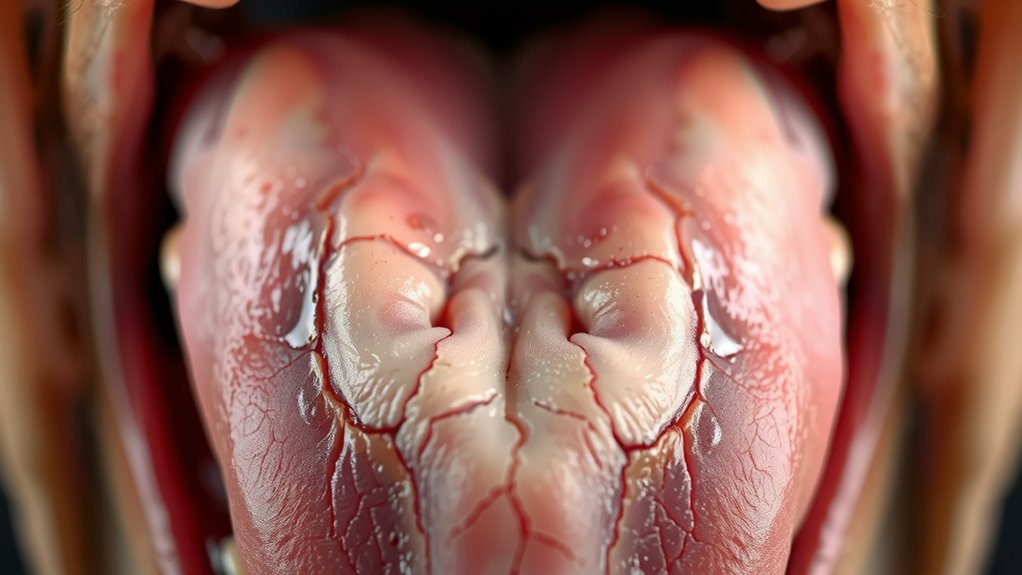
You’ve stared at the canyon in your mouth; now who’s swinging the pickaxe?
Start with roots. Genetic predisposition loads the dice; your family’s tongues crack, yours follows. Age dries the stage. Saliva slows. Grooves deepen. Dehydration? You sip coffee, not water, then wonder why the desert moved in. Mouth-breathing at night sands everything raw. Meds that parch—antihistamines, antidepressants, diuretics—yeah, they help and hurt. Nutrient gaps matter: low B vitamins, iron, zinc. Smoke scorches. Booze burns. Spice taunts, salt rubs it in. Clench your jaw all day? Pressure carves lines. Bad brushing? You scrape like a belt sander. Environmental exposure piles on: heat, wind, dust, workplace chemicals. Chronic conditions like diabetes or Sjögren’s pull moisture. Stress? It tightens, you chew, you crack. Choices echo. Loud.
Normal Variations Vs Warning Signs
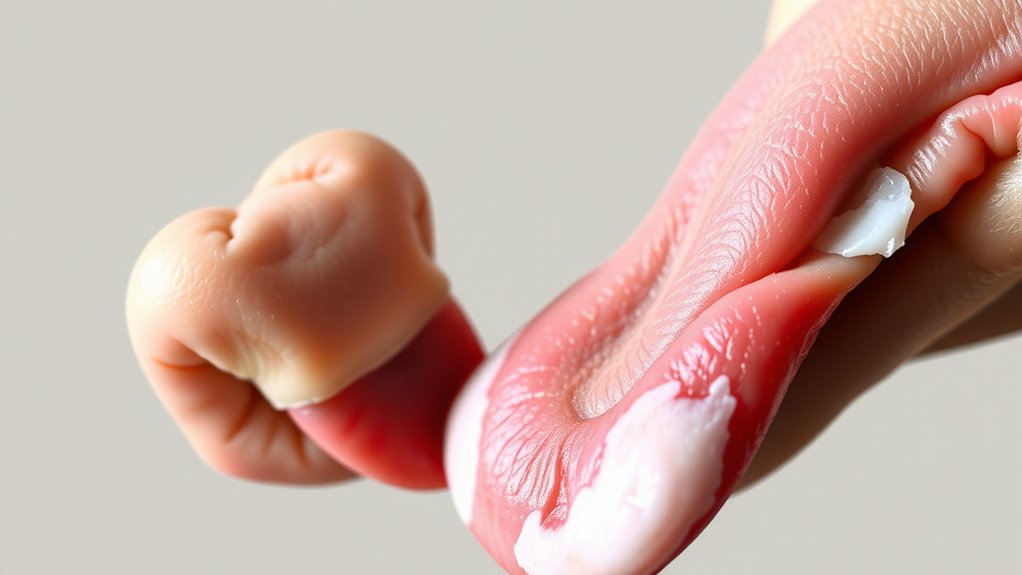
You stare at those tongue cracks like the sky is falling—relax. Benign looks boring: shallow painless grooves, steady pink color, no swelling, no funk. But if the fissures burn, bleed, or blow up overnight, if the tongue swells, flips beefy red or ghost white, or sprouts patches like mold—that’s a warning, so stop guessing and get checked now.
Typical Benign Features
While a cracked tongue can look dramatic, most fissures are harmless and boring. You age, your tongue folds. Big whoop. Those lines are age related grooves, not doomsday fault lines. They deepen after hot coffee, cool down after water, and mind their business. Your taste buds? Mostly quiet. Think asymptomatic papillae just sitting there like bored security guards. No pain, no pus, no panic. The surface gets dry, you hydrate, the map looks smoother. You brush gently, debris leaves, breath chills out. You stick it out at the mirror, it looks wild, then you eat breakfast and forget. That’s normal. Your tongue flexes, you live. Stop catastrophizing. Notice patterns, keep it clean, and move on with your day. Calm mouth, strong appetite, zero drama.
Concerning Warning Signs
When cracks stop being background noise and start screaming, pay attention. Tiny grooves? Fine. But pain that spikes when you eat or talk? Not fine. Swelling, heat, and funky breath that punches back? Red flag. Taste loss that doesn’t budge? Bigger one. And oral bleeding from cracks you barely touch—yeah, that’s not “just dry.” White or yellow patches that scrape and sting? Think infection. A hard lump under a split? Don’t argue. Ulcers that won’t heal after two weeks? Clock’s ticking. Burning like pepper spray, even with water? Stop pretending it’s normal. Fever, fatigue, drooling at night, jaw ache—stacked signs matter. If you smoke, drink, or grind, you’ve loaded the dice. Take the hint. Call a dentist or doctor today. No excuses. Move now.
Related Conditions and What They Indicate
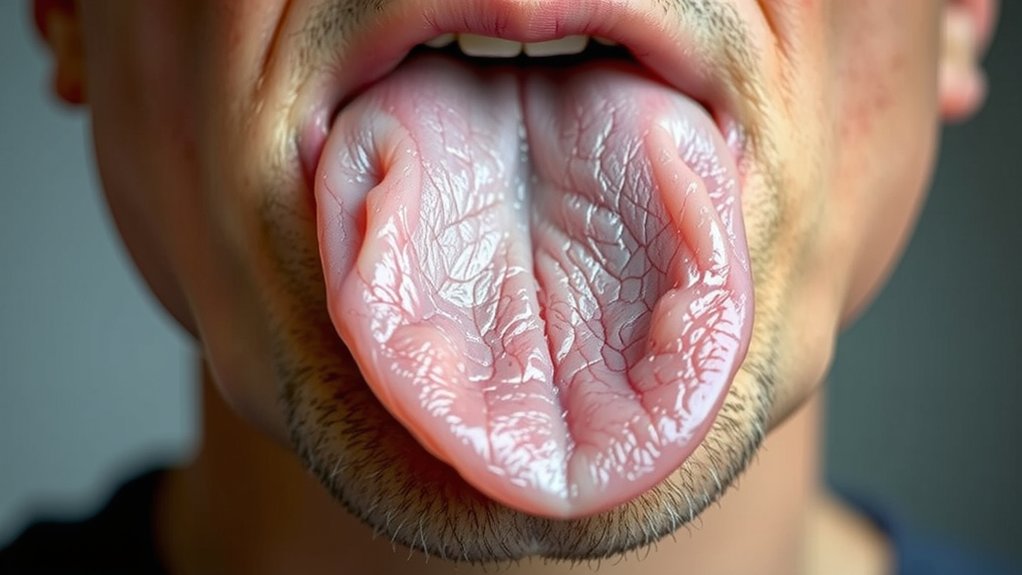
Because a cracked tongue rarely shows up alone, it points to company—and not the fun kind. You’re looking at syndromic patterns and autoimmune correlations, not random bad luck. Sometimes it’s genetics. Sometimes it’s neglect. Dehydration. Mouth breathing. Harsh meds. Or nutrition face‑planting. You want signal, not noise, so read the clues and stop pretending it’s “just texture.”
| Condition | What it hints | Why you care |
|---|---|---|
| Fissured tongue | Often benign trait | Track changes, not panic |
| Nutrient gaps | B12, iron, zinc strain | Energy, skin, mood tank |
| Autoimmune links | Sjögren’s, psoriasis | Dryness, flares, cross-talk |
If it repeats, document it. Pair notes with labs, not guesses. Push your clinician for root causes. Yes, today, not “someday.” Stop stalling and book the workup; your tongue called already.
Symptoms That Suggest Infection or Inflammation
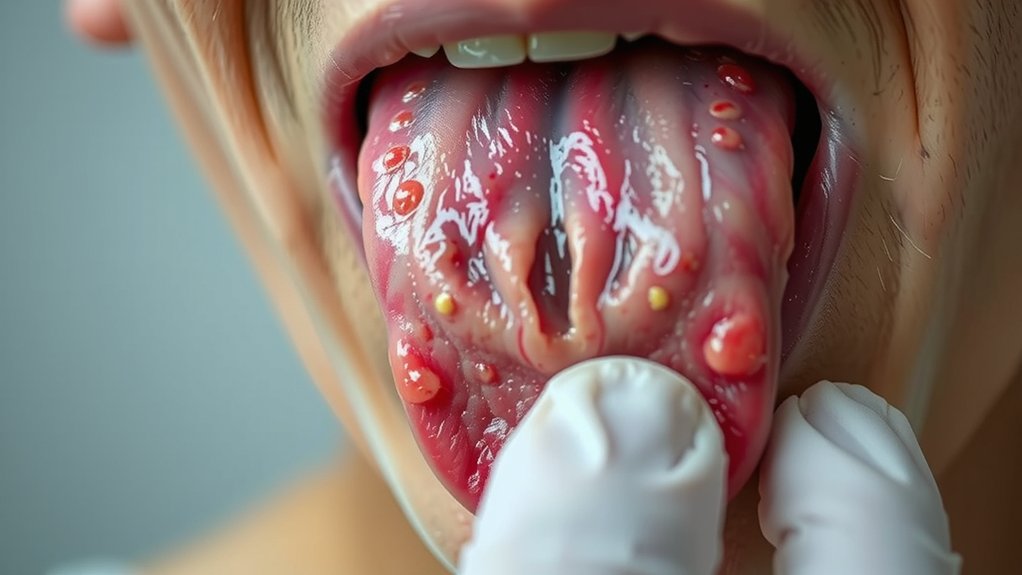
Your tongue hurts nonstop, and you keep pretending it’s nothing—wrong. Angry red cracks, puffy edges, a sting when you sip OJ—classic inflammation calling you out. Add fever or swollen neck nodes and stop stalling, because infection isn’t playing nice and you need real care now.
Persistent Tongue Pain
Although a cracked tongue can look quirky, steady pain screams trouble. Pain that lingers isn’t cute, it’s a flashing siren. It burns when you sip coffee. It stabs when you talk. It aches even at rest. That’s not “just dry.” That’s your body yelling about infection or inflammation. Ignore it and you invite worse. Eat? Hurts. Brush? Hurts. Kiss? Good luck. And then the fallout: sleep disturbance, short fuse, wrecked emotional wellbeing. You can’t focus because every word tastes like sparks. You dodge spicy food like it’s lava. You start whispering, then you stop speaking. Smart move? No. Get real. Track triggers, check mouth habits, ditch harsh mouthwash, hydrate, and book an exam now. Not next week. Now, before pain owns you for good.
Redness and Swelling
If the cracks glow red and the tongue starts puffing, that’s a siren, not a style choice. Red means irritated. Swelling means pressure. Pain joins the party and bites back. You try to talk and the words skid. Hello, speech difficulties. You try to eat and every spice screams. Even water stings. Then night hits. Mouth throbs. Cue sleep disruption. Don’t shrug and wait. Heat plus puffiness plus tenderness says something’s brewing, and it’s not tea. Clean up your act now. Rinse with warm salt water. Stop the hot chips and acid drinks. Hydrate. Keep the tongue off jagged teeth. Lips closed, jaw relaxed. If it keeps raging, get checked fast. Waiting won’t look tough. It just hurts longer. Your mouth deserves peace today.
Fever or Swollen Nodes
Swelling in the tongue is bad enough—now add a fever or those tender lumps under your jaw and it’s a louder alarm. Your body’s shouting. That heat? That ache? It’s immune activation going full siren. Maybe a viral prodrome is kicking off before the main show, or bacteria invited themselves and won’t leave. You feel wiped, edgy, gross. Swollen nodes press like marbles, and you keep poking them. Stop. Note the pattern instead. Fever plus cracked tongue plus nodes equals infection until proven otherwise. Dehydration won’t fix this. Gargles won’t bluff this. You need real evaluation, not wishful scrolling. Call your clinician, today, not “someday.” If breathing, swallowing, or speech tank, skip the hero act and go now. Yes, now. Because delay bites harder.
At-Home Care and Daily Mouth Hygiene
Seriously, your tongue isn’t a trophy—clean it daily or it’ll roast you with bad breath and gunk-packed cracks.
Start simple. Use Tongue scraping every morning, then again at night if you’re brave. Slow firm strokes from back to front. Rinse. Next, fix your Brushing technique. Short strokes near the gumline. Two minutes, no excuses. Get into those traps where funk hides and feeds the fissures. Got sharp edges on a tooth? Cover with dental wax until a dentist smooths it. Don’t pick the cracks. Don’t torch them with harsh scrubs. Clean the brush head. Replace it every three months. Make it routine. Dirty mouth, dirty outcomes. Floss nightly, no skipping. Use alcohol-free rinse after, swish hard, spit. Keep a scraper in your travel kit.
Hydration, Nutrition, and Vitamin Deficiencies
Clean mouth, good start. Now feed that tongue like you mean it. Cracks scream one thing—thirst. Drink water, not sugary sludge. Sip all day. Refill. Repeat. Keep electrolyte balance on point; plain water helps, but minerals matter. Add a pinch of salt and citrus if you sweat like a sprinkler. Eat moisture too—melon, oranges, cucumbers. Your tongue loves wet.
Protein builds tissue. So chew eggs, yogurt, beans. Then vitamins—B12, folate, iron—yeah, the boring heroes. Without them, your tongue pouts, swells, splits. Get them from smart dietary sources: leafy greens, meat or fortified milk, lentils, nuts. Not mystery gummies.
Quit mouth desertifiers. Alcohol. Tobacco. Endless coffee. Dry air blasting all night. You want smooth? Fuel like a grown‑up and hydrate like it’s your job today.
When to See a Dentist or Doctor
Before you shrug it off, know this: cracks can be chill, or they can be sirens. If your tongue burns, bleeds, stinks, or swells, stop the hero act. Call a dentist. White patches? Ulcers that won’t quit? Pain that wakes you up? You’re not special. Get seen. Fever with mouth pain? That’s not a vibe, that’s a warning. Can’t eat, can’t drink, can’t even brush? Enough. Go today.
See a doctor if cracks arrive with new rashes, joint aches, or sudden fatigue. Body talk matters. Sudden trauma or sharp edges shredding your tongue? Fix the cause, then get an exam.
Worried about cost? Fine—check insurance considerations first, but don’t stall. Can’t travel? Use telemedicine access for triage now. Silence isn’t toughness. It’s risk. Period.
Diagnosis and Treatment Options
How do you actually get answers about those cracks? You stop guessing. You let a pro look, poke, and ask hard questions. History first. Dry mouth, meds, burning, blood—spill it. Then exam. Light, mirror, tongue depressor, no drama. Swab for yeast if it’s creamy. If a patch looks weird or won’t heal, Biopsy techniques settle the argument fast.
Treatment isn’t magic. Clean the tongue, hydrate, ditch tobacco, tame reflux. Nutrients matter—iron, B12, folate—so fix the gaps. Got thrush riding those fissures? Topicals help, but stubborn cases need Systemic antifungals. Pain? Rinses numb. Night grinding? Guard up. Ulcers? Remove irritants. Persistent bleeding or weight loss? Don’t play hero. Return. Now. You wanted answers. You got a plan. Move. Follow up, adjust, keep the tongue honest.