
No, a rabbit didn’t hijack Easter by accident. You’re chasing a spring ritual in a church suit. Pagan fertility, German folklore, immigrant hustle—then boom, chocolate sales. Eggs mean birth, hares mean wild renewal, and you buy plush proof. You think it’s cute; it’s ancient. It’s also a moral test in your backyard basket. Want the receipts—how a wary hare became your Sunday mascot and why that hunt still judges you?
Key Takeaways
- The hare’s pagan spring fertility symbolism linked to Eostre/Ostara made it an emblem of rebirth that later aligned with Easter themes.
- German folklore created the Osterhase, a hare that hid painted eggs in children’s nests at dawn.
- Immigrants from German-speaking regions brought the egg-delivering hare to America, where it became the Easter Bunny.
- Marketable, cute rabbits replaced wild hares, and chocolate, plush toys, and ads standardized the modern bunny icon.
- Egg hunts, baskets, and family rituals fuse spring rebirth symbols with playful, non-liturgical traditions around honesty, generosity, and community events.
From Pagan Symbols to Springtime Icons
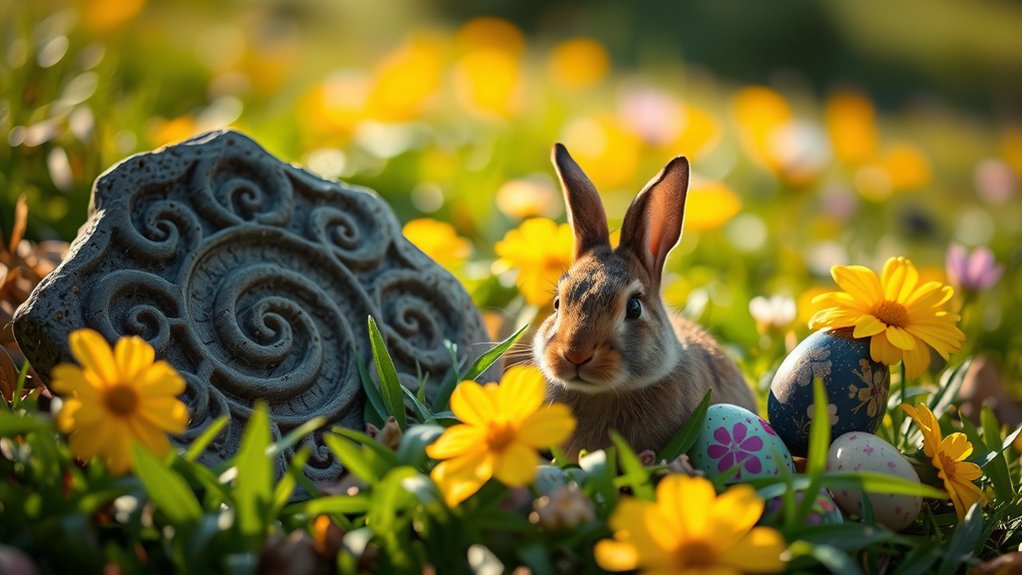
How did a wild, moon‑mad hare become your cute pastel mascot? You didn’t vote for it. Ancient crowds did. They watched the night sky, felt the thaw, and read animal tracks like hot headlines. You chase grades; they chased seasons. The hare ran fast through seasonal festivals, trailing fertility, speed, and audacity. That’s nature symbolism with teeth, not teddy bears. Spring meant risk and return. Food or famine. Life shoving winter aside. You want comfort. They wanted survival. So they picked a creature that multiplied like rumors and bolted like lightning. Admit it. That image sticks. Panic plus promise. You crave renewal? Own the wild source, not the candy coating. Stop pretending tradition is gentle. It’s fierce, cyclical, and very much alive. Right now.
The German Osterhase and Egg-Delivering Hare
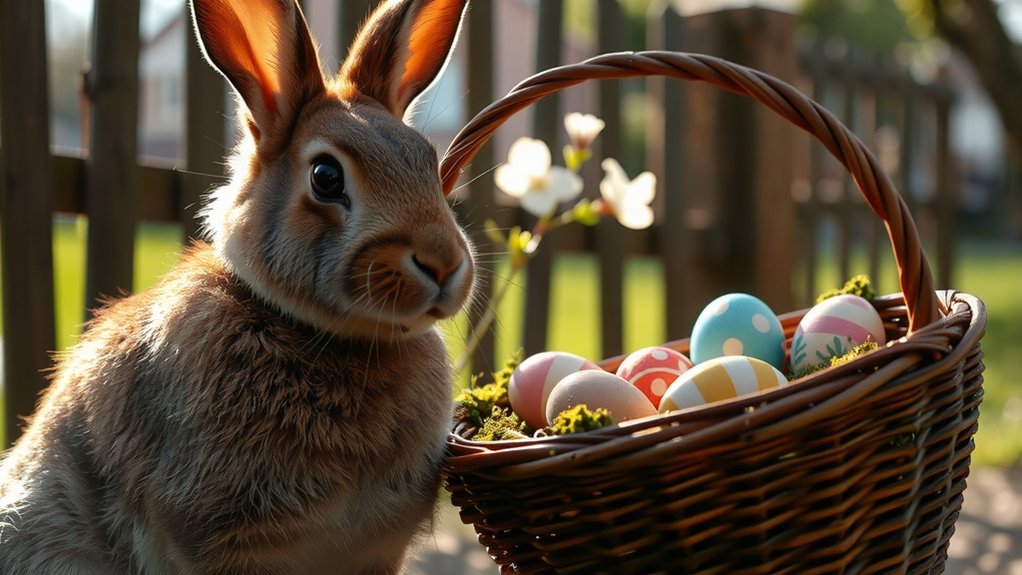
You think the bunny is cute—newsflash—German folklore started with the Osterhase, a sharp‑eared hare that judged kids and dumped eggs like a furry customs cop. Protestant households turned it into a home test—kids built nests, you waited, and the hare delivered bright eggs if you passed. Then the hare got a makeover, you demanded a cuddlier rabbit, and boom, the Osterhase flipped into the Easter Bunny you chase today.
Origins in German Folklore
Why does a rabbit drop eggs like a smug mailman? Because in German folklore you meet the Osterhase, a hare with swagger and a basket. You hear it in children’s rhymes, sharp and sing-song, hopping through Lent’s gray tail and straight into blazing spring. Eggs mean new life. The hare means wild fertility. Boom. Symbols collide. You get color and chaos.
You also get regional variants. Alsace whispers hare. Switzerland swaps in a cuckoo. Some towns say fox. Others swear a stork. Pick your myth, you still chase the eggs.
Older villagers told you the hare came at dawn, fast as rumor, hiding bright shells in hedges and brush. Not pious. Playful. Pagan echoes under church bells. Admit it. You love the mischief today.
Protestant Household Traditions
Even as church bells fade, Protestant homes turn the Osterhase into policy—no saint, no relics, just a hare with receipts.
You run the audit. Eggs appear only if kids play fair. No icons. No incense. You light altar candles anyway, not to pray to them, but to see the mess you’ll judge. Family devotions? Short. Sharp. Scripture, then scavenger hunt. You post clues like commandments. You grade baskets like report cards. Mercy, yes; loopholes, no. The hare delivers, but you verify. You ask hard questions. Who hid? Who helped? Who hustled? You reward courage. You laugh loud. Mean it. Tradition with a spine. Faith with teeth.
| Practice | Rule | Result |
|---|---|---|
| Eggs | Honesty | Joy |
| Clues | Order | Fairness |
| Cleanup | Duty | Peace |
| Candles | Clarity | Wonder |
From Hare to Rabbit
Although the folklore starts with a hare, the street-level mascot you chase today is a rabbit, and that switch wasn’t an accident—it was marketing with cute ears. You wanted cuddly. Merchants heard dollars. Enter the German Osterhase, an egg-delivering hare with spring swagger. But you don’t pet hares. They’re wild, wiry, fast. Rabbits? Backyard stars. Plush-ready. Boom, swap. Biological differences matter, and you prefer cute over correct. You looked away, and the ad men sprinted. Chocolate molds shrank ears, rounded faces, sold innocence by the basket. Language helped too. Linguistic evolution blurred hare into rabbit in songs, sermons, playground chants. You didn’t argue. You bought. You bit. History flinched and moved on. Want truth? The rabbit stole the hare’s job. You helped. Own it.
How Immigrants Shaped American Easter Traditions
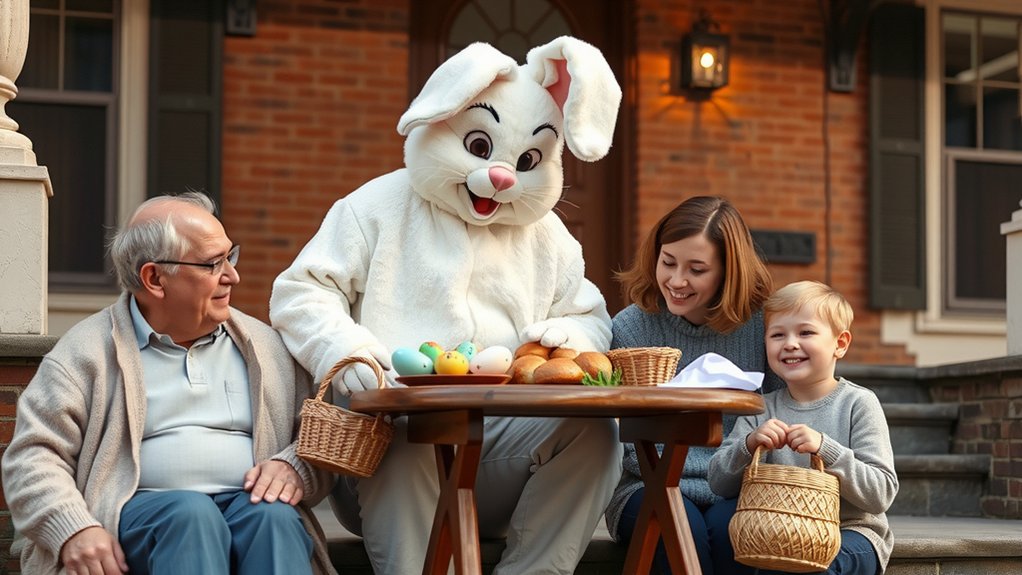
Because newcomers kept stepping off ships with old-country habits, your Easter got weird—in the best way. Germans hauled over an egg-delivering rabbit, sure, but they also built the party around neighborhoods, churches, and bakeries. Settlement patterns did the heavy lifting. Ports first. Then rail towns. Then everywhere. You copied what the next block did because it smelled amazing. Ethnic cuisines shoved their way onto your table—hot cross buns elbowing pierogi, lamb next to kielbasa, sweet breads muscling in like they owned Sunday. You didn’t resist. You bragged. You hid baskets, staged parades, and threw candy like confetti grenades. That’s America: mash-up, turn it louder, call it tradition. Complain if you want. You’ll still queue for chocolate rabbits at dawn. Don’t pretend you invented it.
Why Eggs, Hares, and Fertility Go Together
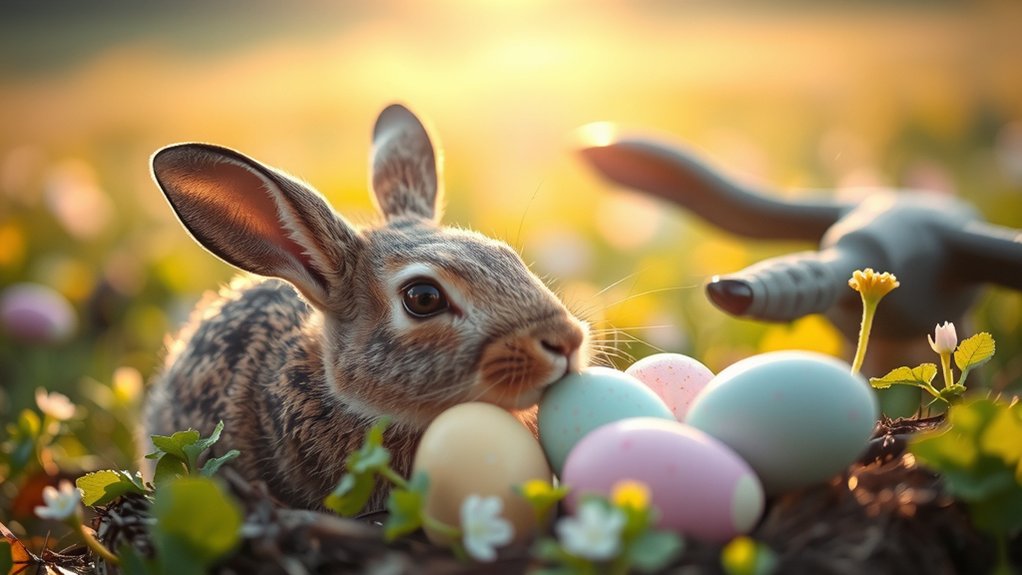
You still think the bunny is just cute fluff? No—Eostre’s spring hare runs with the dawn goddess and shouts fertility, a fierce emblem of life punching through winter. And eggs aren’t snacks but rebirth made solid, so when you crack one you stage a comeback, right now, in your hands.
Eostre’s Hare Origins
In spring’s raw light, the old stories point to Eostre and her hare. You want proof, not pastel myths. Fine. The Bede account drops her name, casual as thunder, then walks away. Typical. You chase Etymological evidence, find trails in dawn words—east, Easter, Ostara—like tracks in wet dirt. Hares explode from hedges. Fast. Skittish. Breed like, well, you know. Spring shouts life, and the hare answers with more life, again and again. You feel that pulse. Don’t pretend you don’t. Ancient folks didn’t. They watched fields wake and saw a goddess in the sprint. Not a cuddly mascot. A surge. A dare. You think that tradition is tidy. It’s not. It kicks. It bolts. And yes, it keeps coming back. Again. Face it now.
Eggs as Rebirth
Shell in your palm. Feel the hush before the crack. That’s rebirth, not cute decor. You break death’s armor and a new thing steps out. Primitive. Honest. Eggs scream life without a microphone. Hares get it. They multiply like rumors, so of course they escort the egg to center stage.
You paint eggs for decorative symbolism, sure, but stop pretending it’s just pretty. Color is a dare. Red for blood, blue for sky, gold for guts. Then you eat the thing. Culinary symbolism with teeth. Protein, not poetry. Feast after fasting. Body after myth.
You want proof of spring. Hold it, dye it, smash it, devour it. Cycle complete. Start again. The Bunny’s the hype man. The egg is the headliner. Act like it.
From Folklore to Chocolate and Plush: A Marketing Leap
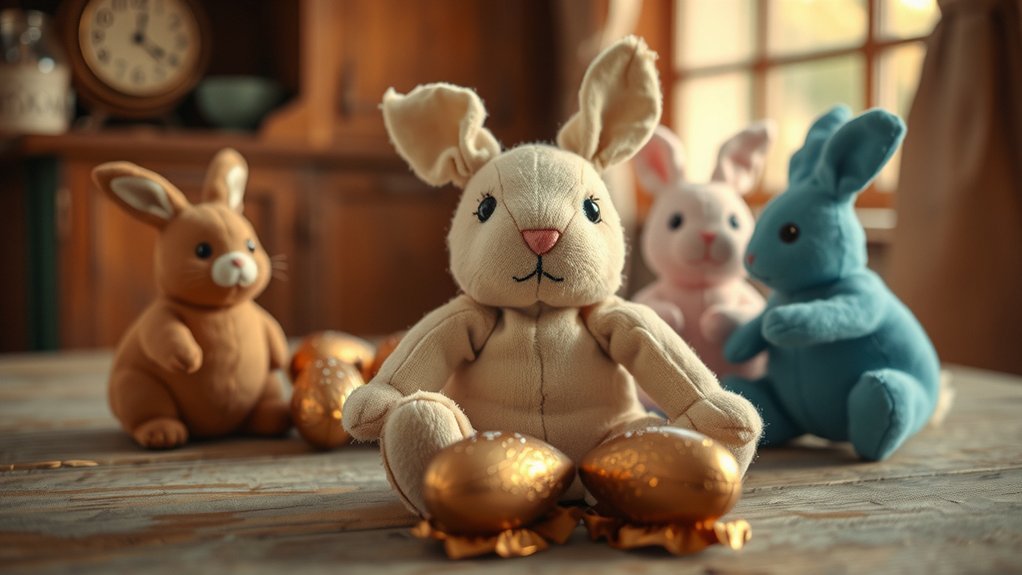
Though born in whispers of folklore, the bunny didn’t stay a ghost—it crashed the marketplace with sugar on its paws and a grin you could sell by the truckload.
Folklore whispered a bunny; the market heard cash and painted its paws with sugar.
You didn’t just watch; you bought, then bragged.
Chocolate hares winked from shelves like tiny sales cops.
You obeyed.
Factories molded cuteness, and cash followed.
Brands smelled opportunity and pounced.
Character licensing turned one furry myth into a product army, marching across aisles, conquering endcaps, invading your cart.
Seasonal advertising hammered you with pastels, jingles, urgency, now now now.
Resistance looked cute and lost.
Then plush arrived.
You hugged the mascot, you paid the price, you called it tradition.
Don’t flinch.
You wanted magic and sugar and softness, and the market delivered, hard.
Every time.
Religious Resonance: Renewal, Resurrection, and the Bunny
While the pews fill and hymns rise, the rabbit still hops in, uninvited and loud. You want resurrection to behave, neat and stained‑glass safe. It doesn’t. Life bursts out. So does the bunny. You see Paschal imagery and you shrug. Eggs, gardens, dawn. Too cute, right? Wrong. New life shouts. It scratches dirt. It multiplies like a dare. You pray for renewal yet fear mess. Pick one. The empty tomb breaks rules, so symbols misbehave too. That’s the point. Preachers reach for Sermon metaphors. They grab fur and soil and heartbeat. You need that jolt. Soft ears. Hard truth. Death lost. Life sprints. Don’t domesticate Easter. Let it kick. Let it hop over your doubt, then back again, relentless. Face it with open hands.
Modern Celebrations: Hunts, Baskets, and Community Customs
Because spring refuses to whisper, you throw a hunt. You stake bright eggs across grass, then dare everyone to move. Fast. Kids sprint. Teens scheme. Adults pretend not to care and dive anyway. You stuff baskets with candy, notes, and tiny kindness. You make space. Inclusive Events, not exclusive cliques. You post Safety Guidelines because common sense isn’t common. Allergies? Label them. Mobility needs? Change the field. No excuses. Community shows up. You lead.
| Activity | Who | Bold Move |
|---|---|---|
| Dawn dash | Kids | Extra golden egg |
| Puzzle trail | Teens | Cryptic map |
| Quiet corner | Sensory | Noise-cancel space |
| Swap table | Everyone | Trade treats |
Then you clean the park, thank volunteers, and post photos. Not for clout. For memory. For momentum. Next year arrives louder. You’ll be ready. Always.