
You saw “high sed rate” on your lab and freaked. Good. You should ask why. ESR means your red cells drop fast because inflammation makes them clump. Infection? Autoimmune flare? Cancer? Or just pregnancy, anemia, age. Annoying test, vague signal, real stakes. Don’t panic. Don’t ignore it either. Pair it with CRP, symptoms, past values. Want to know what actually matters—and what you can do next?
Key Takeaways
- ESR measures how fast red blood cells settle in one hour; higher rates indicate more inflammation-related protein-driven clumping.
- A “high” ESR is above your lab’s reference range; mild, moderate, or dramatic elevations suggest increasing inflammatory burden.
- Common causes include infections, autoimmune diseases, chronic inflammation, pregnancy, anemia, kidney disease, some cancers, and aging.
- Compare ESR with CRP: high CRP suggests acute inflammation; isolated high ESR often reflects chronic or lingering processes.
- Don’t overreact to one result; repeat with the same method, assess symptoms, and follow up with targeted tests or imaging.
What ESR Measures and How the Test Works
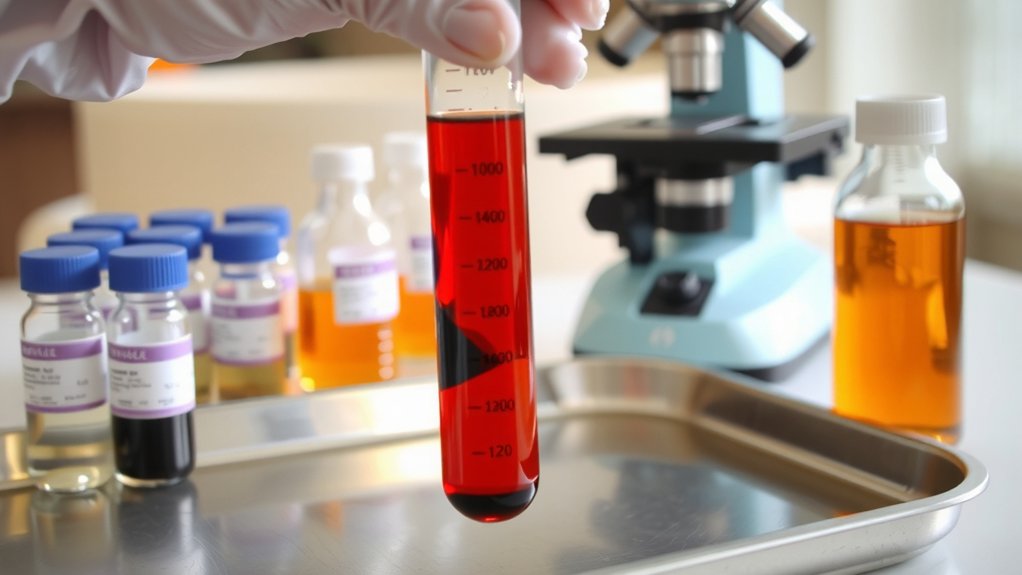
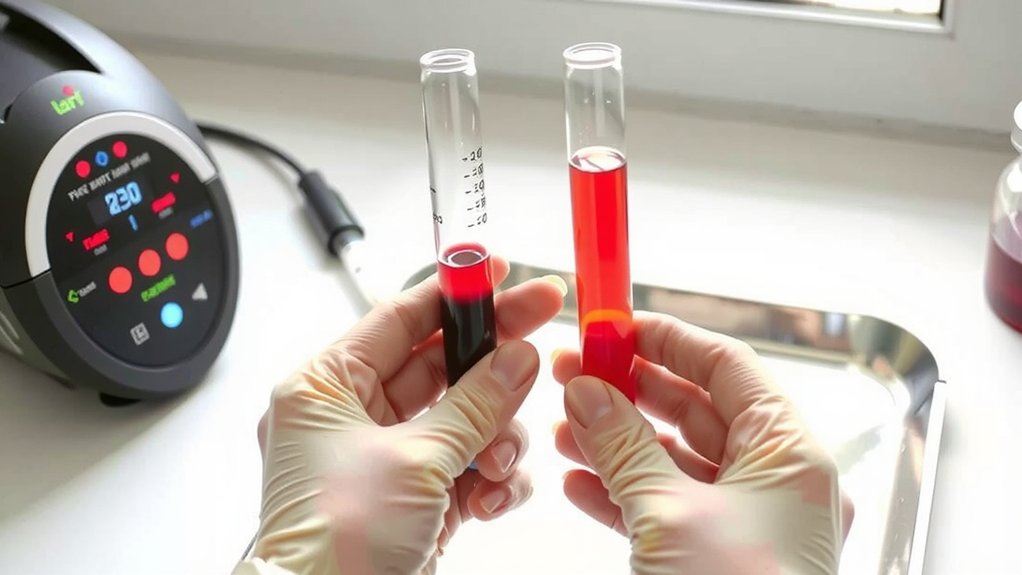
Lab‑tube reality check: the erythrocyte sedimentation rate—ESR—measures how fast your red blood cells sink to the bottom of a tall tube in one hour.
You watch gravity bully your cells. Clumped cells drop faster. Solo drifters stall. That clumping has a name: Red cell aggregation. Proteins glue the stack. Rouleaux like coin rolls. Not cute. You want mechanics? A tech draws your blood, mixes anticoagulant, then loads a tall calibrated tube. The Westergren method rules the lab. Zero at the top, millimeters tick down, one hour, no excuses. You wait. The plasma rises, the red column falls, and the distance tells the tale. Big drop? Big drama in the bloodstream? Maybe. Small drop? Different story. Either way, the test times the fall. Simple. Revealing.
Normal Ranges and What Counts as High
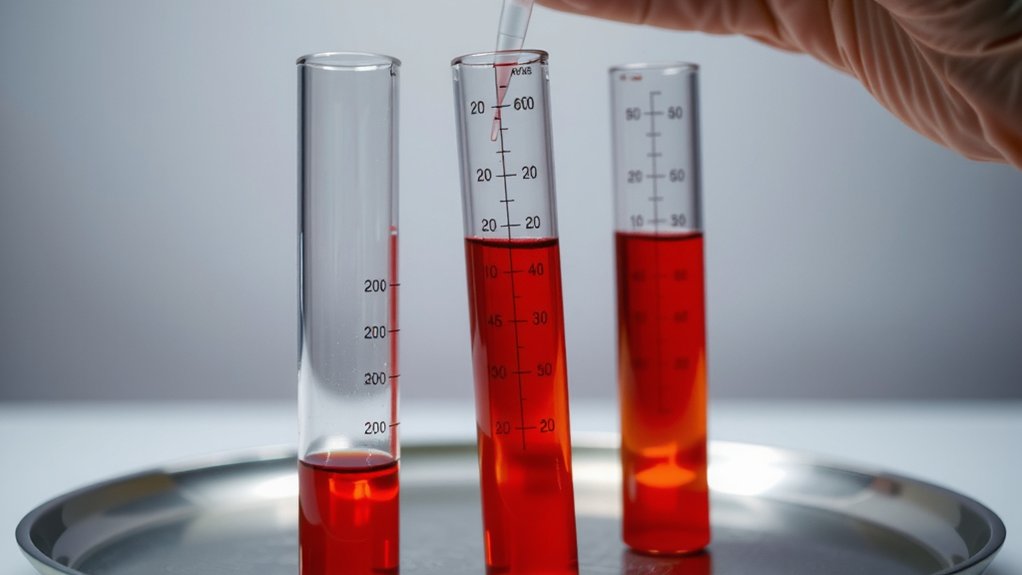
You watched the red column fall; now you want the scorecard. ESR is read in mm per hour. Labs set ranges, not Twitter. For adults, men often top out near 15–20, women 20–30. Kids run lower. Older adults drift higher. That’s age stratification, not mystery. The rule is simple: your number lives inside the lab’s reference band, or it doesn’t.
So what’s high? Above the stated upper limit. Slightly? Think 5–10 points over. Moderately? 20–40 over. Dramatically? Triple digits. Yes, 100 mm/hr turns heads. Context matters, but don’t hide behind it.
Use population percentiles if you like percent games. Sitting at the 95th? That’s high. The 50th? Relax. Also check method notes and units. Same test, different lanes. Compare repeats, not rumors. Next, confirm.
Common Causes of Elevated ESR
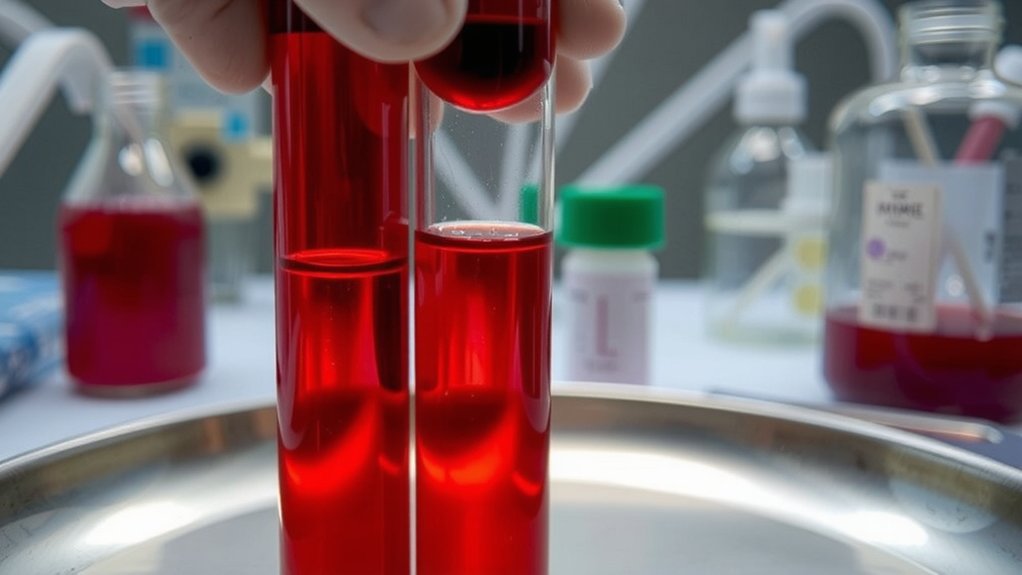
Your ESR is high because your body’s on alert, not nap time—think infections that torch tissues and swelling that won’t quit. Strep throat, a nasty UTI, pneumonia—bam, the needle jumps; inflammation shouts, the lab listens. Or it’s your immune system going rogue with autoimmune hits like lupus or rheumatoid arthritis, friendly fire that cranks the number up and dares you to ignore it.
Infections and Inflammation
When germs invade or tissues ignite, the ESR shoots up—fast. Your blood reacts like an alarm siren. Infections light the fuse. Bacteria, viruses, fungi—pick your villain. Their Pathogen virulence sets the tempo. Meaner bugs, higher ESR. You feel lousy, and your tube of blood agrees. Clumping red cells settle quicker. Boom, higher number. Inflammation does the same dirty work. Burn a tooth abscess, flare a bronchitis, nick a joint—watch it climb. Your immune system fires messengers, then more, then too many. Hello, Cytokine storm. Heat, swelling, pain, fever. Not subtle. You wanted quiet? Tough. ESR won’t whisper. It shouts. It tells you something’s brewing now, not someday. So you check the source, treat the spark, and stop the blaze. Move fast. Don’t wait. Act.
Autoimmune Diseases
Although it’s supposed to guard you, the immune system can turn traitor and light up your ESR like a flare. When it misfires, you attack you. Rheumatoid arthritis torches joints. Lupus slams skin, kidneys, brain. Vasculitis? It blocks roads and starves tissues. Your blood settles fast because inflammation shouts. Loud. And guess what. You might have a genetic predisposition, a loaded trigger you didn’t pick. Environment pulls it. Stress fans it. Infection starts the rumor. You pay the bill. Don’t shrug. Ask for targeted tests, CRP, autoantibodies, imaging. Track flares. Demand patient support, not vague smiles. Push for treatment—steroids, DMARDs, biologics—whatever cools the fire. Move, rest, repeat. Eat smart. Question everything. Don’t wait. Fight back. Today. Your body, your rules, your comeback, not theirs.
Other Conditions and Factors That Can Raise ESR
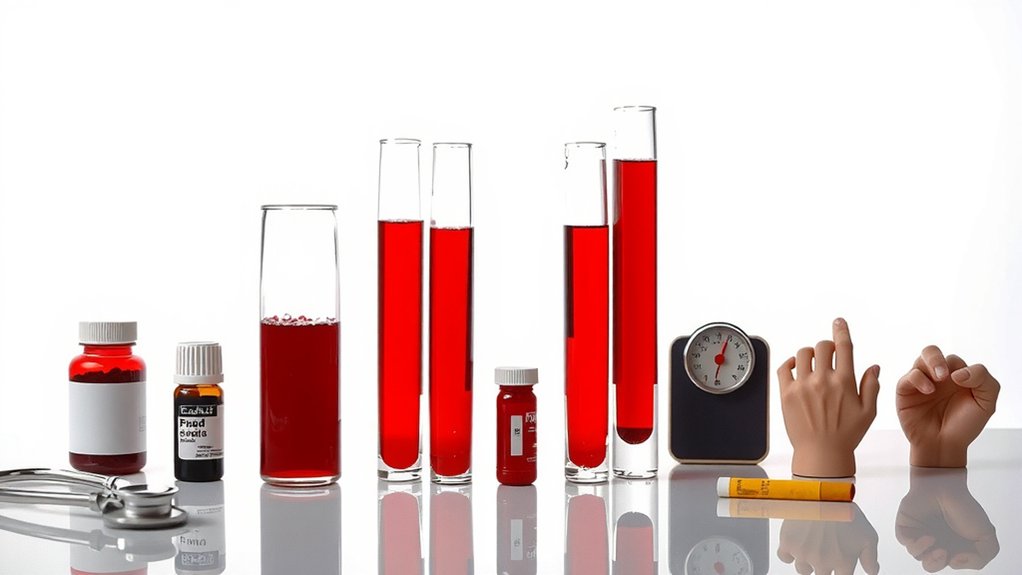
Because life loves to muddy the waters, plenty of things jack up ESR that aren’t some dramatic autoimmune ambush. You get a cold, boom, ESR ticks up. A tooth abscess? Same deal. Pregnancy effects push proteins higher and the number follows. Obesity influence does too, like a slow drumbeat you can’t ignore. Age nudges it north. So does anemia. Kidney disease, some cancers, diabetes, even thyroid swings, all pile on. Surgery last month? Big bruise last week? Expect a bump. Smoking stirs the pot. Birth control and hormone therapy can raise it. So can infections you haven’t noticed yet. Dehydration fools it upward. Lab quirks matter, tubes tilt, temps shift. Point is simple. High ESR screams “look around,” not “panic.” Breathe, then test again.
ESR vs. CRP: How Doctors Use Them Together
You want answers now? CRP spikes within hours when inflammation erupts today; ESR rises slower and hangs on, exposing the slow burn you keep ignoring. That’s acute versus chronic, siren versus echo, flare versus fallout. Doctors use both to nail the diagnosis, steer treatment, and monitor you hard—if the numbers jump you act, if they fall you breathe.
Inflammation Timing Differences
When the fire starts, CRP screams first; ESR shows up late, grumbling. You want speed? CRP spikes within hours. It’s the smoke alarm. Loud. Bossy. Useful. ESR lags; fibrinogen makes red cells clump, and the tube falls faster later. Slow. Sticky. Annoying. That delay matters. You feel awful today, CRP agrees now; ESR shrugs until tomorrow. Doctors read both, then push you for patterns. Rise fast, fall fast? CRP tells the turns. ESR shows the drag. Timing isn’t random, either. Circadian immunology shifts baselines morning to night, while microbiome rhythms nudge liver signals and clot proteins. So test times count. Same lab, same hour, or you chase ghosts. Want clarity? Pair them, repeat smartly, and stop guessing. Start acting. Your body hates lazy timing.
Acute Versus Chronic Signals
CRP screams early, ESR sulks late—fine, clock checked; now use that split to sort lightning from smolder.
You chase heat, not ashes. CRP pops within hours. Infection? Trauma? You see it shout. ESR drags in later, backs the long haul. Autoimmune grind. Old smoke. You think immune memory, flares that refuse to quit. Meanwhile tissue remodeling nudges ESR up, like dust settling, slow and stubborn. Use both or get fooled. High CRP with low ESR? Flash fire. Low CRP with high ESR? Long simmer. Both high? Buckle up.
| Pattern | What it hints | Why it behaves |
|---|---|---|
| Flash high CRP, low ESR | Acute hit | Liver pumps CRP fast |
| Low CRP, high ESR | Chronic churn | Fibrinogen stacks RBCs |
| Both high | Mixed storm | Ongoing damage plus fresh sparks |
Guiding Diagnosis and Monitoring
Because one spikes fast and the other lingers, smart clinicians pair CRP with ESR to nail timing and track the fight. You want answers now. CRP jumps in hours. ESR drifts for days. Together, they draw a timeline. Early blaze or slow burn. Infection raging or smoldering autoimmune mess. You don’t guess, you triangulate. But watch the traps. Laboratory variability bites, so repeat tests, same lab, same method, or stop pretending trends matter. Use clinical algorithms, not vibes. High CRP plus normal ESR? Think acute hit. Both high and stubborn? Think ongoing damage. Falling CRP, lagging ESR? Good—momentum’s turning. Don’t chase single numbers. Chase direction. Context rules. Symptoms speak. Imaging checks. And yes—treatment changes when the line bends. Measure, compare, decide. Then act hard.
How Clinicians Interpret Results and Next Steps
How do clinicians read a high sed rate? They don’t gasp. They triangulate. Context first—your story, your exam, the timeline. Numbers aren’t oracles; they’re clues. A fast fall of red cells screams inflammation, sure, but what kind, what stage, what trigger? They compare with prior results, patterns, and flags from other data. Then they talk to you like an adult. Risk communication, not sugar‑coating. Clear stakes, plain tradeoffs, no mystic lab-speak.
Next, they map roles. Care coordination, not chaos. Primary drives, specialists weigh in, nurses track changes, everyone owns a lane. They set priorities: calm the fire, protect function, watch trends. No victory laps for a single lab. They want trajectories. Consistency beats drama. And if the picture shifts, the plan pivots—fast. Very fast.
When to Seek Medical Advice and Follow-Up Testing
When should you call? When your sed rate jumps and your body screams. Fever that won’t quit. Night sweats. Chest pain. Shortness of breath. New weakness. Rapid weight loss. Swollen, hot joints. Vision changes. Don’t wait. If ESR is sky‑high or rising fast, stop guessing and call today.
Bring receipts. That’s Appointment Preparation. List symptoms, dates, meds, infections, vaccines, and family history. Snap photos of rashes. Track pain scores. No list, no mercy.
Hate waiting rooms? Use Telemedicine Options for quick triage, then get labs repeated in person. Ask blunt questions: What’s the likely cause, what tests next, what’s the timeline. Demand follow‑up within weeks, not months. If you’re blown off, escalate. Yes, you’re the squeaky wheel. Good. Keep pushing until answers show up.