
You think that cut is fine? Prove it. If it’s getting redder, hotter, and angrier by the hour, it’s not “just healing,” it’s waving a red flag. Throbbing pain? Swelling that won’t quit? Pus playing peekaboo? That smell isn’t “normal.” And if the redness is creeping outward like a crime scene, stop pretending. You’ve got a problem. Want to know the line between toughing it out and calling a pro?
Key Takeaways
- Increasing pain, throbbing especially at night, wound widening or not improving.
- Spreading redness/heat: expanding halo, hot to touch, red streaks toward lymph nodes.
- Thick yellow/green/gray pus or foul odor; persistent blood-tinged drainage; increasing volume from ooze to gush.
- Swelling that worsens daily, tight glossy skin, reduced range of motion or function.
- Systemic signs: fever, chills, fatigue; tender swollen lymph nodes near the area; high-risk wounds need urgent evaluation.
Normal Healing vs. Signs of Infection
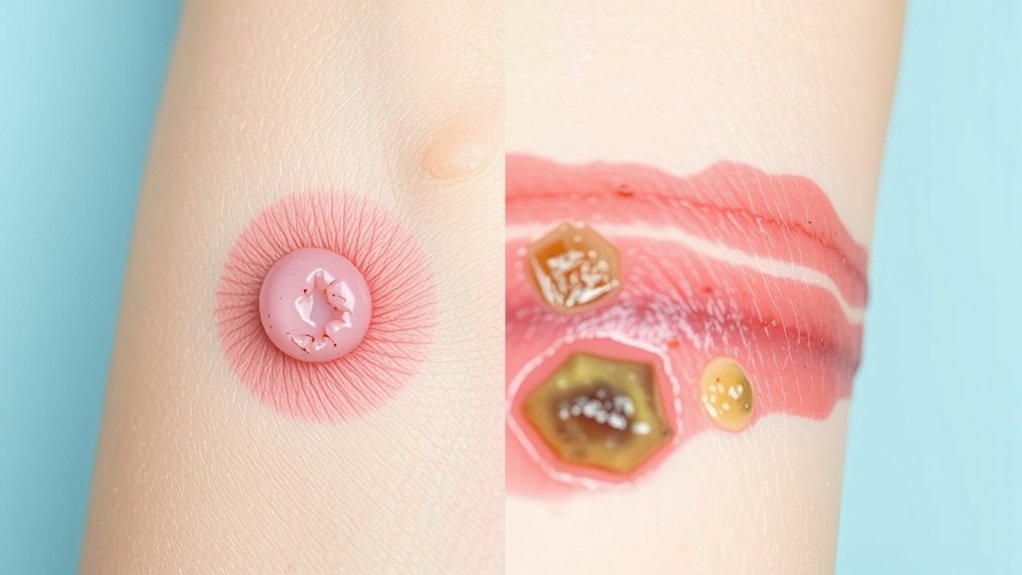
If you’ve ever stared at a scab and wondered “is this fine or am I doomed,” good—pay attention. Normal healing is boring. You clean, cover, and watch scab formation do its job. Pain eases daily. The cut shrinks. Edges meet like friends who finally apologize. No drama.
Infection loves drama. Pain ramps up. Throbs at night. The wound leaks thick yellow or green junk, maybe smells like a gym bag left in August. It widens instead of closing. Skin feels tight and tender. You get chills or feel weirdly tired. That’s your body yelling.
Still not sure? Press the area gently. Fresh blood is fine. Cloudy pus is not. Over weeks, scar remodeling should smooth things out. If healing stalls, stop guessing. Get help.
Redness, Swelling, and Warmth: What’s Concerning
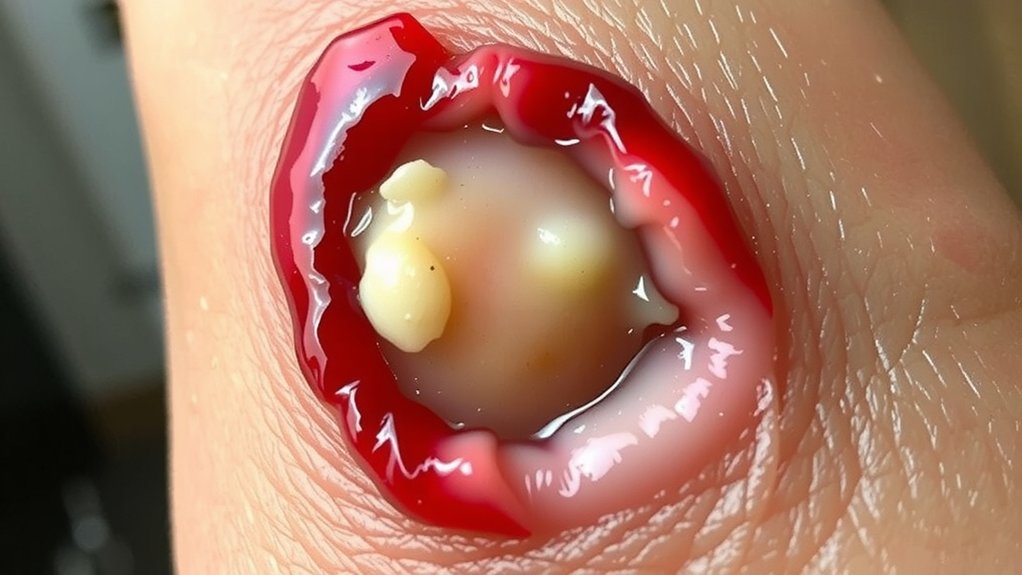
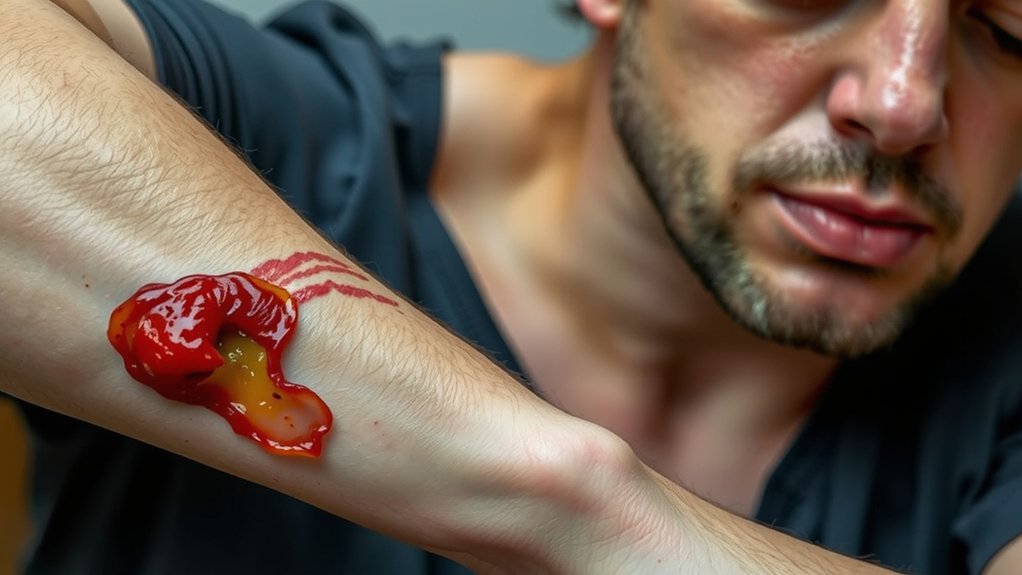
See that red halo creeping outward, lines marching up the skin like it’s plotting a road trip—yeah, spreading redness is a bad sign, not a hero story. If the puffiness won’t back off after 48 to 72 hours or keeps getting bigger, you’re not “just healing,” you’re ignoring a flare that wants center stage. Warm is normal day one, but hot-to-the-touch heat that outmatches the surrounding skin—especially with tenderness—means trouble, so stop pretending it’s fine and act.
Spreading Redness Patterns
Because cuts don’t send calendar invites, you watch the skin. Red that behaves matters. Does it bloom outward like spilled paint? Does it draw sharp lines like a mapmaker? You don’t negotiate with creep. You call it. Patchy islands mean spread. A hot rim with central clearing? Not cute. Serpiginous margins snaking away? That’s a menace. Thin red tracks racing toward your elbow or groin? That’s your wake‑up slap. You mark the edges. You don’t blink.
| Pattern | What you see | What it screams |
|---|---|---|
| Ring | central clearing, bold rim | donut of trouble |
| Wavy edge | serpiginous margins | infection creeping |
| Linear streaks | red lines toward node | lymph channel alarm |
If color sharpens, heat spreads, or lines march, assume escalation. Act. Clean, cover, seek help from a clinician.
Persistent Swelling Timeline
You chased the red lines; now clock the swell. Swelling should peak early then back off. Not drag on like a bad sequel. Morning check. Night check. That’s diurnal variation—normal shifts, small, predictable. But if each day looks bigger, you’re losing. Track activity correlation. Walk more, swell more? Fine, it should deflate with rest and elevation. If it doesn’t, that’s a flag. Tight shiny skin. Finger marks that linger. Throb that won’t quit. Range shrinks. Shoe won’t fit. Two days in and the girth still climbs? Stop pretending it’s nothing. Mark the edges with a pen and time-stamp them. Compare, brutally. Better by 72 hours, or worse? Worse means call a pro. Today, not next week. Don’t negotiate with infection. Get help. End drama.
Warmth Versus Normal Healing
While a healing cut can feel a little warm—like a fresh sun patch on skin—it shouldn’t feel like a space heater glued to your body. If the skin blazes, throbs, and the red halo keeps spreading, stop pretending it’s fine. That’s a warning. Normal warmth fades. Infection heat lingers and climbs. Touch it. Does it sting like a hot coin? Look for swelling that pushes tight, glossy, angry. Compare sides. One cool, one cooking. Not normal. Grab a thermometer. Any will do—digital, infrared, old‑school. Different thermometer types, same truth. Rising numbers mean trouble. Strip back clothing insulation. Don’t trap heat and fool yourself. Elevate. Hydrate. Recheck in an hour. Hotter, redder, angrier? Call a clinician now. Don’t wait. Don’t argue. Get help, end doubt.
Pus, Drainage, and Odor: Interpreting Discharge
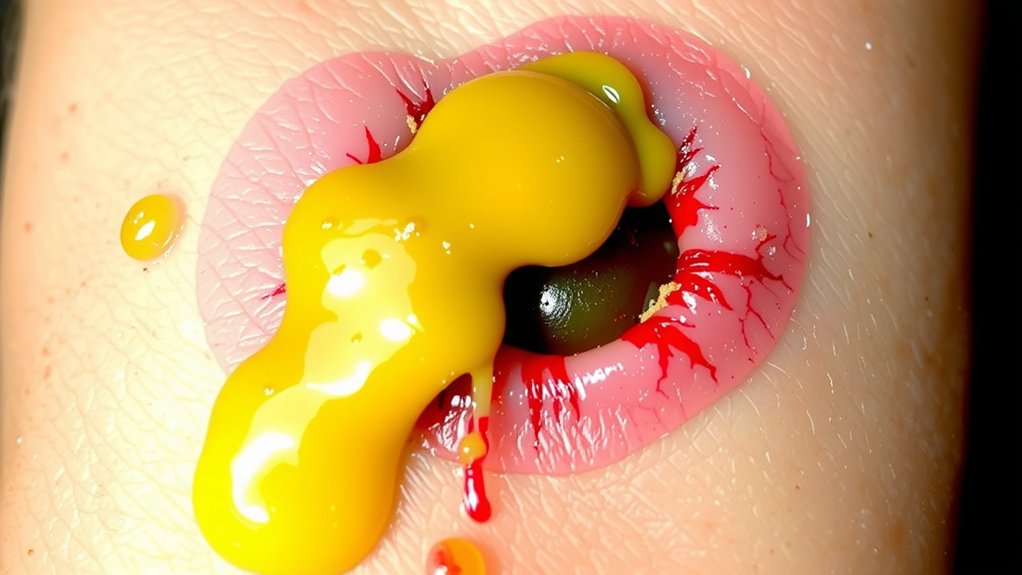
If pus shows up, your cut is talking—and it’s not saying anything nice.
Yellow, green, or gray sludge screams infection. Thin clear fluid early on? Fine. Thick goo that clumps and sticks? Not fine. And blood-tinged slime that keeps coming? Big red flag. Smell it. Sharp sour stink means trouble; sweet rotten funk means worse. That’s odor chemistry, not drama. Bacteria party, you pay. Want proof? Do microbial analysis: more discharge, darker color, nastier smell, faster flow. Pattern matters. Drip turns to ooze then gush? You’re losing. Small scab with big puddle under it? Same story. Keep it clean, cover it, stop squeezing like a hero. If discharge grows, if fever joins, or red streaks march outward, stop guessing and get urgent care now.
Pain, Tenderness, and Reduced Function
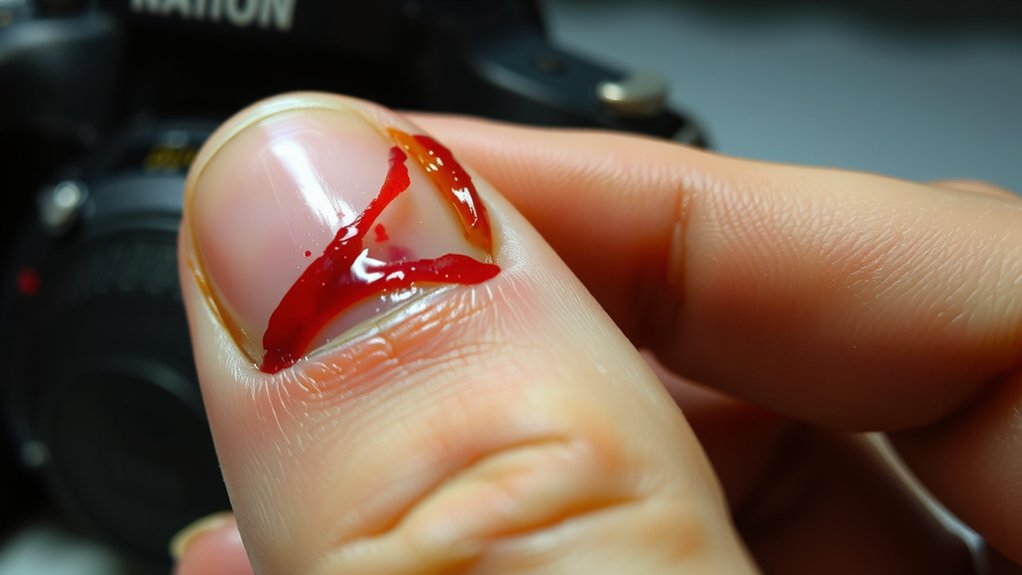
Touch it and you flinch—yeah that’s tenderness not bravery points. You try to bend lift or twist and the joint says nope; your range of motion just got taxed. If a cut bosses you around like that you don’t wait, you act because pain that shuts you down is a warning siren not a suggestion.
Tenderness to Touch
Because even a light tap makes you flinch, that cut is talking—loud. It hates fingers. It hates sleeves. Brush it once and your nerves scream like sirens. That’s tenderness. Not cute. Not “just a scrape.” Your skin runs a brutal sensory mapping experiment every second and the data is ugly. A breeze hurts. Soap burns. Clothing irritation? It’s a bully with spikes. You avoid contact like it’s a live wire, then touch it anyway, and instant regret. Pulsing. Heat. A sharp sting that bites harder when you press near it. Why so dramatic? Because swelling ramps pressure and inflamed tissue amplifies every poke. You call it sensitive. It calls for attention. So listen. Stop poking. Cover it. Clean it. If it worsens, get help.
Limited Range of Motion
While the cut looks small, your joints know the truth. You try to bend. They refuse. Stiff, hot, stubborn. Pain bites then lingers, like a bad song on repeat. You push harder. It pushes back. Range shrinks. Tasks stall. Button a shirt? Hilarious. Grip a mug? Comedy. Infection swells tissue, jams tendons, sparks nerve entrapment that zaps you when you move. Your body guards the wound with tension, then punishes you with sharp protest. Keep babying it and muscles quit; hello muscle atrophy. Keep ignoring it and function tanks faster. Can’t straighten. Can’t twist. Can’t trust that joint at all. That’s not drama. That’s mechanics. Heat, redness, throbbing, then loss of motion. Test it now. Compare sides. Feel the limit. Believe it. Act now.
Body-Wide Symptoms: Fever, Fatigue, and Swollen Lymph Nodes
Sometimes your body hits the panic button for you. Fever shows up like a flashing siren. You feel hot then cold then irritated. That’s not drama. That’s a systemic response. Your immune activation kicks hard, blasting heat to slow invaders and speed defenders. You sweat. You shiver. You hate everyone. Meanwhile fatigue stomps you. Not cute tired, brick‑on‑chest tired. Simple tasks feel epic. Climbing stairs? Ha. Even scrolling hurts. Then the lymph nodes join the party. Jawline marbles. Tender pits. A sore lump in your groin that wasn’t invited. They swell because they’re filtering the mess, trapping bacteria, swelling like bouncers on payday. Your body is broadcasting the headline in bold: this cut isn’t local anymore. Pay attention. Don’t pretend. Hear it. Act wary.
When to Seek Medical Care and What to Do Next
Fever, bone‑deep fatigue, swollen nodes—yeah, that’s your warning siren. Don’t wait. Call your doctor or hit urgent care today if redness spreads, pain throbs harder, pus pools, or red streaks climb your skin. Bite, puncture, hand, face, or groin wound? Go now. Can’t move the area, or you’ve got diabetes, chemo, or steroids? Stop stalling.
Before you go, clean gently with soap and water, then cover. Don’t squeeze. Don’t “air it out.” Take photos for Wound documentation. Circle the redness with a marker. Note fever numbers. Bring meds, allergies, tetanus dates.
At the clinic, ask for clear next steps, antibiotics if needed, and Follow up scheduling within 24–48 hours. Take every dose. Recheck if worse. Spreading pain? New fever? Back you go. Right now.