
Spot a tiny “925” on your ring and think it’s random? Wrong. You’re looking at sterling silver—92.5% real silver, built for daily abuse. Not pure, not junk. And yes, it can be gold‑colored. That’s plating, not magic. You want value, not mystery metal. You want shine without lies. So how do you tell the real stuff from fakes, and why does it tarnish anyway? Good question—now let’s get blunt.
Key Takeaways
- 925 indicates sterling silver: 92.5% pure silver alloyed with 7.5% metals (usually copper) for strength.
- It’s a hallmark found on rings, chains, clasps, earring posts, bails, and other jewelry parts.
- 925 marks composition, not brand, origin, price, or style; additional maker or assay marks provide more detail.
- On gold-colored pieces, 925 means gold-plated sterling; thicker plating meeting vermeil standards should list karat and micron thickness.
- Genuine sterling shows low magnetism and tarnishes slowly; lack of clear hallmarks warrants further testing or verification.
What 925 Means in Jewelry Hallmarks
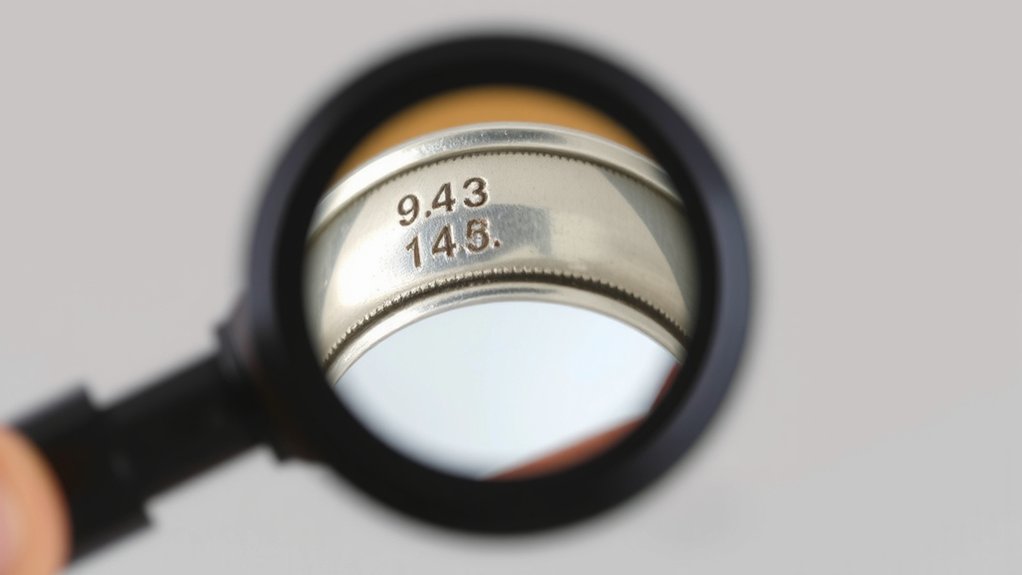
One number, one truth: 925 means sterling silver—92.5% real silver, the rest toughening metals like copper. You see it stamped inside rings, tucked on clasps, hiding under pendant bails. It’s a hallmark, not a mood. It identifies the alloy and dares fakes to try. Historical origins? Medieval guilds, brutal standards, molten tests, no excuses. Assay offices cut, scratch, and certify, so your mark isn’t a cute decoration. You want fairy tales. Consumer myths scream that 925 means plated, cheap, or “not real.” Stop. It marks composition, not price, not style, not clout. Pair marks matter: a maker’s mark, maybe a lion, maybe a country code. You read the set, not one digit. Learn the language. Buy smarter, today. Demand proof, reject hype, insist tests.
Sterling Silver vs. Pure Silver
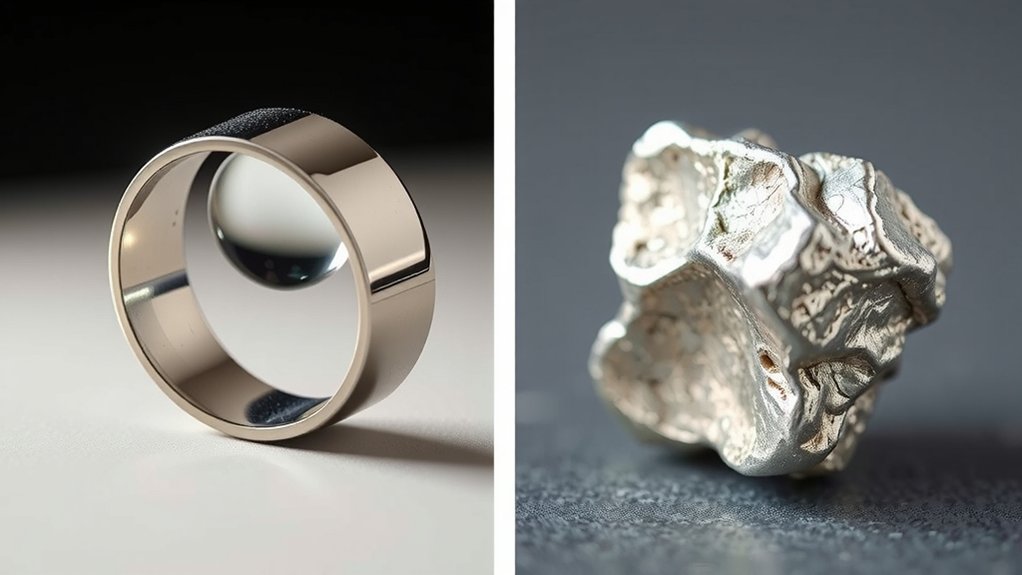
While pure silver sounds like the holy grail, it isn’t your everyday hero. You want beauty, but you also want backbone. Pure silver is soft. It bends. It scuffs. Its Mechanical Properties scream handle with care. Sterling steps in at 92.5% silver with copper riding shotgun. Stronger. Tougher. Ready for daily chaos. Rings, chains, charms—the stuff you actually wear—need that grit. You don’t baby a bracelet in math class.
Don’t romanticize the past, either. Historical Uses loved sterling for coins, cutlery, and gear that took hits. Why? Durability, not fairy dust. You want a bright shine that survives life, not a diva that sulks in a drawer. Pick sterling when you plan to move, work, sweat. Save pure for show. Or suffer. Your call.
Why 925 Appears on Gold‑Colored Pieces
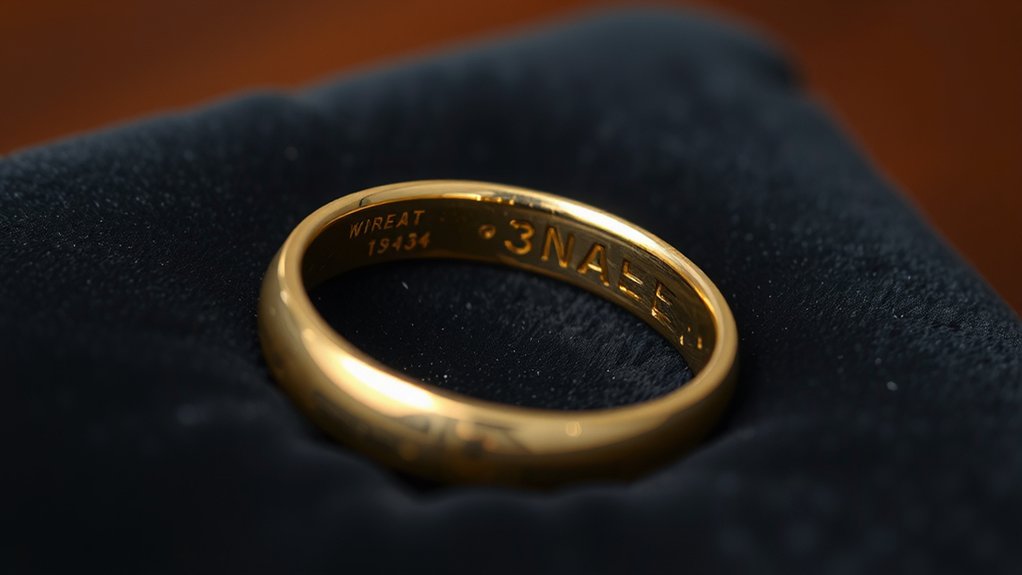
You spot 925 on a gold‑colored ring and think it’s solid gold—no, it’s sterling silver under gold. That stamp usually means gold‑plated sterling silver, while true vermeil hits stricter rules: sterling core, real gold of at least 10k, and a thicker layer around 2.5 microns that doesn’t flake like cheap flash. Want the look without the lie—then say it—demand “vermeil” and the thickness specs, or walk.
Gold-Plated Sterling Silver
Gold‑plated sterling is the plot twist behind that shiny “gold” ring stamped 925. You’re looking at a silver core wearing a gold coat, not solid gold. The 925 marks the sterling base, period. Jewelers slap on a thin gold skin through an electroplating process, fast and flashy, sometimes cheap, sometimes decent. It looks rich. It isn’t. Sweat, lotion, and time chew that layer. High spots fade first. Surprise. Silver peeks through. You panic. Don’t. Clean gently. Avoid pools and perfumes. Store dry. If it wears down, replate it or own the two‑tone drama. Ask sellers how thick the coating is, what karat, and what warranty. Push them. Ask about chemicals and waste. The environmental impact isn’t cute, so buy better, keep longer, repair, repeat.
Vermeil Standards
Meet the upgrade: vermeil—real sterling (925) under a serious gold coat. You see gold, you read 925, you think scam. Relax. Vermeil means thick plating on sterling, not mystery metal. Standards matter: at least 2.5 microns, real gold, 10k or higher, usually 14k for color that pops. That 925 stamp tells the truth about the core. The gold is the armor. The silver is the spine. You want proof? Demand micron specs, karat, and Durability testing. Rub tests. Salt‑spray. Sweat. Brutal. If sellers dodge, walk. Consumer protections back you—FTC rules require clear plating disclosures. Ask for “vermeil,” not flimsy “gold‑plated.” Different league. Longer wear. Less flake. Still treat it right. No pools. No polishes. You want shine? Earn it. Respect the plating, skip abuse.
925 vs. Vermeil vs. Silver‑Plated
Why does 925 beat vermeil and silver‑plated in real life? Because it’s solid metal, not a costume mask. You scratch it, you polish it, it still looks like itself. Vermeil? Nice until the gold thins and the silver peeks through like roots after a bad dye job. Silver‑plated? Blink and the base metal says hello.
You care about Environmental Impact. Fewer replacements mean less waste. 925 lasts, so you don’t keep buying throwaways. That matters. You also care about Allergy Risks. Sterling is predictable. Plated pieces hide nickel landmines. Surprise rash, anyone?
Value wins too. You can resize, repair, even refinish. Try that with microns of plating. Go ahead. I’ll wait. Daily wear? Sweat, soap, chaos. 925 shrugs. Vermeil negotiates. Plated quits. Every time.
How to Spot Genuine Sterling Silver
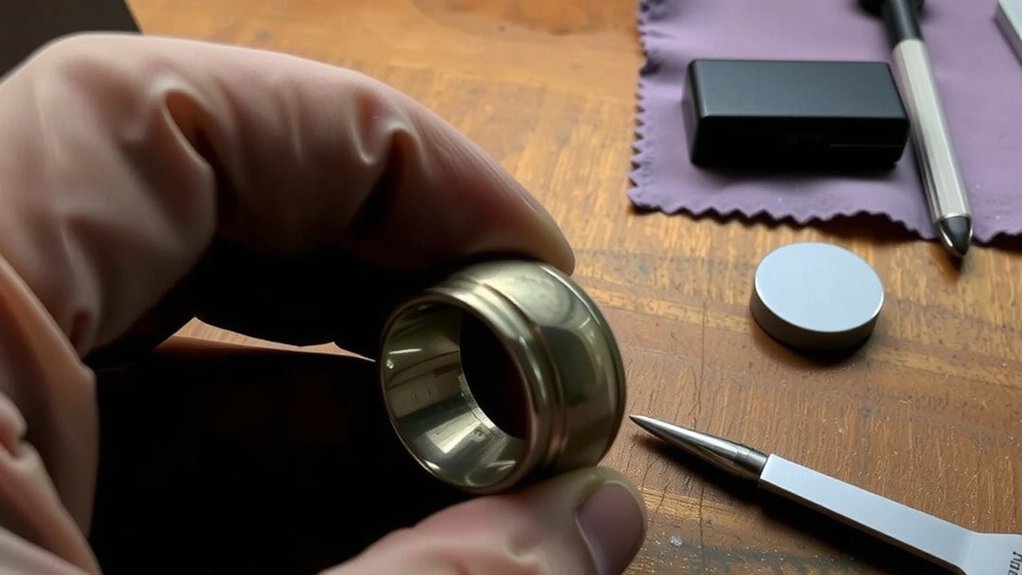
First, face the truth and check for a clean 925 hallmark—on the clasp, inside the band—not some crooked, fuzzy stamp that screams cheap. Then slap a magnet on it; real sterling shrugs, fakes cling like a needy ex. And yes, expect tarnish and a soft gray patina over time—if it stays mirror‑shiny forever, guess what, it’s probably not sterling.
Inspect 925 Hallmark
Flip the piece over and hunt the tiny truth: the 925 mark. Don’t squint politely. Own it. You’re the judge. Look for clean edges. Crisp digits. No shy stamping. Real silver takes a firm hit, so the stamp depth should feel even, not whisper thin on one side and cratered on the other.
Now stare harder. Spot weird curves or wobble? That’s trouble. Font anomalies scream corner‑cutting. A 9 shaped like a tired 6. A 2 with a limp foot. A 5 that bloats like it skipped gym. Laugh, then get serious. Check placement near clasps or inner bands where makers hide their pride. Straight, centered, consistent. Smears mean haste. Double strikes mean panic. You deserve better. Demand proof. Demand 925 that behaves today.
Magnet Test
You liked the stamp? Cute. Now prove it. Grab a strong neodymium magnet, not that weak fridge toy. Hold it near the piece. Real sterling shows low magnet sensitivity. It won’t jump. It won’t snap. If it locks on like a bulldog, you’ve got base metal under a shiny story.
Run ferrous detection like a pro. Test the chain, then the clasp, then every link. Expect tiny pulls from steel springs in clasps—fine, ignore that. But the body should stay cool and stubborn. Slide the magnet down a flat surface; silver resists sticking, it glides.
Still unsure? Compare with a known silver coin and a cheap nickel trinket. Feel the difference. Hear it. Magnet clunk equals fake. No clunk? Keep it. You win today.
Tarnish and Patina
Watching silver darken is the tell. Real sterling sulks. It browns then blacks, slow and stubborn. Fake pieces? They peel, they pout, they stain you green. Rub with a soft cloth. Silver oxide lifts gray. Plating doesn’t. Hit it with breath. A quick fog, then clean shine returns. That’s good. Smell metal? Brass funk screams fraud. And no, mirror‑bright forever isn’t normal; preventive coatings only buy time, not truth. Patina hides detail yet frames edges. Makers even push it—artistic patina—for drama. You want proof? Track change, not marketing.
| Sign | What it says |
|---|---|
| Slow, even tarnish | Likely sterling |
| Rainbow smear polish removes | Real silver oxide |
| Green crust on skin | Plating or base metal |
| Black in crevices | Artistic patina, intentional |
Face it. Silver tells time.
Understanding Tarnish and Oxidation
Why does that 925 ring go dark when you barely wore it? Because silver meets sulfur in air and flips attitude fast. That thin black film? Silver sulfide. Oxidation isn’t drama. It’s math, electrons jumping, bonds locking. Chemical mechanisms, not bad luck. You breathe, it reacts. You cook eggs, it reacts. City smog cheers. Sweat adds salt. Perfume throws fuel. Boom. Tarnish. Then the nickel or copper in sterling joins the party and corrodes a little, nudging color from bright to brooding. Call it patina if you want romance. It’s still reaction. Notice the Environmental impact too. More pollution means faster darkening, like a weather report for your finger. Hot gyms, hot tubs, hot kitchens push it harder. Surprised? Don’t be. It always wins.
Care, Cleaning, and Storage Tips
Silver met sulfur and threw a tantrum. You saw the black smudge and panicked. Relax? No. Act. Grab mild soap, warm water, a soft brush. Scrub gently, like you’re erasing a bad decision. Rinse hard. Dry harder. Cloth, not paper. Then polish with a treated cloth—light passes, no gorilla arms.
Now keep it clean. You hate tarnish? Prove it. Store pieces in linen pouches or individual zip bags. Air is the enemy. Moisture too. Use humidity control: silica gel, charcoal packets, even a rice hack. Don’t shower in it. Don’t swim in it. Perfume last, jewelry after. Rotate wear. Nighttime? Off. Drawer, dark, quiet. You’re the boss—act like it. Skip sinks, heat, rubber bands, bleach, and sulfur-heavy closets, unless chaos thrills you today, seriously.
Pricing, Value, and Resale Considerations
Though you love the shine, price slaps first. 925 means 92.5% silver, so the floor is melt value, not your feelings. Dealers pay scrap, not poetry. Weight matters. Condition matters more. Dents? Discount. Tarnish? Small hit. Designer stamp? Now we’re talking. You chase margin, not dreams. Check spot silver today, then watch Market trends this week. Volatile? Act fast. Stable? Negotiate harder. Stones add or subtract depending on quality, not size. Hallmarks boost trust and price. No hallmark? You babysit doubt.
Selling options: pawn, online auction, consignment, direct to a jeweler. Each takes a cut. Time is money and patience bleeds. Get quotes from three buyers. Avoid “free appraisal” traps that mysteriously lead to lowball offers. Real Appraisal fees buy real numbers for you.
Other Common Silver and Gold Marks
How do you spot the fakes and the sleepers hiding in plain sight? 925 isn’t the whole story—look for 800 or 835 for older continental silver, 950 for higher‑grade shine, “Sterling” or “Britannia” if the maker wants to brag. You want truth, not tin. Hallmarks talk. You listen. Gold? Same game. 375, 585, 750, 916—each a purity punch. Platinum throws 950 too. Still guessing? Stop. Let assay offices be the referee. They stamp crowns, leopards, eagles—whatever the jurisdiction worships. Date letters lock the year. Counterfeits choke here. Your move.
| Mark | Meaning |
|---|---|
| 375/9K | Low gold, budget grit |
| 585/14K | Mid gold, daily warrior |
| 750/18K | Rich gold, warm glow |
| 916/22K | High gold, deep yellow |
Trust marks, not myths. Test, verify, brag later. Paper beats swagger every time.
Where to Find Stamps and Maker’s Marks
Magnifying glass up. You want proof, not fairy dust. Start at the obvious—the ring shank, inside and low. Too easy? Check clasps. Lobster, spring ring, or that tiny tag near the catch. Stamps hide there like smug gremlins. Pendants? Hit the pendant bails. Look under the hinge, around the throat, everywhere you swear no one would stamp. Earrings play dirty. Scan earring posts and backs. Necklaces and bracelets pull the same stunt on links near the closure. Brooches stash marks behind the pin. Watches tuck them on casebacks. Still nothing? Scrub the grime, then look again. Don’t blink. Makers love microtype. 925, logos, country codes. If it’s blank, be suspicious. Ask hard questions, or walk. Trust your eyes. Not excuses. Not myths. Demand receipts.