
Over 90% of adults get cavities—so odds say you, not your neighbor. Think you’ll spot it? Maybe not. It starts as a chalky speck, then a sneaky brown pit that traps your lunch and zaps you with cold. Front teeth tattle; molars lie. Stain or decay? Guess wrong, pay later. Floss snags, sugar stings, shadows spread. Don’t wait for pain. You want proof—and the one test that exposes the cheat?
Key Takeaways
- Early decay appears as chalky white spots or faint frosty lines that later darken; remineralization brings gloss back and edges feel smoother.
- Front teeth show visible brown/gray spots, tiny edge chips, and gumline lines; back molars develop dark pits in grooves that trap food.
- Hidden cavities form between tight contacts and along gumlines; watch for bleeding after flossing, soreness when chewing, and food impaction.
- Progression shows tan to brown/black pits, rough snagging edges, and shadows; roughness that catches floss or tongue signals enamel breakdown.
- Stains polish off; decay feels sticky, hurts with cold/sweets, and worsens; call the dentist for lingering pain, gumline shadows, or get bitewing X-rays.
Early Visual Clues: Chalky White Spots and Faint Discoloration
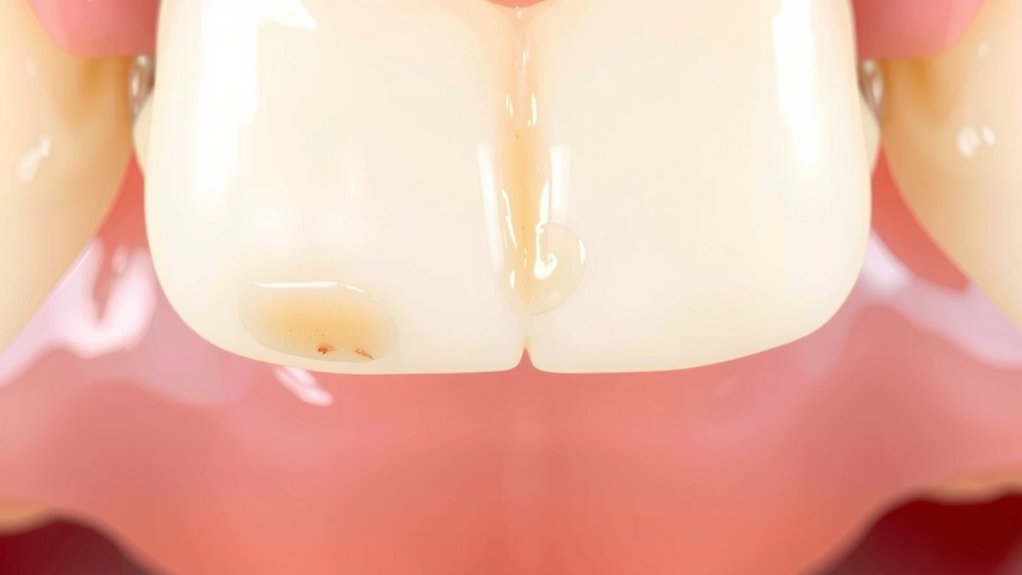
Although you want cavities to announce themselves with pain, they start by whispering—chalky white spots that look like dried spit on enamel. You see a faint frost line. Then a shadow. Not drama. Decay scouts. Acid raids your enamel after each snack attack. Those spots mean minerals fled. You can still fight. Look for remineralization signs: gloss returning, edges sharpening, sensitivity easing. Don’t stall. Brush with fluoride, spit don’t rinse, and starve the invaders. Identify your dietary contributors. Sodas, sticky granola, sneaky “healthy” juices. Yeah, your mouth’s sugar economy is bankrupting your teeth. Catch the beige tint before it turns brown, before it craters. Stare at the mirror under bright light. Tilt. Dry the tooth. See it? Good. Now act. No excuses. Start tonight.
What Cavities Look Like on Front vs. Back Teeth
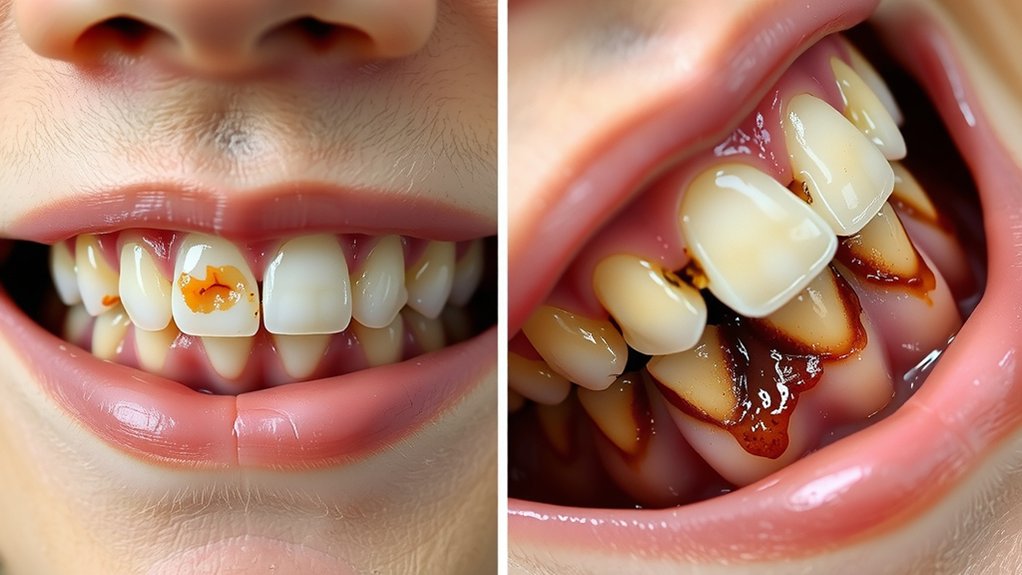
Look at your front teeth—showtime—because a cavity there usually flashes brown or gray spots, tiny chips along the edge, or a thin line hugging the gum that ruins selfies fast. Now swing to the back where you hide the mess: your molars collect gunk in deep grooves, dark pits that don’t brush out, sudden zing when you bite a chip—yeah, that. Face it, front screams visible trouble, back whispers pain and shadows, and both call you out right now.
Front Tooth Cavity Signs
Ever wonder why your front teeth snitch on cavities while the back ones play‑and‑seek? They live on stage. Your smile aesthetics expose every flaw. You see chalky dots, faint brown lines, even tiny pits that catch your nail. You feel zingy cold. Sweet hurts fast. Air stings. Lisp pops up. Yes, speech changes, because enamel thins and edges chip. You can’t hide it. Not in selfies. Not under lipstick. Fix it or it screams.
| Sign | Look | Feel |
|---|---|---|
| White chalky spot | Dull patch near edge | Zing with cold |
| Brown shadow | Thin line between teeth | Floss snags |
| Tiny pit | Rough snag on nail | Air hurts |
Stop pretending it’s “just coffee stains.” It’s decay. Early. Small. Fixable. Book the visit today, before front-page damage hits. For you.
Back Molar Decay Clues
Trapdoor molars hide their crimes. You can’t see the mess back there, but you sure feel it. Chewing sensitivity that zings like a live wire. A cold sip and boom. You flinch. Dark pits in the grooves, not cute freckles, actual sinkholes. Sticky spots that snag floss, then snap. That’s a clue. Food trapping after every bite, like your molars moonlight as storage lockers. You tongue it. It stays. Gross. The bite feels off, like gravel under a tire. Sweet hurts. Pressure lies. You stall on the left side, then the right. Stop pretending it’s nothing. Cavities love the back roads, the deep fissures, the tight contacts your mirror misses. Call it early. Probe, floss, rinse, repeat. Book the visit. Or keep gambling—lose enamel.
Hidden Decay: Between Teeth and Along the Gumline
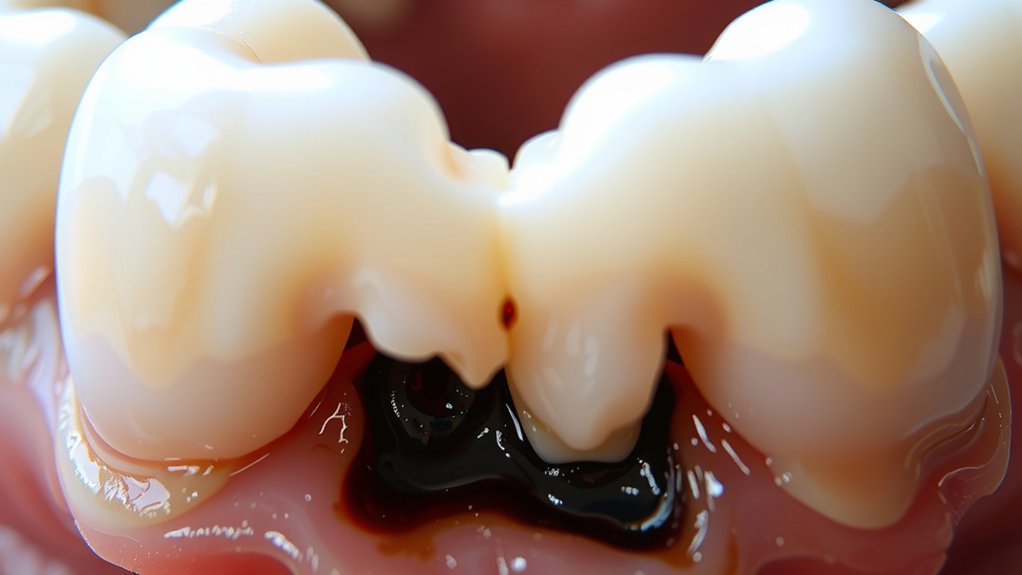
While you’re busy brushing the front for the mirror, decay is sneaking where you don’t look—jammed between teeth and hugging the gumline. It loves tight contacts. It camps under plaque like a troll under a bridge. You swipe, it laughs. Missed again.
Between teeth, food packs. Sugar lingers. Saliva can’t save you there. Interdental cleaning does. Floss, picks, water jets. Use them or donate your enamel to the cavity fund.
Along the gum edge, bacteria slide into gingival pockets. Quiet. Patient. They ferment your snacks and tax your nerves. Bleeding after flossing? That’s a flare, not a coincidence. Sore when chewing? Surprise guest.
Attack back. Angle the floss. Hug the curve. Sweep up, not straight through. Night snacker? Rinse. Dry mouth? Sip. Excuses? Deleted.
Color and Texture Changes: Brown/Black Pits, Rough Edges, and Shadows
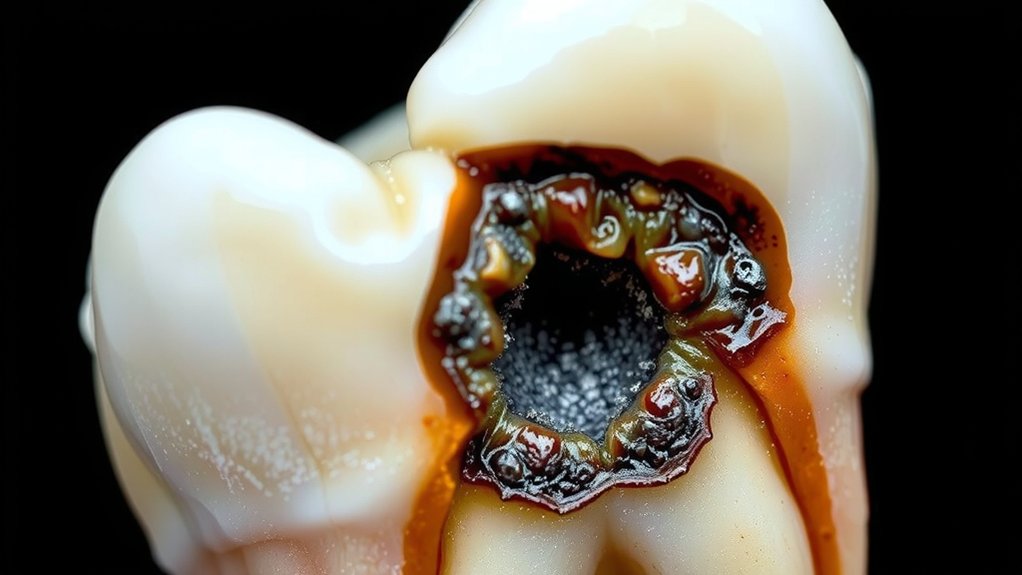
See that spot turning brown then nearly black on your tooth—yeah, that’s not “coffee art,” that’s decay screaming at you. Run your tongue along the edge and feel that snaggy roughness; smooth enamel doesn’t scratch like that, cavities do. Stop pretending it’s nothing—are you really waiting for a chunk to break off before you act?
Brown to Black Discoloration
Because sugar and time don’t play nice, your tooth starts showing it. First it blushes tan. Then brown. Then near‑black. Rot. You see tiny pits that trap coffee, cola, and midnight snack. Shadows cling to grooves like bad habits. You brush harder. They laugh. The spot stays, deepens, spreads, creeping along the fissure like spilled ink. Touch it. Feels sticky after sweets? That’s demineralization throwing a party you didn’t RSVP to. Diet influences kick the door in. Sugary sips. Grazing. Acid on repeat. And yes, Genetic predisposition stacks the deck, but you still play the hand. Don’t argue. Look at the molar mirror. Dark crater, bull’s‑eye center, lighter rim. That contrast screams cavity. Catch it small or watch it turn cave. Your move. Today.
Rough Enamel Edges
Usually the first clue isn’t color, it’s feel. Your tongue snags a ridge. Click. Scratch. That edge shouldn’t be there, but it is, mocking you every chew. Rough enamel edges shout trouble. Early decay nibbles from below, while enamel abrasion grinds from above. You call it “normal wear.” Cute. It’s damage. Bite misalignment? That’s a jackhammer, chiseling micro‑chunks, turning smooth glass into gritty curb. Toast catches. Floss frays. Cold zings. Then a brown speck appears and pretends it’s harmless. It isn’t. Stop babying it. Test it. Drag a pick, feel the catch, hear the squeak. If it hooks, that surface is breaking. Get ruthless, not hopeful. Smooth should feel invisible. Rough means crack, cavity, or both. Book the fix. Today. No delays, no excuses.
Stains vs. Decay: How to Tell the Difference
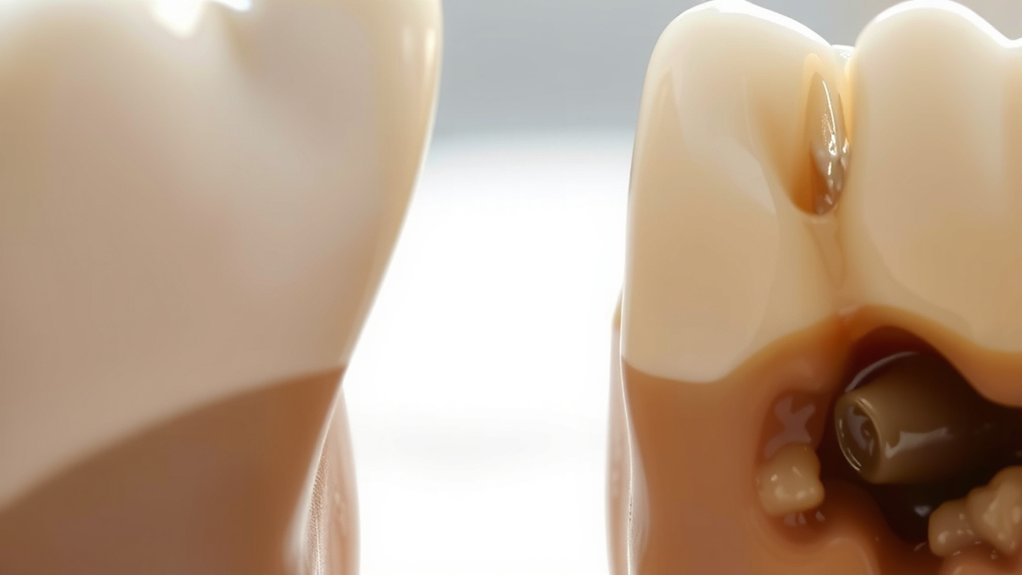
While that dark spot on your molar screams “disaster,” slow down—you might be looking at a stain, not a cavity.
Coffee paints. Tea tattoos. Wine brags. That’s dietary staining, not doom. It sits on the surface, laughs at your brush, then lightens with polishing paste.
Decay behaves nastier. It creeps. It softens enamel, feels sticky under a probe, and hides in pits like a thief. You feel roughness, not color.
Tobacco effects? Brutal. Brown bands, smoky edges, yellow chorus that won’t quit. Still superficial. Ugly, yes. Holes, no.
Test it. Floss snaps clean? Likely stain. Sugar hits and spot zings? That’s bacteria throwing a party. Smell funk? Plaque city.
Bottom line. Color alone lies. Texture tells truth. Shine resists? Stain. Chalky, matte, crumbly? Decay.
Red Flags, X-Rays, and When to Call Your Dentist
So you can spot stain from decay—good. Now prove it. Red flags aren’t shy. Cold zaps that linger. Sweet bites that sting. Night throbs that wake you. Bad breath that won’t quit. A pit that catches floss. Gray shadow at the gumline. That’s not drama. Those are Pain Indicators.
X-rays settle fights. Bitewings expose sneaky pits between teeth and under old fillings. Radiolucent wedges? That’s decay hiding. No guesswork. Evidence.