
One in five people has tangled with bed bugs or knows someone who did—your odds aren’t cute. You wake up with small, round, itchy welts, faint pink to deep plum, lined up like a cheap connect‑the‑dots on your neck, shoulders, or waist. Fresh ones feel warm, then redden or bruise. See repeat spots after sleep? Check the mattress: black specks, shed skins. Think it’s mosquitoes? Sure. Want the truth—and what to do next?
Key Takeaways
- Small round, slightly raised bumps, pinhead to pea-sized; pink on light skin, dusky red/plum on darker tones, sometimes with a pale halo.
- Bites often appear in lines or tight clusters with gaps, especially along skin edges contacting sheets, cuffs, and seams.
- Common sites include neck, shoulders, arms, waistline, hip crease, small of back, and behind knees.
- Fresh marks usually show after sleep; warmth and swelling peak quickly, with itch intensifying then easing over the next day or two.
- Differentiate: mosquitoes leave random welts; fleas cluster on ankles; spiders are twin-puncture bites; confirm by inspecting mattress seams for black specks or rusty smears.
How Bed Bug Bites Look on Different Skin Tones
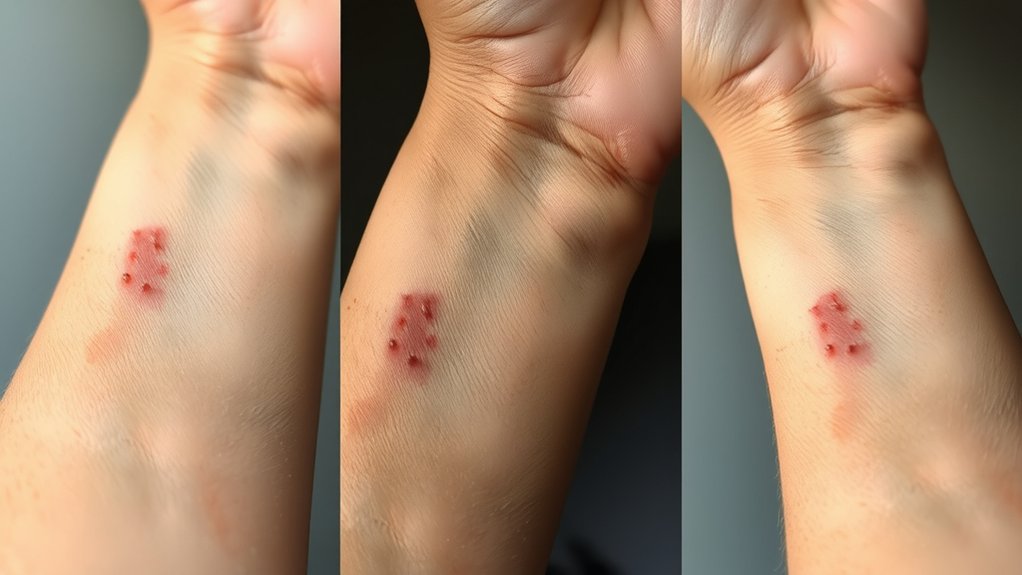
Usually you don’t spot bed bugs—you spot their signature, and it doesn’t play fair across skin tones. On deeper tones, the contrast hides. On lighter tones, it shouts. Unfair? Absolutely. You want truth, not guesses. So you watch patterns, not panic. Linear clusters, dawn itch, fresh-after-sleep timing. You test with photography lighting—warm lamp, cool phone flash, window light. See the shade variation change the mark’s edge? That matters. You tilt, you zoom, you refuse gaslighting by bad angles. Stop blaming soap, weather, or your imagination. Track symmetry, repeated placement on arms, neck, waistline. Night after night means something. Miss it, and they win. Document daily. Same sheets, same pose, different light. Demand evidence. Force the bites to confess. No mercy. No denial. Act now.
Size, Color, and Swelling: Key Visual Signs
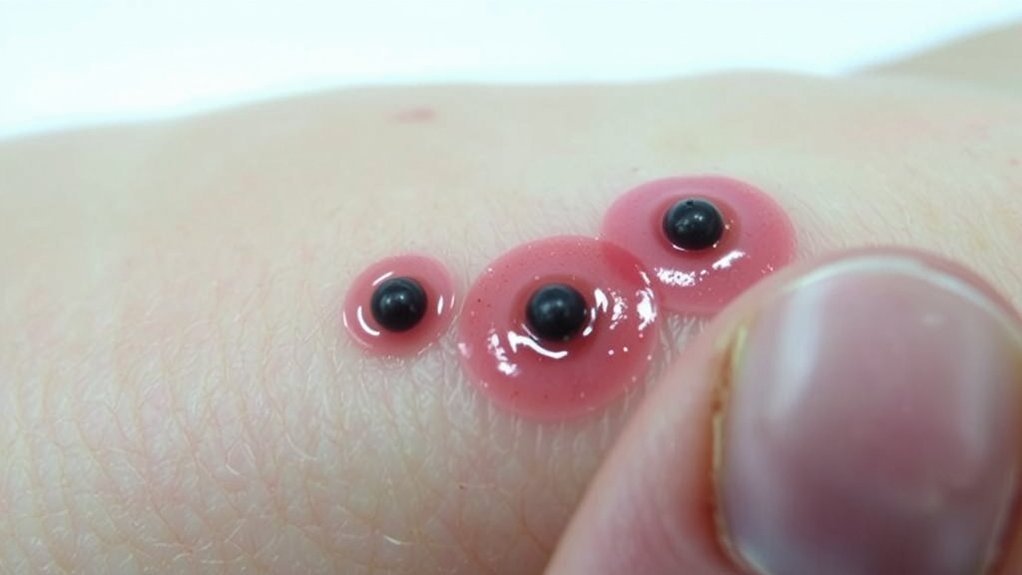
Evidence has a size, a color, a swell. You want numbers? Think small. Pinhead to pea, not plate-size drama. Fresh bites sit tight, round, a little raised. Pink on light skin, dusky red or deep plum on darker tones, sometimes with a pale halo. You press it. It fights back. Warmth builds, then puff. Swelling peaks fast, then slows. You watch itch severity climb like a bad joke, from whisper to scream, then finally quit.
Color shifts tell on time. Early blush. Midday burn. Late-day bruise. That’s lesion evolution, and yes, it tattles. Scratch if you enjoy regret. You’ll break skin, invite scabs, stretch the swell, and brag to bacteria. Or you ice it, clean it, and stop feeding the circus. Decide your misery.
Common Patterns and Bite Locations
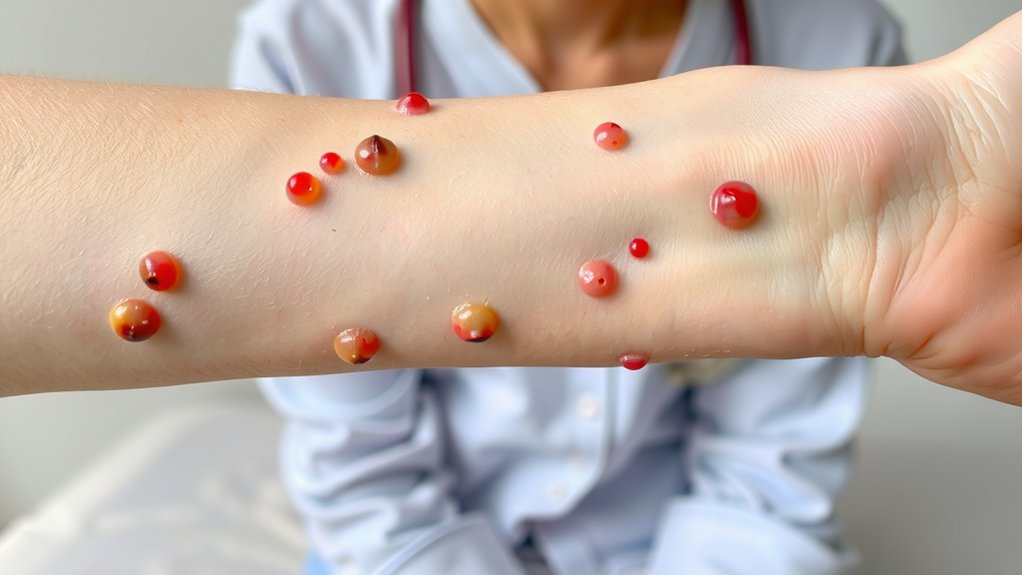
Often, bed bugs leave a story in lines and clusters, not solo drama.
You wake up and see a row. Then a gap. Then another hit.
They love edges. Where skin meets sheets. Neck. Shoulders. Arms. Waistbands. Sock lines.
Those Cluster patterns aren’t cute. They scream, we fed here.
You think it’s random? Please. They follow heat and carbon dioxide like groupies after a tour bus.
Preferred sites are the places you forget to protect. The back of your knees. The small of your back. The soft belly. The hip crease.
Exposed at night equals targeted at night. Simple.
Sleep still, get mapped.
Move a lot, still tagged.
Check seams. Check cuffs. Check that pillow fortress you trust.
See the tracks. Fight back tonight.
Bed Bug Bites vs. Mosquito, Flea, and Spider Bites
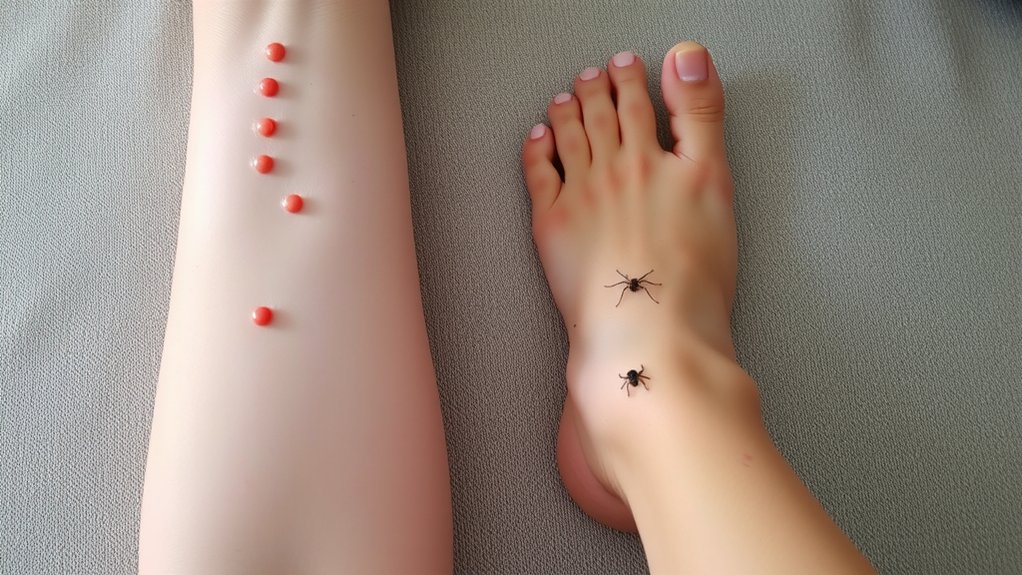
How do you tell bed bugs from the usual suspects without playing bug bingo at 3 a.m.? You look. Hard. Bed bugs hit in lines or clusters—breakfast, lunch, dinner—often on arms or backs. Mosquitoes scatter welts on exposed skin fast. Fleas pepper ankles; tiny, jumpy, rude. Spiders? Rare, usually single, with twin punctures. Feeding Duration matters: bed bugs sip for minutes, then hide. Host Preferences matter more: fleas chase pets; mosquitoes follow breath; spiders don’t hunt you. You want truth. Not excuses.
Look hard: lines mean bed bugs; random welts scream mosquitoes; ankles say fleas; single twin bites? Spider, rarely you.
| Clue | Bed Bug | Rival |
|---|---|---|
| Lines/Clusters | Yes—creepy parade | Mosquito: random chaos |
| Location | Bedsides, backs, arms | Flea: ankles, pet zones |
| Feeding Duration | Minutes in stealth | Mosquito: seconds; Flea: rapid nips |
| Host Preferences | You while you sleep | Flea: pets; Spider: not you |
Decide now, relentlessly.
When to Seek Medical Care and Confirm an Infestation
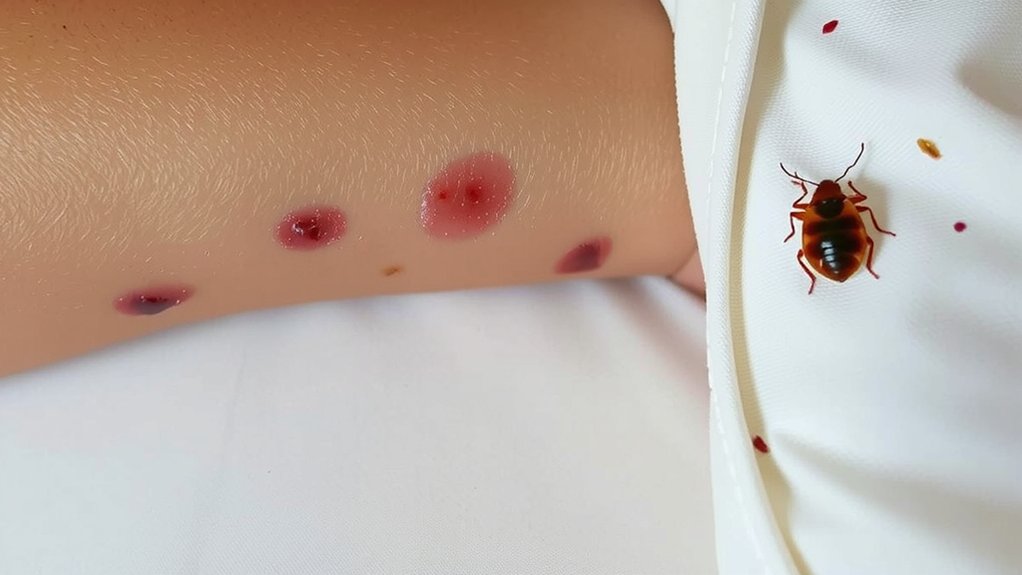
You sorted the bite drama; now comes the hard part—what to do when it’s not just itchy but risky, and proving the invaders are real. If bites explode fast, itch like fire, or swell like balloons, stop guessing. Watch for allergy signs: hives, lip or eye swelling, wheeze, dizziness. Breathing weird? Go now. Fever, pus, red streaks? That’s infection—see a clinician today. To confirm an infestation, quit hoping and hunt. Use an inspection checklist: strip sheets, scan mattress seams, box spring, headboard. Look for black pepper dots, rusty smears, shed skins, sweet musty odor, live crawlers. Flashlight. Credit card edge. Lint roller. Interceptor traps on bed legs. Bag a specimen. Can’t verify? Call a pro and stop sleeping on denial. Do it. Sleep later.